
Electric Oven Bake Element vs Control Board: Which One Failed?
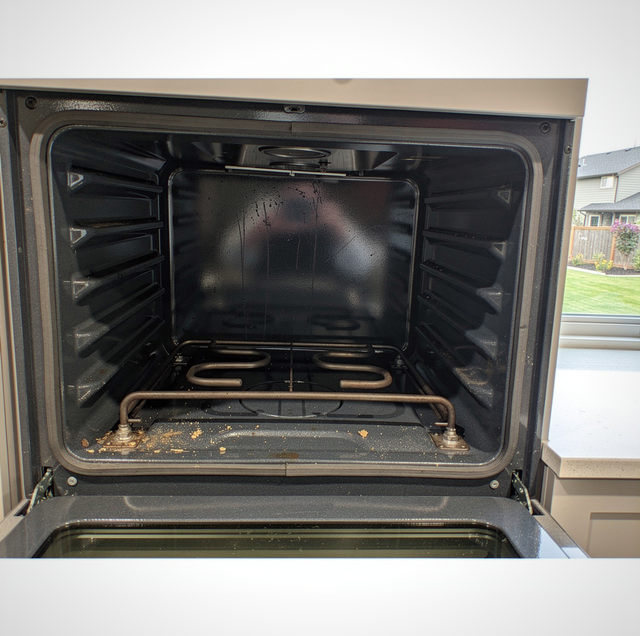
An electric oven that lights up, beeps, and counts down a preheat but never gets hot has lost its heat somewhere between the control board and the bake element. Three things decide which end failed: what the element looks like with the oven cold, whether the board is actually sending power to it when you press Bake, and whether the rest of the oven (the broiler, the display, the cooktop) still behaves. Those three answers sort a no-heat call into an element job, a board job, or one of a short list of parts that sit between them.
How the Bake Circuit Turns a Setting Into Heat
The bake element is a metal tube with a coiled resistance wire running through its center, packed in a white mineral insulation that keeps the wire from touching the tube. When current flows through the wire, it heats the entire sheath, and on a visible element, you see this as an even red-orange glow along its length.
The element does not decide when to heat. The control board does. A temperature sensor, a thin metal probe mounted in the upper back wall of the oven cavity, reports the cavity temperature to the board. When the reading sits below your set temperature, the board closes a relay, a small switch soldered onto the board, and that relay sends power out to the element. When the oven reaches temperature, the relay opens, the element cools a little, and the cycle repeats for as long as the oven is on.
The element itself runs on 240 volts, which arrives as two separate 120-volt legs from a double-pole breaker. The clock, the display, and the board's own electronics need only one leg. That split matters later because it explains how an oven can look fully alive yet produce no heat.
The table below lists the common symptoms alongside the part each one points to.
| What you see | Where the fault sits first |
|---|---|
| Element has a visible break, split or bubble | Bake element |
| Element looks intact but stays dark during preheat | Relay, board, wiring or sensor (element still possible) |
| Oven heats past the set temperature and keeps going | Relay stuck closed on the board |
| Error code on the display with no heat | Sensor or board, read from the code |
| Display lit, oven and some cooktop burners weak or dead | Power supply to the range |
Signs That Point at the Bake Element
The element wears from the heat it makes. It cycles between cold and glowing hot every time the oven runs, and years of that expansion and contraction fatigue the sheath. Spills, grease, and oven cleaner that land on it add corrosion to the stress.
With the oven off and fully cool, a failed element can be plain to see:
- A clean break: The tube has split apart, and the two ends may sag toward the oven floor.
- A blister or bubble: A raised, swollen spot on the sheath where the insulation inside has failed, and the wire has overheated in one place.
- A burned or pitted spot: A dark, crusted patch or a small crater where the wire arced through the sheath.
A bright flash, a crackle or a few sparks from the bottom of the oven, followed by no more heat, is the wire burning through.
A visible break settles the question for that element. It does not always settle the whole repair, because an element that shorts as it fails can take a board relay with it.
If an element flares, sparks or glows in one bright spot, switch the oven off at the controls and at the breaker and keep the door shut. Replacing it and checking the board behind it is work for an appliance technician.
When the Element Looks Fine
An intact-looking element is not proof of a good one. The resistance wire can break inside the sheath with no mark on the outside, and an element can also fail at its terminals, where the wires connect at the back wall of the oven cavity, and heat slowly loosens and scorches the connection.
That is why a technician confirms the element with a meter before going further. Two measurements answer the question: whether the element itself has the right resistance, and whether 240 volts actually reaches its terminals while the board is calling for heat. Those are measurements taken on live wiring inside the oven, which is why they belong to a technician.
If the element tests good and power reaches its wire ends but the element stays dark, the fault is in the connection between them, a loose or scorched terminal at the back wall. If the element tests good and no power arrives during a bake call, the problem sits upstream, and the board, the relay, the wiring harness, a thermal cutoff, or the temperature sensor come next.
Relays on the Board: Open, Stuck and Burned
The relay is the moving part of the control board, and it is the part of the board that wears out first. Every time it closes, a small arc jumps across its contacts as the element's load switches on. Over thousands of cycles, the contacts pit and erode.
A relay can fail in two directions:
- Stuck open: The contacts no longer close, so the board calls for heat and nothing reaches the element. The display shows the oven preheating, the cavity stays cold, and there may be no error code at all.
- Stuck closed: The contacts weld together, so the element stays on regardless of what the sensor reports. The oven runs well past its setting, and on ovens fitted with a thermal cutoff, that cutoff trips to shut the heat down.
The connection between the two parts is the reason an element is not always the end of the story. When an element shorts as it burns through, it can draw a surge of current through the relay contacts and burn or weld them in an instant. A new element goes in, the oven still does not heat, and the owner reasonably assumes the new part was bad. In that case, the element was the cause, and the relay was the casualty, and both need replacing.
When the relay is soldered onto the board, a failed relay means replacing the board, or, on some models, sending the board out for component-level repair.
Why the Element Is Checked First and the Board Last
The order follows from three facts about the two parts.
Frequency: The element is the part exposed to direct heat cycling and spills, so it is the first suspect in any electric oven with no bake heat.
Visibility: An element failure can be confirmed by looking at it and a single resistance check. A board fault is confirmed by ruling out the element, the wiring, and the sensor, which means the board can be blamed with confidence only after they have been cleared.
Consequence: A bake element is a modest part. A control board is the expensive part on an oven. Replacing a board on a guess, when the real fault was a loose terminal or a failed sensor, leaves you with the same cold oven and a much larger bill.
Find the model and serial label before you call. Depending on the model, it sits inside the door frame, on the storage drawer frame or under the cooktop. Read the full model number, including any letters at the end.
Other Parts That Can Stop the Heat
A no-heat oven is not always an element or a board. Several other faults produce the same cold cavity, and a proper diagnosis rules each one in or out.
Temperature sensor: If the sensor fails, the board can no longer read the cavity. On electronic ovens, a failed sensor can set an error code, and the board then refuses to heat. A sensor that reads wrong without failing outright gives an oven that still heats but runs hot or cold.
Thermal cutoff: A one-time safety fuse or a resettable high-limit switch, mounted on the back or top of the oven, breaks power when the oven overheats. Once it opens, the oven loses heat, and on some models the display goes dark too. A tripped cutoff can be a symptom, so the overheating that may have tripped it, a stuck relay, or a blocked cooling fan is checked before a new one goes in; a self-clean cycle can also trip one on its own.
Wiring and terminal blocks: The wires behind the oven run hot for years. A connector that has loosened, browned, or melted can drop power to the element, even if every part on either side of it is still good.
Power supply: Because the display needs one leg and the element needs both, a range that has lost one leg of its 240-volt supply can still display normally and produce little or no heat. Cooktop elements on the same range may also go weak or dead. Turning the range breaker fully off and back on is a fair first step. If the breaker trips again, or the problem is in the house wiring or the outlet behind the range, that is a job for an electrician.
The door: A door with a sagging hinge or a torn gasket lets heat escape fast enough that the oven struggles to reach temperature, which can look like a weak element.
Repair or Replace After the Diagnosis
Once the failed part is known, the decision is mostly about which part it was and what oven it lives in.
An element replacement on an otherwise sound oven is a strong repair on any range, freestanding or built-in. The part is common, and the job is quick.
A board is a closer call. On a newer oven with parts readily available, a board replacement is still a sensible repair. For an older freestanding range where the board is discontinued or hard to source, the cost and wait time for the board can tip the decision toward replacement. Built-in wall ovens lean toward repair even with a board fault, because replacing one means fitting a new unit into the existing cabinet opening, and not every current model matches an older cutout.
The condition of the rest of the oven matters too: a board failure on a range with a cracked cooktop and worn hinges is a different question from one on an oven in good shape.
A cold oven tempts a quick parts order. The element is the right place to start looking and the wrong place to stop. The element is checked first because it is the most likely to fail, and the board is blamed last because it is the only part that cannot be proven guilty until everything around it has been cleared.
Frequently Asked Questions
Some newer ovens use a hidden bake element mounted underneath a solid enamel floor panel, so there is nothing to inspect from inside the cavity. Reaching it means removing the floor panel or, on some models, pulling the range out to work from the back, which makes it a diagnosis-first repair.
Two elements burning out in the same moment is improbable. When bake and broil fail together, the suspects are the parts they share: the control board, a tripped thermal cutoff, the wiring that feeds both, or the supply to the range.
It is not worth the gamble. A blister marks a spot where the sheath is close to failing, and when it gives way, the arc can spatter molten metal onto the oven floor, leaving a permanent mark in the enamel. The flare can also start a small grease fire on a dirty floor.
The risk is in the return. Parts sellers can refuse returns on electrical parts once they have been opened or installed, so a board bought on a guess that turns out not to be the fault stays yours. Confirming the cause first protects that spend.
It can be. Self-clean drives the cavity to roughly 800 degrees Fahrenheit or more for hours, far hotter than cooking. That heat is hard on the thermal cutoff, the door lock motor, and the board, and any of them can fail during or just after the cycle.
A little, on its first heat. New elements carry a light protective coating from the factory that burns off the first time they glow, with a short-lived smell and a wisp of smoke. Running the empty oven once before cooking clears it.
Have the oven checked element-first — the bake element, its terminals and the board relay tested in that order, so only the parts that failed are replaced. SD Appliance serves Spokane, Spokane Valley and North Idaho. Call (509) 866-6767.
