
Freezer Repair in Spokane, Spokane Valley and North Idaho
Owner-Operated | Repairing Appliances Since 2013 | Open 7 Days, No Weekend or Holiday Surcharge | Licensed, Bonded and Insured in Washington
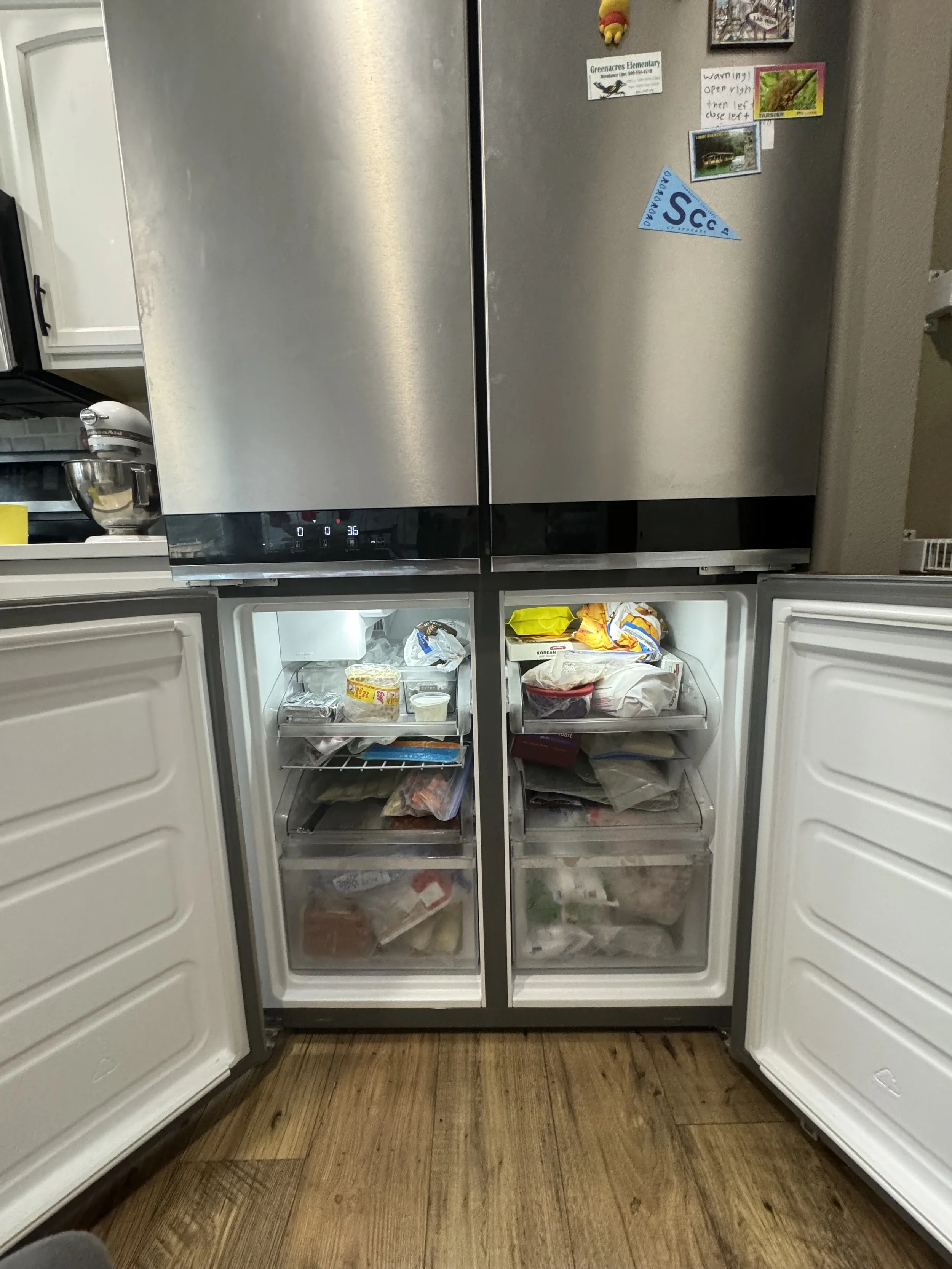
If the chest freezer in your garage has stopped holding temperature, the upright in the basement is running constantly without getting cold, or you have opened the lid to soft packages and half a season of meat, you are on the right page.
SD Appliance is Sergei Dergunov, working out of the South Hill since 2020 and repairing appliances since 2013. Upright, chest, built-in, and standalone units that live in garages and basements. You get him on the phone, and the questions he asks there are what decide which parts come out to you.
A freezer call gets treated the same way a refrigerator call does, because the food is the real cost and it is on a clock. Say what the freezer is doing and roughly how long it has been doing it, and that is what shapes the visit. There is a page for the refrigerator side too.
What people are actually saying when they call
Freezer calls arrive in a narrow set of shapes. Find yours here, and the section under it explains the mechanism.
“My freezer is not freezing, but it is still running.”
The commonest freezer call, and the one people misread. A freezer that hums along without getting cold is not a dead freezer: cold is being made, and something is stopping it reaching the food, which is a different and cheaper repair.
“There is a wall of frost inside.”
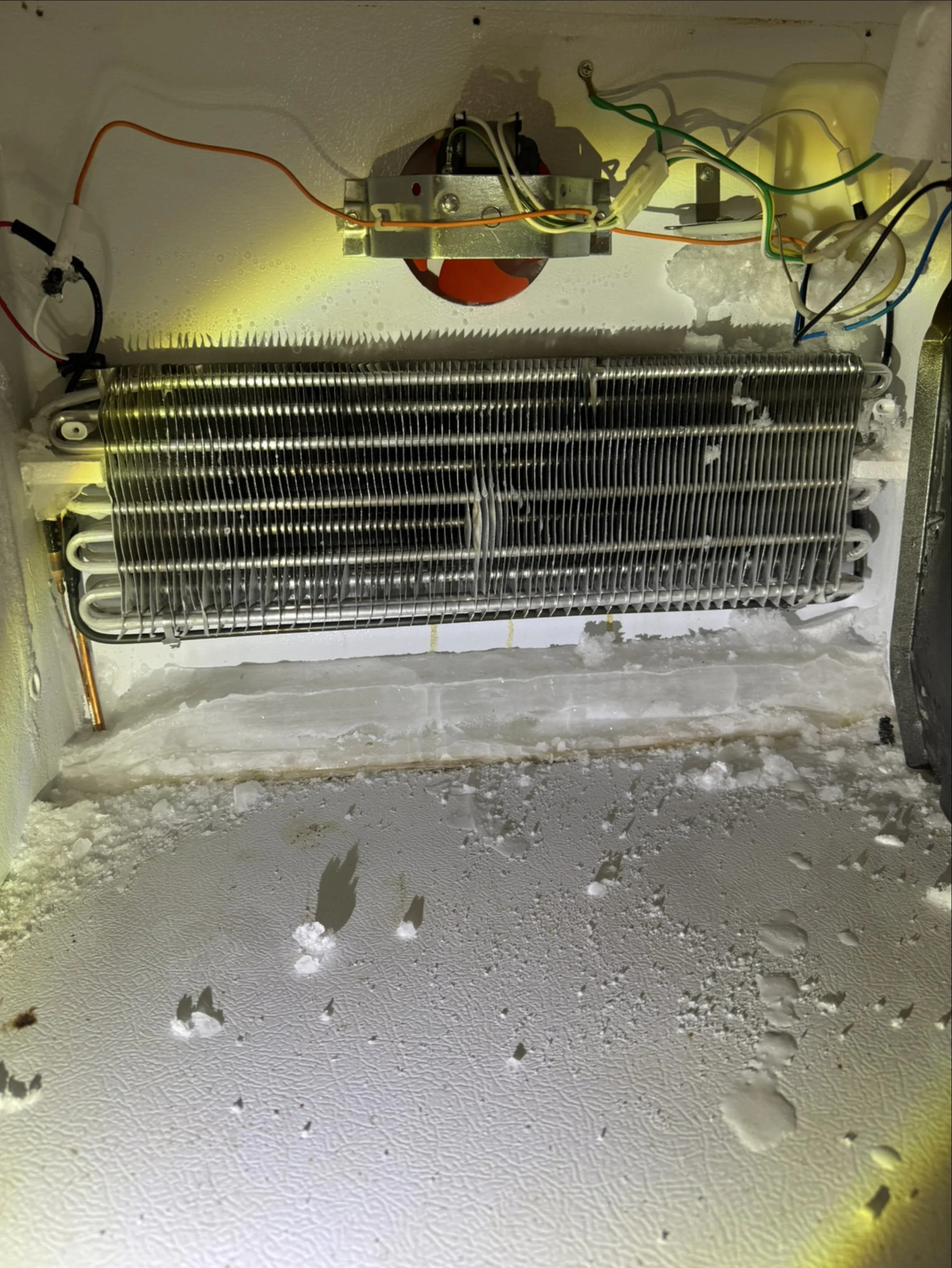
Frost thick enough to notice is a symptom rather than a housekeeping problem. On a self-defrosting freezer, it means the defrost system has stopped defrosting, and it gets worse until airflow stops.
“It is a chest freezer in the garage, and it is full of meat.”
The setting most of these calls come from. Say how full it is and how long it has been off, because a packed chest freezer holds the temperature much longer than an empty one, and that changes how the day is planned.
“It runs constantly and never shuts off.”
Not normal, even when the food is still solid. Something is letting warm air in faster than the machine can pull heat out, and on a chest freezer the lid gasket is the first place to look.
“It has puddled on the garage floor.”
Nearly always the defrost drain rather than anything in the sealed system. Blocked drain, nowhere for the meltwater to go, so it exits at the bottom of the cabinet.
“It has started buzzing or rattling.”
Worth acting on rather than living with. A chest freezer sits in a garage where nobody hears it every day, so by the time a new noise gets noticed, it has been going a while.
“The lid does not seem to seal properly anymore.”
Worth taking seriously on a chest freezer, because the lid gasket is the part doing the work. A seal that has gone hard or torn will cost you temperature and run the compressor into the ground.
What actually fails
What actually fails on a freezer is a short list: frost buildup and defrost failure first, then the evaporator fan.
Defrost failure: the one that looks like a dead freezer
The number one, and the reason a freezer can hum away perfectly while nothing inside is frozen. Ice sheets over the coil until air stops passing through it, at which point the machine is making cold it cannot deliver. Heaters, thermostats and sensors are the parts, and none of them is a major outlay.
Evaporator fan: number two
Without it, cold sits at the coil instead of circulating. On an upright, that shows up as one shelf staying properly frozen while the rest goes soft, which is a useful thing to mention on the phone because it points straight here.
Lid and door seals: the slow, expensive one
A gasket that has hardened, torn, or pulled away lets warm air in continuously. The freezer never catches up, the compressor never rests, and the electricity bill goes up quietly. Cheap to fix and easy to miss.
Compressor: where the conversation changes
The expensive end, and the reason the diagnosis happens before any number gets quoted. A compressor failure is sealed-system work, and it is not done here; it requires EPA 608 certification and must be handled by a certified refrigeration technician. On an inexpensive garage unit that usually ends the discussion anyway, and you will be told that plainly rather than sold a visit to hear it.
What a garage freezer full of meat changes
The typical freezer call here is a garage unit, a chest freezer, or a standalone with meat in it, and that changes the triage rather than the repair. A full chest freezer is its own cold store: packed solid and left shut, it holds temperature for a long time, which is why the first thing worth saying on the phone is how full it is and whether the lid has been opened. The advice while you wait is short. Do not open the lid more than you have to, and if you have ice or ice packs, put them in. On parts, local counter stock for appliance parts is thin, so defrost components and fans ride on the van, and anything less common comes from out of town, and you are told what that means for timing before anything is ordered. That lead time is why the phone questions matter here: a full chest freezer buys you time to get the right part, but only if the symptom was accurately described on day one.
What this covers
What we do not do
Sealed-system and refrigerant work
We do not hold EPA 608 certification and do not open sealed systems. Compressors, evaporators, and anything involving refrigerant go to a certified refrigeration technician, and you get the diagnosis either way.
Installation
Repairs only. New units are not installed, and an existing freezer is not moved, levelled into place or hauled away.
Drop-off or in-shop repair
There is no shop and no bench repair. The freezer is worked on where it stands, garage and basement included.
Commercial and walk-in freezers
No walk-ins, blast freezers or restaurant equipment. Residential chest and upright units are fine, including ones in rental properties.
Repair or replace?
A defrost heater, a thermostat, a fan, or a lid gasket on a freezer that is otherwise sound is an easy yes. These are inexpensive parts on a machine that is mechanically simple, and a freezer that gets one goes on for years.
The one that goes the other way is a failed compressor on an inexpensive chest or upright freezer. On an older, inexpensive unit, repair rarely makes financial sense, and the honest recommendation is to put the money toward a replacement instead. Nobody enjoys driving out to say that, and it still gets said.
In between, a built-in or a large-capacity unit tilts toward repair because replacing one of those costs considerably more than replacing a garage chest freezer.
Three questions settle it, and they get asked on the phone: what is in it, what did the freezer cost, and how old is it.
What it costs
It covers travel, inspection, and the diagnostic time needed to separate a defrost or fan fault from a compressor one, which is the difference between a modest repair and a replacement. It goes toward the repair if you go ahead, and it stands on its own if you decide not to.
After that, the number tracks the part and the access. A chest freezer is the easiest appliance we work on, because everything is accessible and nothing has to be pulled out of a cabinet. A built-in column is the opposite. Two freezers with the same fault can therefore carry different prices, depending on how long it takes to get to them.
You get the number before the work starts. If something unexpected turns up once a panel is off, the work stops, and you are told before anything is added.
How the visit goes
You talk to Sergei
No call center and no dispatcher. Chest or upright, roughly how old, and which of the three it is doing: not cold at all, cold but not cold enough, or frosting up. Those are three different repairs.
He arrives with the common parts on the van
He keeps the most common freezer parts stocked on the van, which is why many of these repairs finish on the first visit instead of waiting on an order.
Diagnosis, then a price
Confirmed at the machine, with a thermometer in the cabinet rather than a reading off the dial, and quoted before anything comes apart.
The repair, and what happens if a part has to come in
Nothing gets ordered without your approval on the part and the price, discontinued parts included. Parts and labor are warranted for 30 to 90 days as stated on your invoice.
does the work
Why a freezer that runs but does not freeze is usually good news
One symptom accounts for more freezer calls than any other, and the instinct it produces is almost always wrong. The freezer hums. The light works. Nothing is cold. People read that as a dead appliance and start pricing replacements.
In fact, the humming is the useful part. It means the compressor is running and producing cold. What has broken is the part that moves that cold around, or the part that stops ice choking off the airflow. The two suspects are the evaporator fan and the defrost system, both of which are ordinary repairs involving inexpensive parts.
The opposite pattern is the one that costs money. A freezer that is silent, or that clicks every few minutes and goes quiet again, is not making cold at all. That points at the compressor, and that is where the replacement conversation starts.
So the two questions worth answering before you call are simple: is it running, and is there frost inside? Running with frost points at defrost. Running, no frost, and no air moving when you hold a hand near the vent points at the fan. Not running at all points somewhere more expensive. None of that replaces a diagnosis, but it tells you which conversation you are about to have.
The practical version, for anyone standing in a garage looking at a freezer full of meat: keep the lid shut, add ice if you have it, and say whether the thing is running. That last one does more work than anything else you can tell him.
Real customers, real repairs
“Contacted SD Appliance on a Sunday for my broken freezer and he was able to come out on Monday. Sergei diagnosed the issue and fixed the problem. He was very efficient and professional and I would not think twice about having SD Appliance out in the future.”
“They were awesome, super responsive and communicative, even came Christmas Eve to finish the repair on my freezer. Would definitely recommend!”
Common questions
Normally the opposite. Running means cold is being made, so what has failed is the fan moving it or the defrost system letting air through. Both are ordinary repairs.
Longer than you would expect if the freezer is full and the lid stays shut. Add ice or ice packs if you have them, and keep it closed. Say how full it is when you call.
Once the frost is thick enough to notice, the defrost system is not keeping up. On a self-defrosting freezer, that is a fault, not a cleaning job.
Yes, and that is where the bulk of these calls are. Access tends to be easier than an upright, and the common parts ride on the van.
It depends on what failed. A thermostat, a fan or a lid seal, almost always. A compressor on an inexpensive unit, rarely, and you will be told that plainly.
Yes. It is one of the cheaper repairs and one of the most overlooked, because a bad seal presents as a cooling problem.
All the major ones, including LG, Whirlpool, Samsung, Maytag, GE and Frigidaire, plus Sub-Zero, Thermador and Bosch on the built-in side. No manufacturer authorization and no manufacturer script to follow.
No. Seven days a week at the same rate.
Where we go, and how to book
Freezer repair across Spokane, the South Hill, Spokane Valley, Liberty Lake, Cheney, Mead, Colbert, Airway Heights, Medical Lake, and out to Coeur d’Alene, Post Falls, Rathdrum, and Hayden. Idaho is charged at the same rate, with no distance surcharge. Garage and outbuilding units are the same call as a kitchen one.