
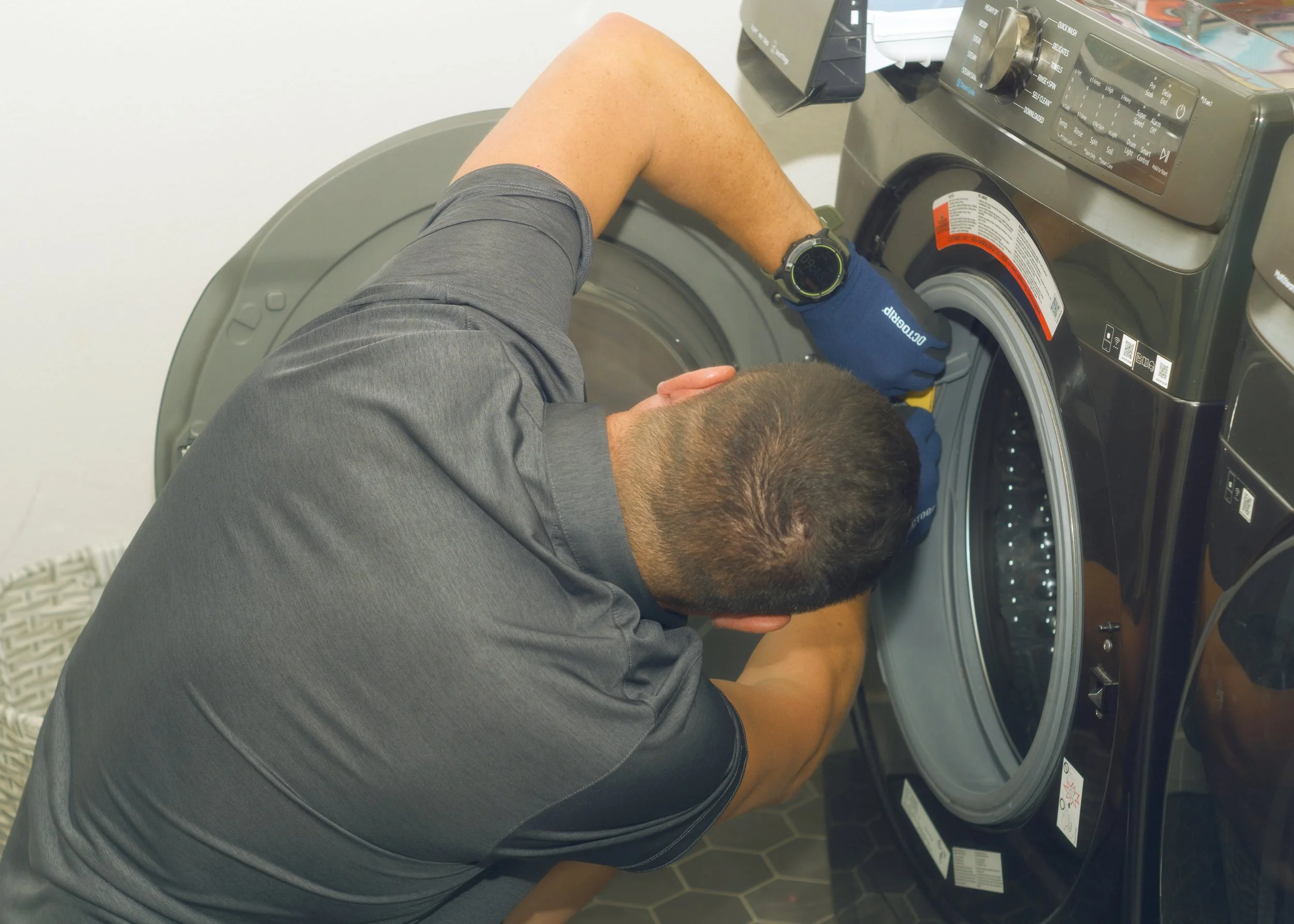
Washer Repair in Spokane, Spokane Valley and North Idaho
Owner-Operated | Repairing Appliances Since 2013 | Open 7 Days, No Weekend or Holiday Surcharge | Licensed, Bonded and Insured in Washington
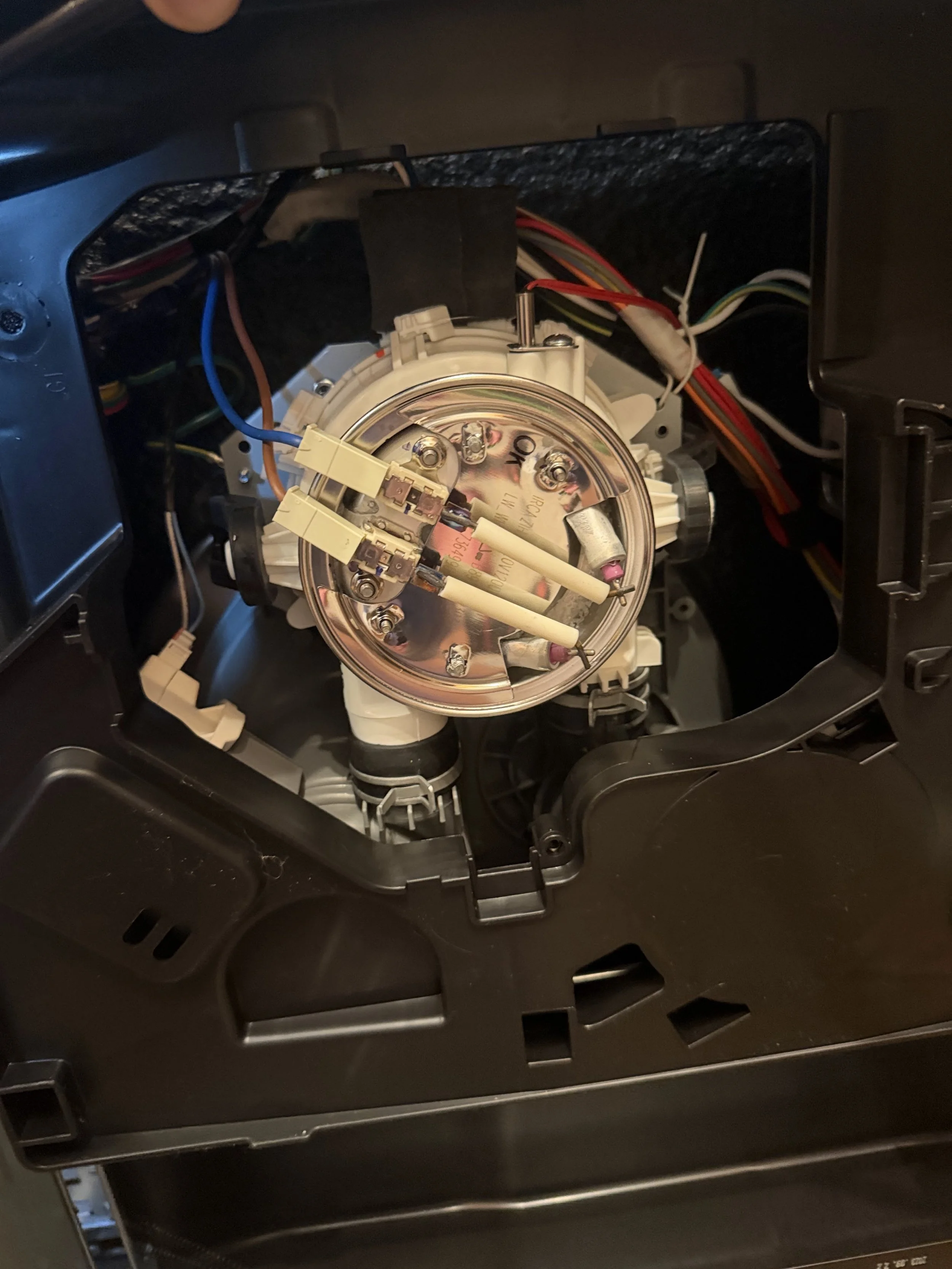
If your washer has stopped mid-cycle with the door locked and the drum full of water, it fills and drains but never spins, or water is spreading across the laundry room floor, you are on the right page. Washer calls come in steadily year-round, and the three parts behind most of them are repairable.
SD Appliance is Sergei Dergunov, repairing appliances since 2013 and working out of the South Hill in Spokane since 2020. Front load, top load, high-efficiency, stacked, coin-op, and apartment-size for homeowners and landlords with tenants waiting.
A washer that has stopped with the door locked is treated as urgent, and not only because of the inconvenience. A wet load left sealed in a warm drum starts to smell, and that turns one problem into two.
What people are actually saying when they call
Washer calls typically start with: “My washer is not working.” When people are more specific, it is one of these.
“My washer is not working.”
The opening line people use covers everything. The follow-up questions do the work: does it fill, does it drain, does it spin, and does it make a noise while it tries?
“It will not drain.”
Water sitting in the drum at the end of a cycle. The drain pump is the first suspect, and one phone question narrows it further.
“It fills and washes but will not spin.”
A different fault from a drain problem, though people often describe them together. On a top loader it points one way, on a front loader another.
“It is leaking.”
Front loaders and top loaders leak from different places, so the type of machine is the first question.
“It stopped mid-cycle, and the door is locked.”
Wet laundry sealed in a warm drum goes sour quickly, so say so when you call.
“It shakes so hard it moves across the floor.”
Suspension on a top loader, and on either type it can be as simple as an unbalanced load or as involved as bearings.
“It will not fill, or it takes forever to fill.”
A different fault from the drain problems above, and a commonly missed one. Inlet valves and their screens are the usual answer, and the symptom is often gradual rather than sudden.
“It smells musty even when it is clean.”
Front loaders especially. Residue builds in the door gasket and the drum, and the honest answer is that it is sometimes a cleaning habit rather than a repair. Where the gasket itself has gone, it is a repair.
What actually fails
A short list of parts accounts for the bulk of washer repairs, and which one it is depends on whether the machine is front loading or top loading.
Drain pump: the number one washer repair
The part replaced most. It shows up as water left in the drum, a cycle that stops before spinning, or a machine that hums without moving water. Common enough that the part rides on the van.
Door gasket: the front loader classic
The rubber boot at the door of a front loading machine. It fails at the fold where water and detergent residue collect, and it presents as a leak that appears partway through a cycle rather than at the start.
Control board: the one you diagnose before you buy
Boards are the expensive end of a washer repair. Plenty of symptoms that look like a dead board turn out to be a switch, a lock, or a wiring fault, and ordering one on a guess is how a repair becomes uneconomic.
Top loaders fail differently
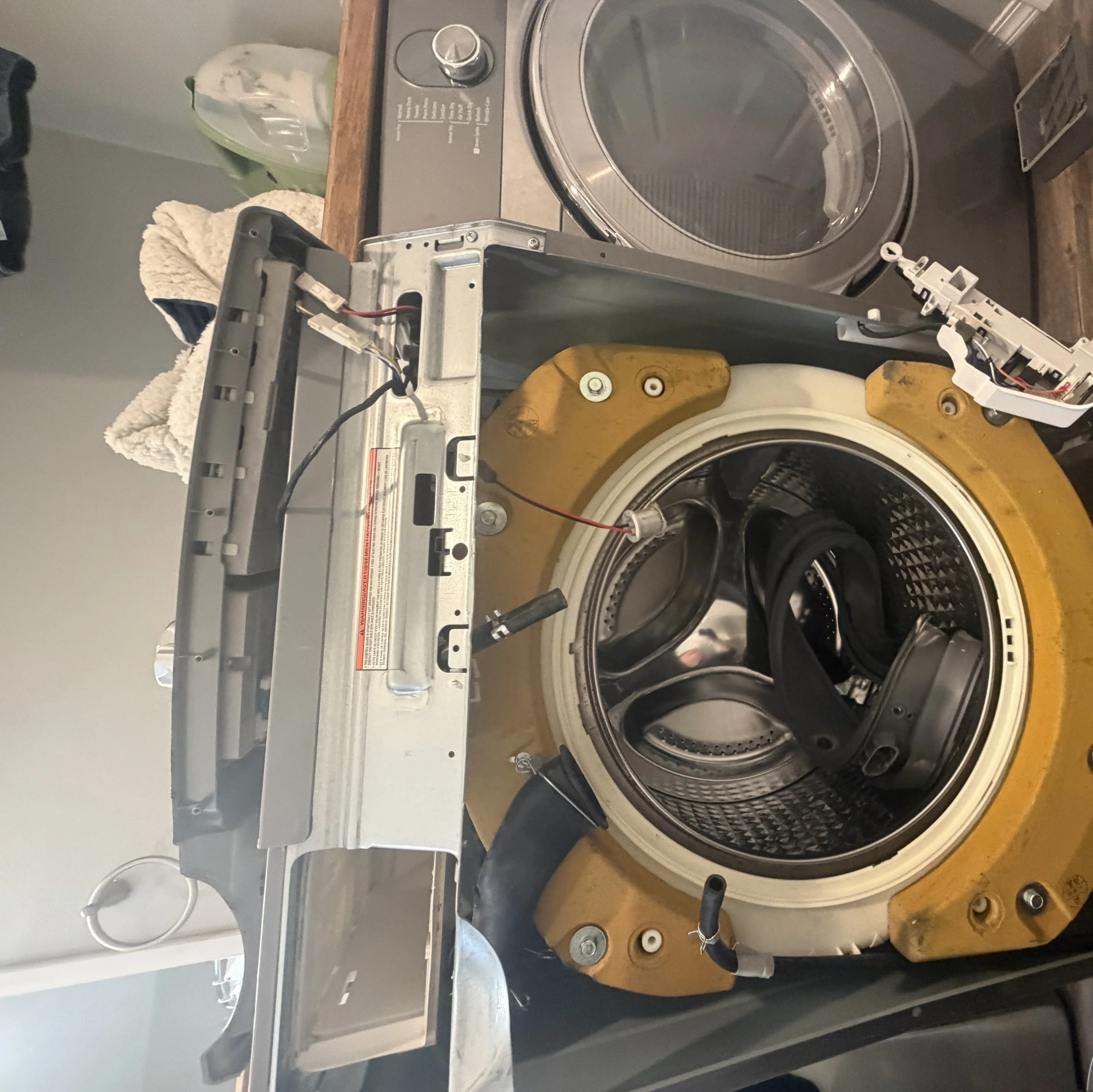
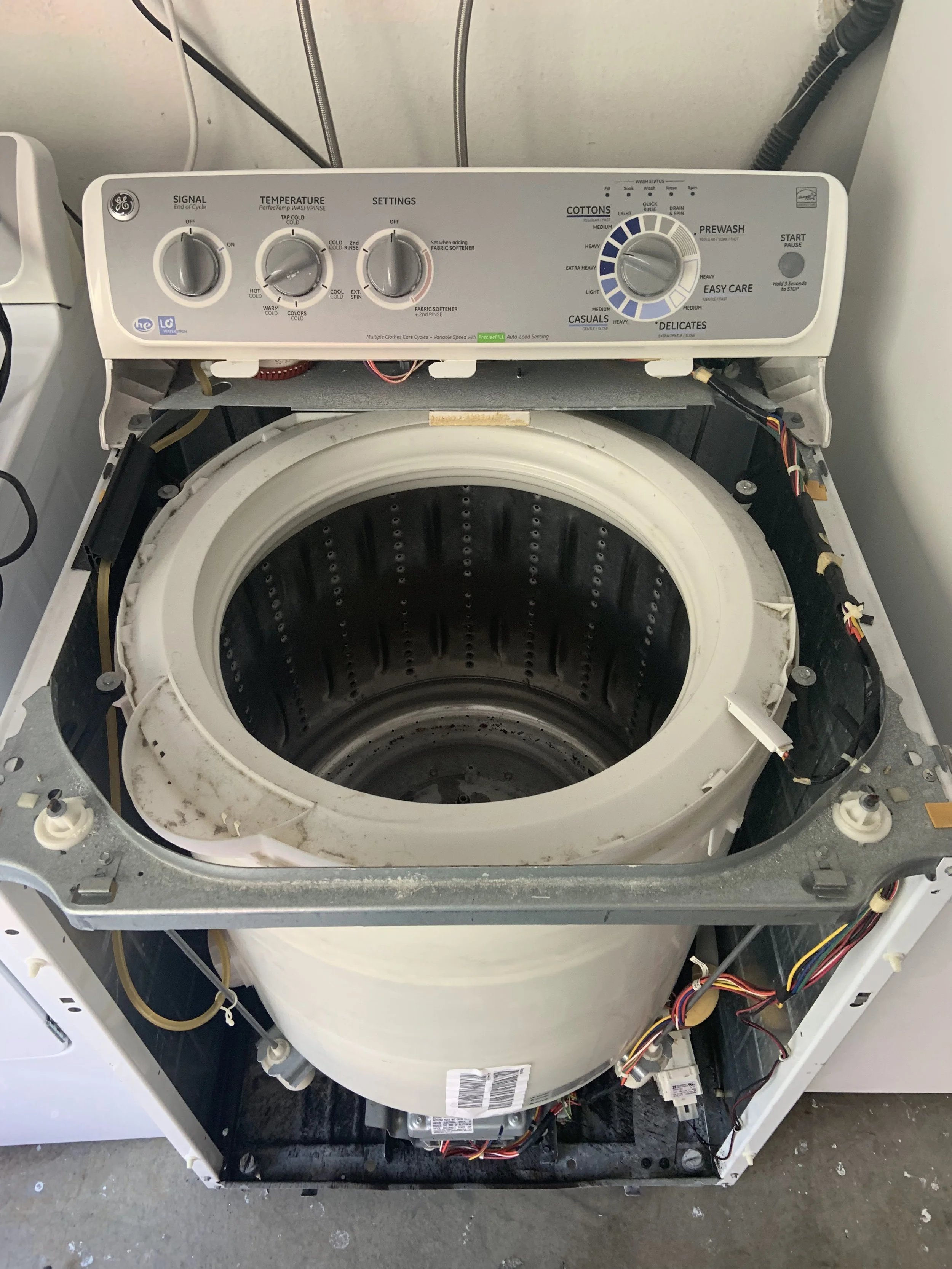
Transmissions, drain pumps, suspension and lid switches, rather than gaskets and boards. Neither type is better; they just break in different places, and it is worth knowing which set applies before anyone talks about parts.
What a Spokane laundry room adds to the job
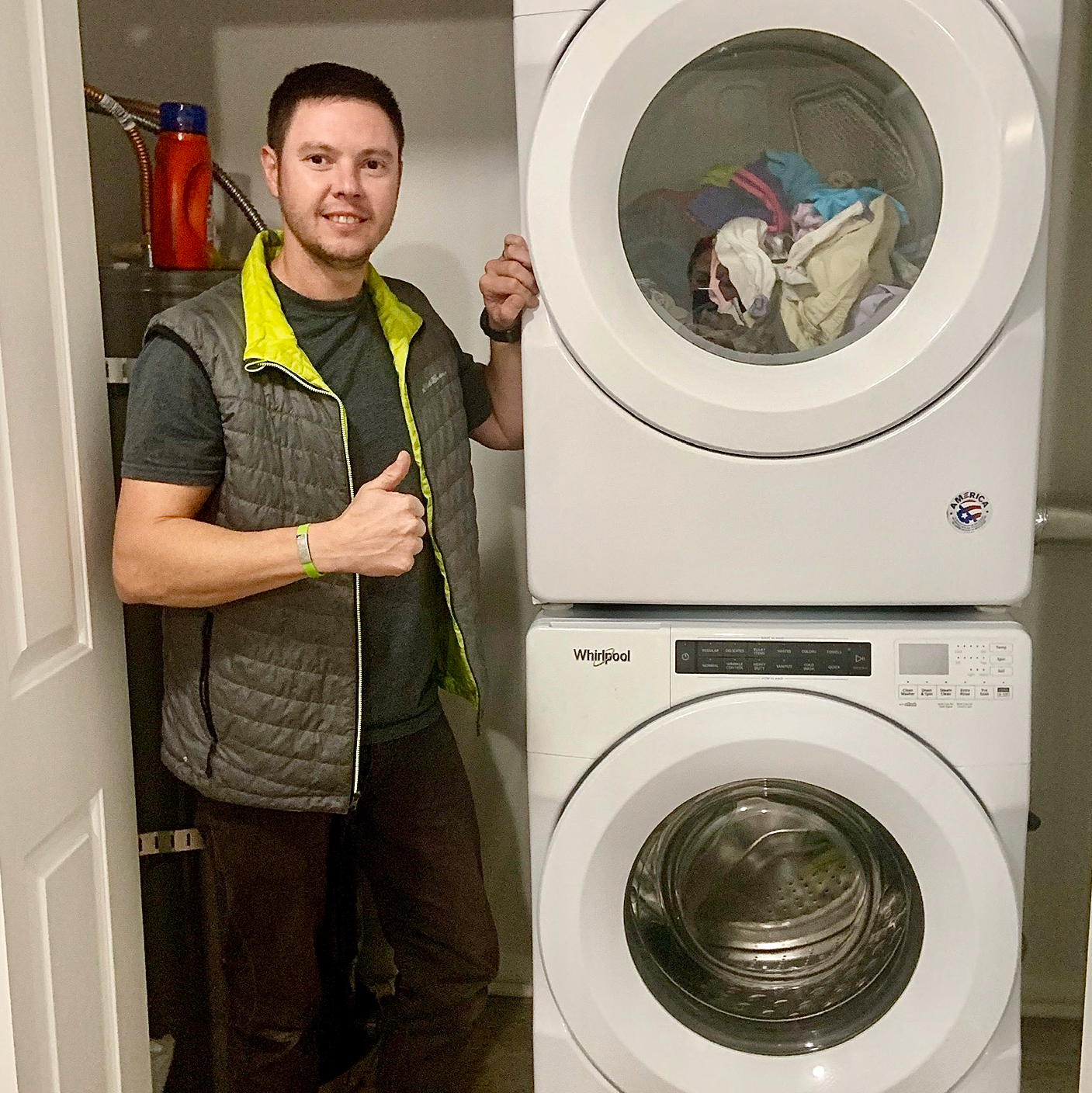
Two things shape washer calls here. The first is access. Stacked washer and dryer units in closets are common here, and reaching the washer sometimes means bringing the dryer down first, which occasionally needs a second person. Mentioning it on the phone means the visit gets planned around it rather than discovered on the doorstep. The second is parts. Local counter stock for appliance parts is thin, so anything the local suppliers do not have comes from out of town, and you are told what that means for timing before anything is ordered. Drain pumps and door gaskets are common enough to ride on the van, which is why the phone questions further down this page are worth two minutes of your time: they decide whether the right part is already in the van when he arrives.
What this covers
What we do not do
Installation
Repairs only. New units are not fitted or plumbed in, and machines are not moved between homes.
Drop-off or in-shop repair
There is no shop and no bench repair. The washer is worked on where it stands, closet installations included.
Cleaning a washer from the inside
Doing it properly means stripping the machine down, which costs more than the result is worth. A cleaning cycle is the better answer, and that advice costs nothing.
Repair or replace?
A drain pump, a door gasket or a lid switch on a washer that is otherwise sound is an easy yes. Those are the repairs that put years back on a machine for far less than a replacement.
The one that reliably goes the other way is bearings on an older front loader. When a front loader’s bearings go, the repair is expensive enough that on a machine fifteen years old the honest recommendation is not to put that money into it. That advice is given even though it means turning down the work.
Between those two extremes sits the control board, where the diagnosis earns its keep. A confirmed board is often still worth doing on a newer machine, but usually not on an older one. That is the whole argument for confirming it instead of guessing.
The rule people find when they search this is that a repair costing more than about half a replacement means buy the replacement. What it misses on a washer is that the identical repair on the identical machine can be a yes or a no depending on how the rest of it has aged. A pump on a five-year-old front loader and a pump on a fifteen-year-old one buy you very different amounts of time. That is why the answer comes after the diagnosis rather than before it.
What it costs
It covers travel, inspection, and the diagnostic time needed to confirm a fault rather than assume it, which on a washer is the difference between a pump and a control board. It applies to the repair if you go ahead, and stands on its own if you decide not to.
After that, what moves the price on a washer is which part has failed and how much of the machine has to come apart to reach it. A drain pump on an accessible machine and a bearing job on a stacked front loader in a closet are not comparable work. Front loading and top loading machines also carry different part costs for the same symptom.
The price comes before the work, and if something unexpected arises once the panel is off, the job stops and you are notified.
How the visit goes
You talk to Sergei
There is a phone question for washers that narrows things down before anyone drives out: when it tries to drain, can you hear the pump running, is it humming, or is it completely silent? Those three answers point in three different directions.
He arrives with the likely parts
Drain pumps and door gaskets are common enough to carry. That is why a good share of washer calls finish on the first visit.
Diagnosis, then a price
Confirmed on the machine rather than assumed from the symptom, which matters above all when the suspect is a control board.
The repair, and what happens if a part has to come in
Nothing gets ordered without your approval on the part and the price, including discontinued parts. Original manufacturer parts come first. Parts and labor are warranted for 30 to 90 days as stated on your invoice.
changes the outcome
Why the phone call decides how fast your washer gets fixed
Washers are the appliances where a two-minute conversation most often changes the outcome. The reason is that the common failures produce overlapping symptoms, and the parts that fix them are different sizes, priced differently, and not all carried in the same quantities.
Take will not drain. If the pump is audibly running and moving nothing, that suggests an obstruction or a failed impeller. If it hums without turning, that suggests a seized pump. If it is silent, that points to something else entirely, possibly a control board or a lid switch that has stopped telling the machine to drain. Three answers to one question, three different parts, and only one of them is worth putting on the van before leaving.
The same applies to leaks. A front loader leaking partway through a cycle behaves differently from one leaking as soon as it fills, and the two point at different components.
None of this is a trick. It is why the model number is worth digging out before you call, and why a scheduled visit with the right part sometimes beats a same-day visit without it.
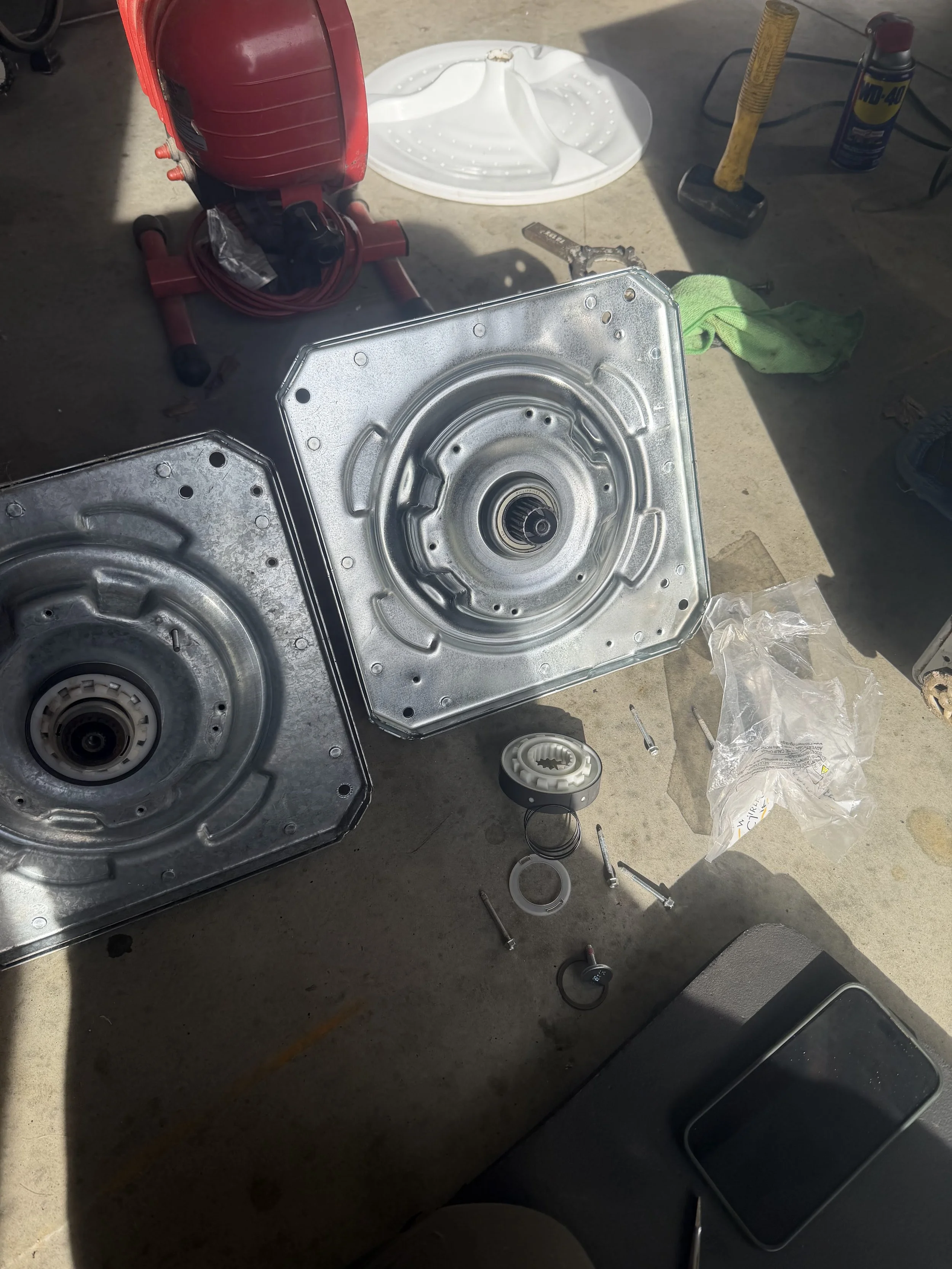
A recent example of it working. A customer got home from a camping trip, put a load on, and the machine stopped mid-cycle without draining. On the phone, he gave the brand and the model number and described what it was doing. That was enough to call it the drain pump before leaving. He went on the schedule; the pump had failed exactly as expected, and it was replaced on that visit. One trip, because the phone call did the diagnosis first.
Real customers, real repairs
“I have a Samsung washing machine that stopped spinning. It wasn't very old so I googled appliance repair and SD Appliance came up in the search. The reviews were good so I called. The service was outstanding. I received a call right away and was scheduled within 24 hours. Sergei diagnosed the problem within 15 minutes, and gave us options. What I appreciated most was his honesty and up front approach of the cost of repair vs. […]”
“He was very professional and explained exactly what I needed to have done and why. Told me that if it wasn't resolved with this repair he would make sure he returned and figured it out for me. Very honest with his expectations. […] I'm very happy with his prompt response to my call, same day and my machine is fixed.”
Common questions
Say on the phone that the door is locked with a load inside, because that detail tells him how urgent it is.
No preference here, and that is an honest answer rather than a dodge. They break in different places, which is the whole of the difference.
Yes. It sometimes needs a second person to bring the dryer down first, so mention it when you call, and the visit gets planned for it.
Not as a service. Doing it properly means taking the machine apart, which costs more than it is worth. Running a cleaning cycle is the better answer, and that advice is free.
All the major ones, including LG, Whirlpool, Samsung, Maytag, GE, Frigidaire and Speed Queen. No manufacturer authorization and no manufacturer script to follow.
Yes. There is more on the property management page.
No. Seven days a week at the same rate.
Where we go, and how to book
Washer repair across Spokane, the South Hill, Spokane Valley, Liberty Lake, Cheney, Mead, Colbert, Airway Heights, Medical Lake, and out to Coeur d’Alene, Post Falls, Rathdrum, and Hayden. Idaho is charged at the same rate, with no distance surcharge.