
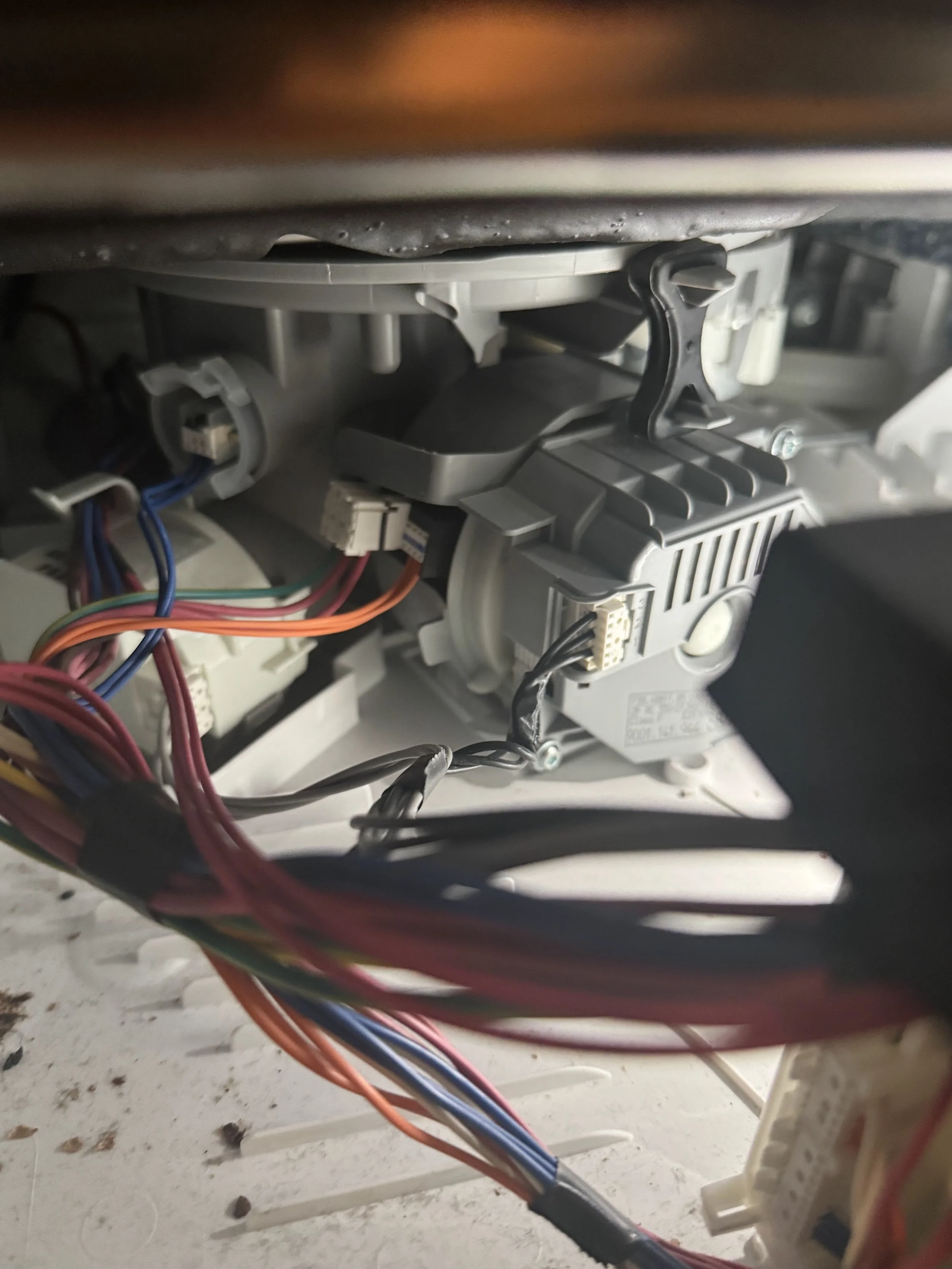
Refrigerator Repair in Spokane, Spokane Valley and North Idaho
Owner-Operated | Repairing Appliances Since 2013 | Open 7 Days, No Weekend or Holiday Surcharge | Licensed, Bonded and Insured in Washington
If your refrigerator has gone warm overnight, the freezer is holding, but the fresh food side is not, or you are standing in front of an open door with a week of groceries and no idea how long you have, you are on the right page.
SD Appliance is Sergei Dergunov, working out of the South Hill since 2020 and repairing appliances since 2013. He takes the call himself, asks the questions that narrow the fault down before he leaves, and carries the common refrigerator parts in the van. Built-in, French door, side-by-side, top and bottom freezer, and the small units in garages and offices.
Prices are set, quoted before anything is opened up, and nobody here earns more by finding you a bigger repair. One person, one rate, seven days a week.
What people are actually saying when they call
These are the situations people describe when they call. If one of them is yours, the next section explains what is behind it.
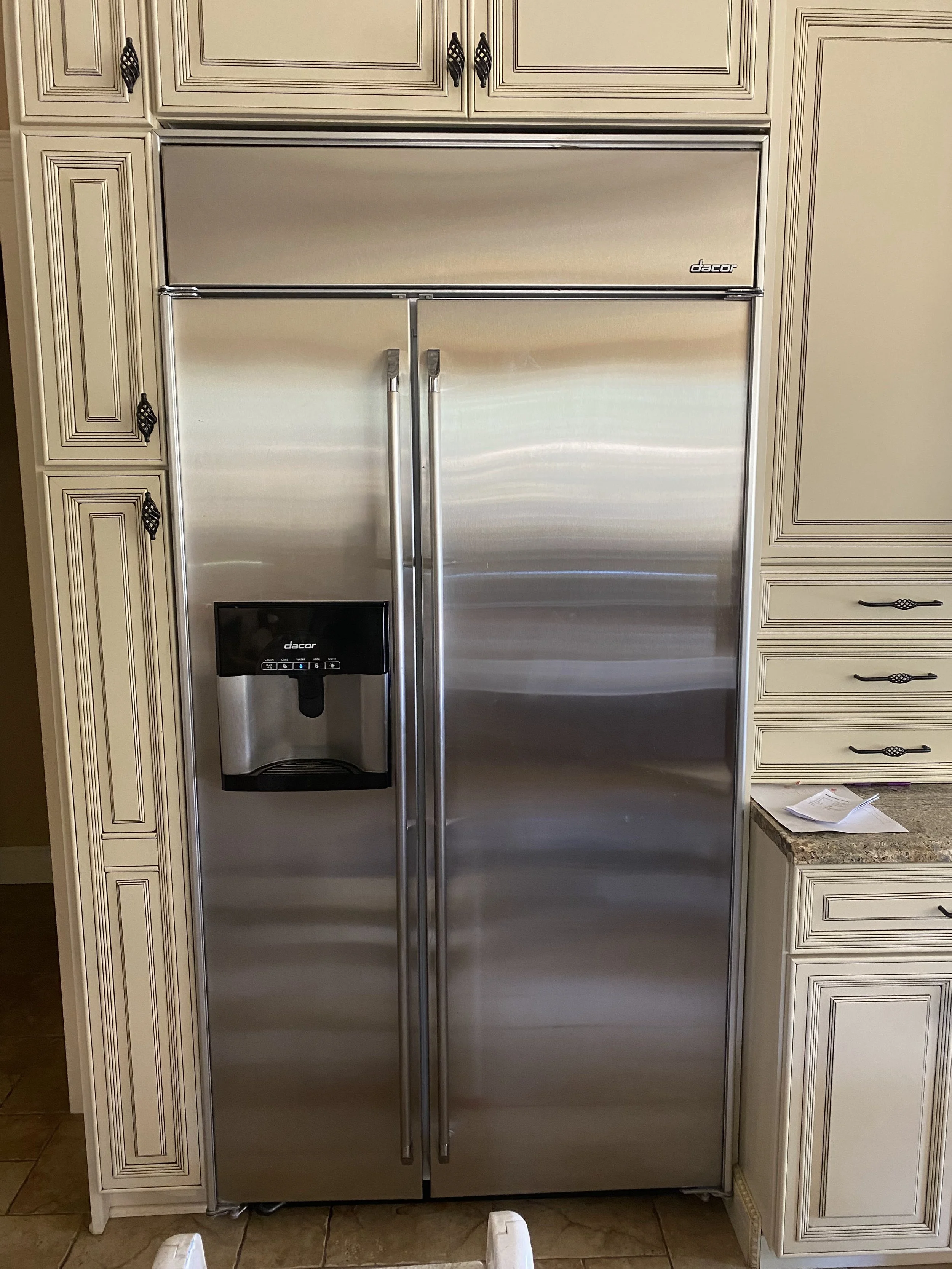
“My fridge stopped cooling.”
The single most common call, and the one with the widest range of causes behind it. Everything below starts here.
“The freezer is fine, but the fridge side is warm.”
A useful symptom, because it points away from the compressor. Cold is made in one place and moved to the other; when half the cabinet is cold, something in that transfer has stopped.
“It got warm overnight, and I do not know what to save.”
Food is the real cost of a refrigerator failure. Say on the phone how long it has been warm, because it changes which parts are worth bringing.
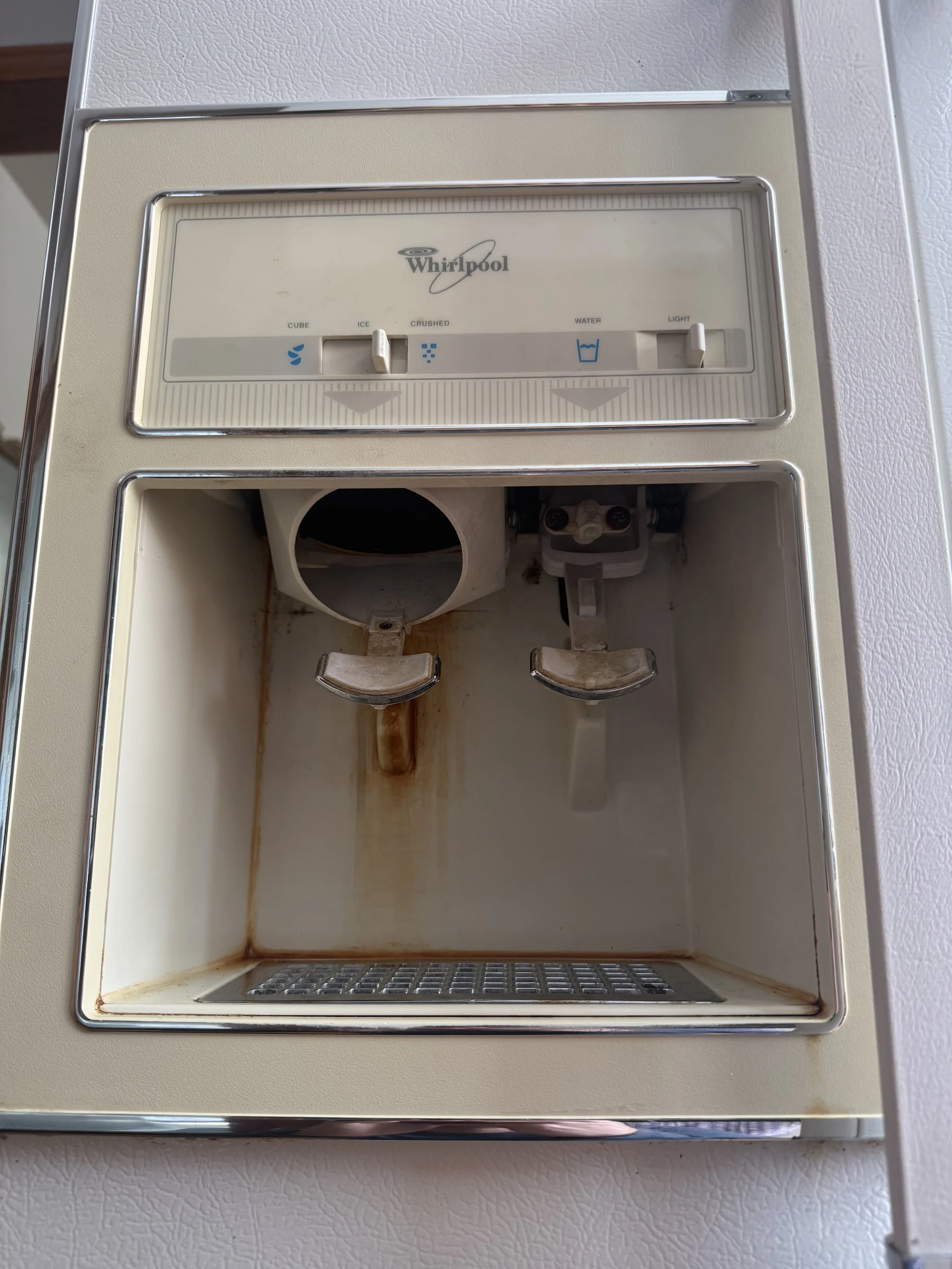
“There is water on the floor.”
Refrigerator leaks come from a handful of places, and the compressor is rarely one of them. Water lines, blocked defrost drains, and door seals account for the bulk of them.
“The ice maker stopped, but it is not urgent.”
People say it can wait, and often it can, which makes it a good candidate for a scheduled visit with the part already on the van.
“It is making a noise it never used to make.”
Usually a fan or a compressor starting to go. A changed noise is the earliest warning anyone gets.
“It runs constantly and never seems to shut off.”
People assume this is fine because the food is still cold. It is not. A refrigerator that never cycles off is working against something, usually a door that has stopped sealing or a condenser packed with dust and pet hair.
What actually fails
After more than a decade of these, the same handful of faults is behind the bulk of refrigerators that stop cooling in Spokane homes.
Defrost system failure: the slow one nobody notices
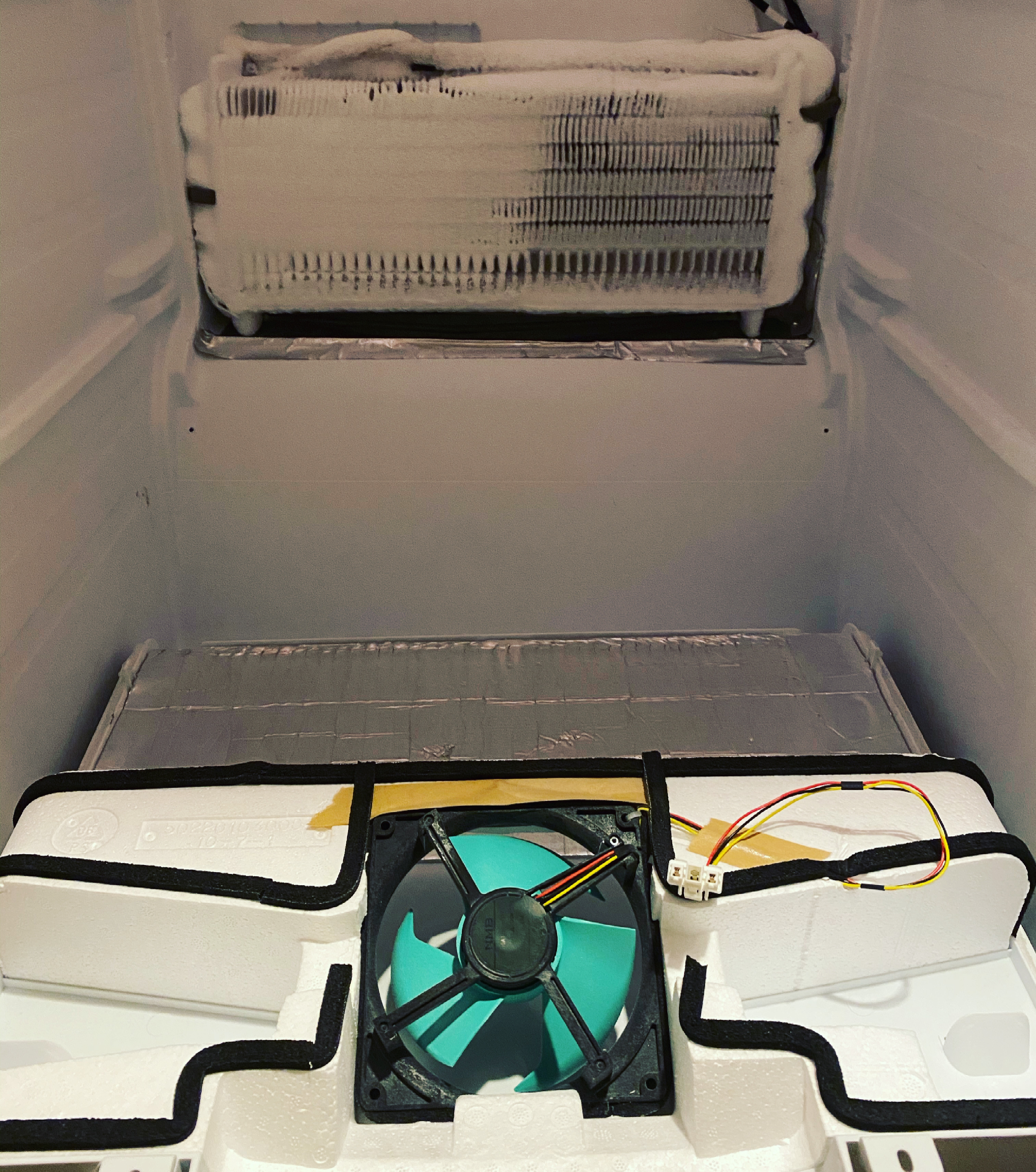
The one at the top of the list. Frost builds on the evaporator until air can no longer move through it, and it comes on gradually, which is why people describe the fridge getting worse over a week rather than failing outright. Heaters and thermostats are inexpensive; a control board is the part that changes the arithmetic, which is why it gets confirmed rather than assumed.
Evaporator fan: the one you can usually hear
The fan that moves cold air from the freezer compartment into the fresh food side. When it fails or seizes, the freezer keeps working, and the refrigerator does not, which is the symptom people describe second only to total failure. Often audible before it quits completely.
Compressor: the replacement-decision call
A failed compressor is sealed-system work, and that is not work done here: it needs EPA 608 certification and goes to a certified refrigeration technician. What you get from this visit is the diagnosis, which on most refrigerators is the point where the honest answer is to put the money toward a replacement rather than chase the repair.
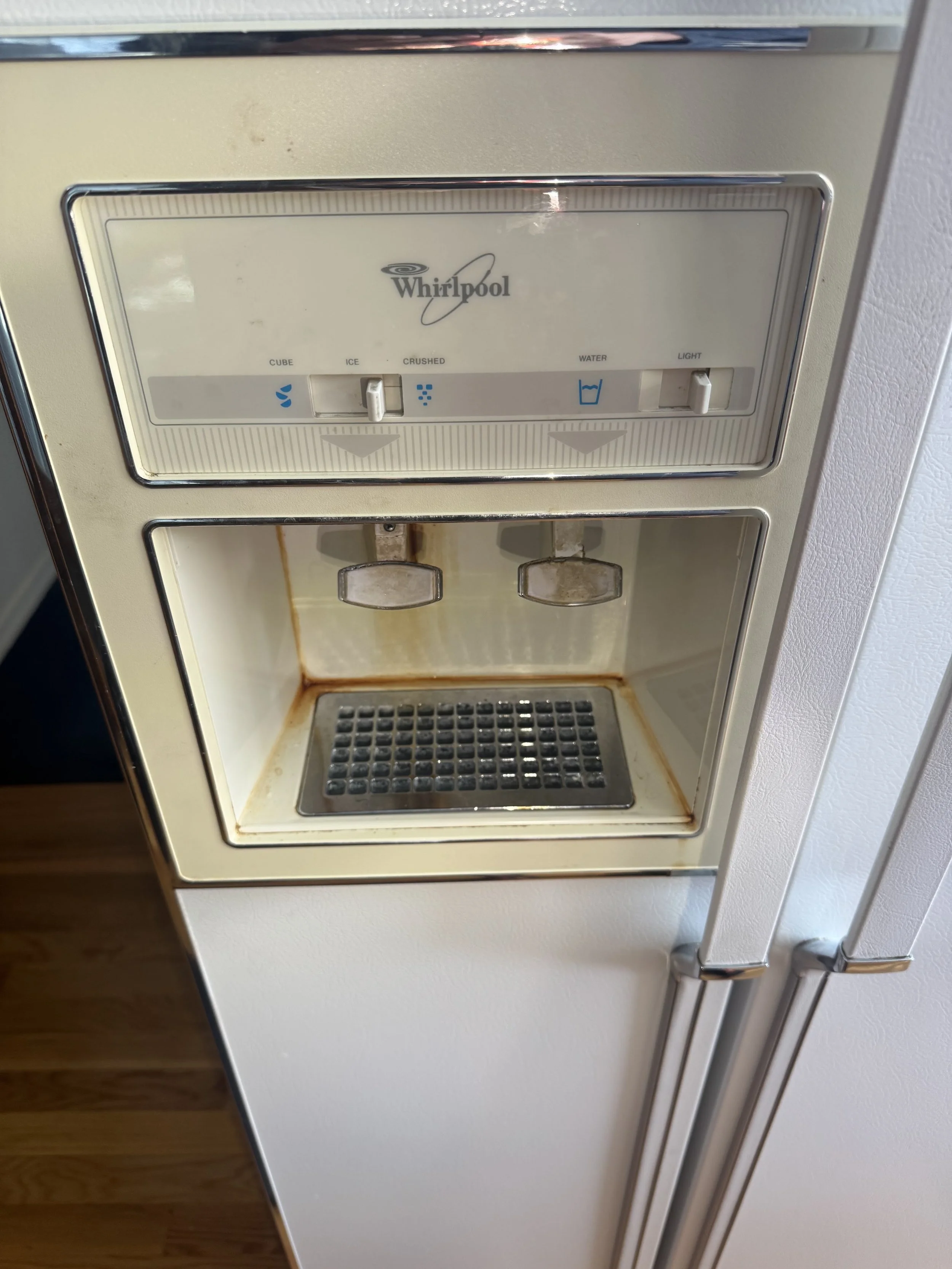
Ice makers and water dispensers: a steady share of the calls
The causes are the ice maker unit itself, a fridge running too warm to make ice properly, or a frozen water line. The ice maker unit is the one commonly carried; the other two are diagnosed on the visit.
Two Spokane facts that change a refrigerator call
Neither of them has anything to do with the appliance itself. The first is parts. Local counter stock for appliance parts is thin; anything the local suppliers do not have comes from out of town, and you are told what that means for timing before anything is ordered. That is why the questions on the phone matter so much on a refrigerator call: naming the failed part correctly is the difference between saving the food today and a second visit later in the week. The second is distance. Service runs well out from the South Hill in every direction, including across the state line, and Idaho is charged at the same rate as anywhere else. On a long drive for a repair that is not worth doing, that conversation happens on the phone rather than after the visit. One local pattern that does come from the machines themselves: garage refrigerators are common, and a Spokane garage in January is a harder place to keep one running than a kitchen.
What this covers
What we do not do
Sealed-system and refrigerant work
We do not hold EPA 608 certification and do not open sealed systems. Compressors, evaporators, and anything involving refrigerant go to a certified refrigeration technician, and you get the diagnosis either way.
Installation
Repairs only. New units are not installed and existing ones are not moved or hauled away.
Drop-off or in-shop repair
There is no shop and no bench repair. All work is done in your home, on the refrigerator where it stands.
Commercial refrigeration
No walk-ins, display cases or restaurant refrigeration. Residential units in rental properties are fine.
Repair or replace?
The honest split, and it is his own estimate rather than a statistic: about eight times out of ten, depending on what has failed, a refrigerator that has stopped cooling is worth repairing. A fan, a defrost heater, a control board, or a door seal are all repairs that cost far less than a new appliance and buy years on a machine that is otherwise sound.
The cases that go the other way tend to share three things: the unit is older, the brand has a record of parts becoming hard to source, and the failure suggests more is coming. When those line up, a replacement is the better use of the money, and that is what gets said, even though it is not what pays for a repair.
The way it gets put on the phone: if it were his refrigerator, would he spend it?
What it costs
It covers travel, inspection, and the diagnostic time a refrigerator needs, which is more than most appliances because the same symptom has so many possible causes. It goes toward the repair if you go ahead, and it stands on its own if you decide not to.
After that, refrigerator repair prices vary more widely than any other appliance here. What drives them is the failed component, how much disassembly it requires, what the part costs, whether it is still made, and whether the unit is built-in or freestanding. A fan on an accessible freestanding refrigerator and a control board buried in a built-in column are not the same job and should not be priced the same.
You get the number before the work starts. If something unexpected turns up once a panel is off, the work stops, and you are told before anything is added.
How the visit goes
You talk to Sergei
No call center and no dispatcher. Tell him the brand, the model number if you can find it, and what the refrigerator is actually doing, and those questions usually narrow the fault before he leaves.
He arrives with the likely parts
Common refrigerator parts ride on the van, which is why many of these are finished on the first visit. This is also why a scheduled visit sometimes beats a same-day one: an extra day can be the difference between one trip and two.
Diagnosis, then a price
The fault is confirmed on site, not guessed at, and the price follows the confirmed fault rather than the symptom.
The repair, and what happens if a part has to come in
Nothing gets ordered without your approval on the part and the price, including discontinued parts. Parts and labor are warranted for 30 to 90 days as stated on your invoice.
one symptom
Why the diagnosis matters more on a refrigerator than on anything else
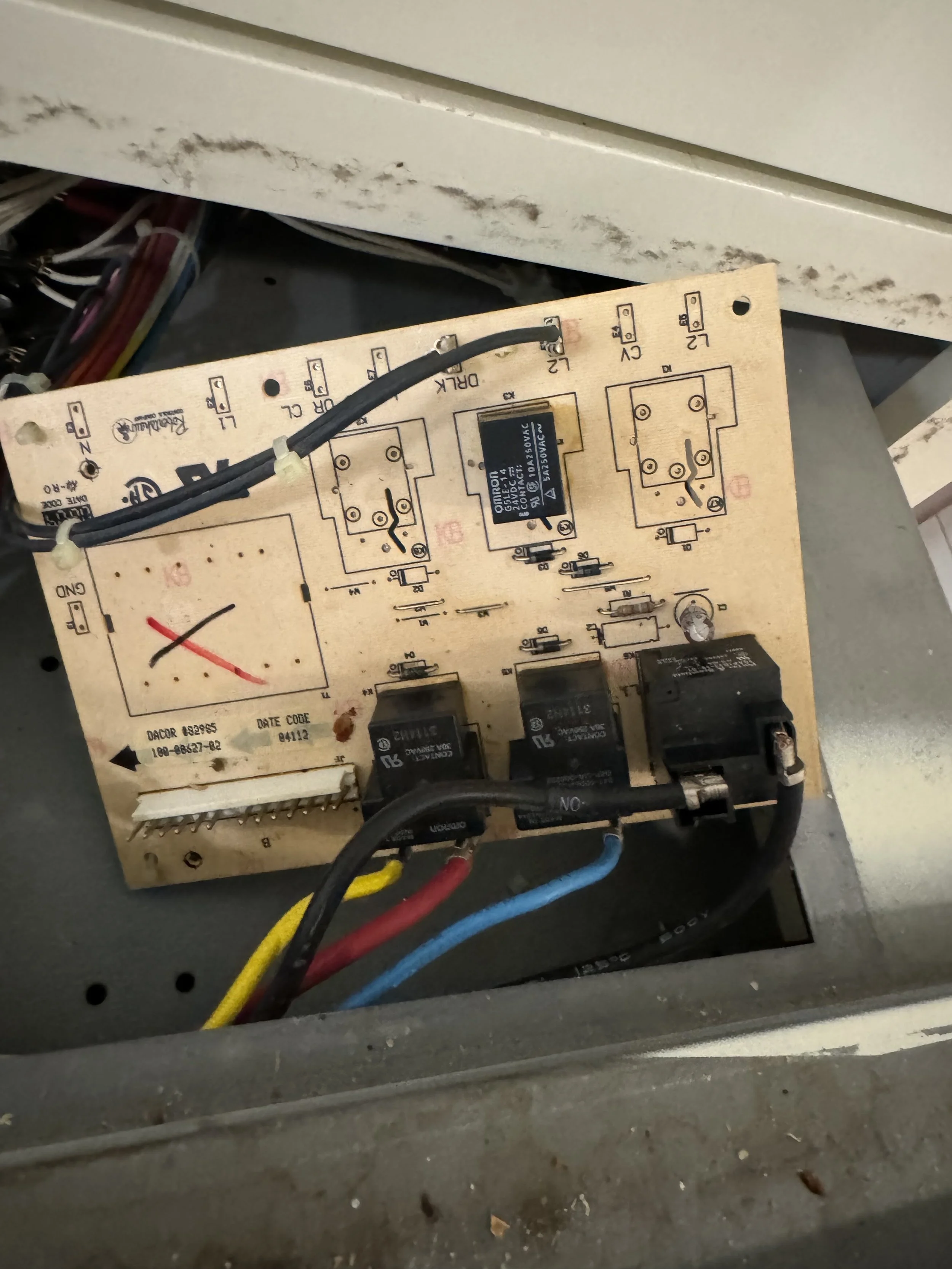
Every refrigerator failure produces the same headline symptom: the food is not cold. Underneath it the cause can be a defrost heater, a thermostat, an evaporator fan, a control board, a door seal or a compressor, and the cost of those runs from an inexpensive sensor to more than the appliance is worth. No other appliance has that spread.
The trap is that guessing is cheap and being wrong is expensive. Replace parts down that list in order, and you can spend a great deal before reaching the actual fault. That is how a repair bill gets bigger than the appliance is worth.
The way to avoid it is to read the machine before touching it. Which compartment is cold tells you whether cold is being made or only moved. Whether the compressor is running, and whether it is running constantly, separates a cooling problem from an airflow problem. Frost pattern on the evaporator points at the defrost system. Several years spent wiring and troubleshooting buildings before ever opening an appliance is why that sequence comes first, and the parts order comes second.
The question worth asking whoever you call: before you order a part, what is the machine doing that makes you confident it’s the right part?
Real customers, real repairs
“Sergei troublshot out fridge because it continued to not defrost no matter what we did. He deduced it was the control board and was able to get the part and fix it quickly. Sergei was professional, had great communication, and great service! We would have Sergei repair our appliances again if needed!”
“He asked me about the problem I had with my refrigerator. I told him that my led lights went out. He came to my house and figured out the issue within minutes. The problem was one light went out, so they all go out. He showed me which light to replace and how to get it out without damaging anything. He gave the option to order the light and come back and install it for another service fee. Or give me the part number and store I could buy it and replace it myself. I chose to buy the light myself and install it. Thank you for looking out for my best interest by saving me money.”
Common questions
Cold is still being made, and something has stopped moving it. The usual causes are the evaporator fan and the defrost system, and both are repairs rather than replacements.
Keep the door shut, and say how long it has been warm when you call. It is the detail that changes which parts get loaded.
More often than not. Age, brand, and parts availability are what push it the other way. Longer answer on the repair or replace page.
Yes, including built-in columns and cabinet-depth units. They take longer to access, and the parts cost more, and both are in the quote rather than discovered afterward.
All the major ones, including LG, Whirlpool, Samsung, Maytag, GE and Frigidaire, plus Sub-Zero, Thermador, Viking, Bosch and Miele on the high-end side. No manufacturer authorization and no manufacturer script to follow.
Common refrigerator parts ride on the van. Local counter stock for appliance parts is thin, so anything less common comes from out of town, and you are told what that means for timing before anything is ordered.
No. Seven days a week at the same rate.
Where we go, and how to book
Refrigerator repair across Spokane, the South Hill, Spokane Valley, Liberty Lake, Cheney, Mead, Colbert, Airway Heights, Medical Lake, and out to Coeur d’Alene, Post Falls, Rathdrum, and Hayden. Idaho is charged at the same rate, with no distance surcharge. On a long drive for a repair that is not worth doing, that gets said on the phone before anyone gets in a van.