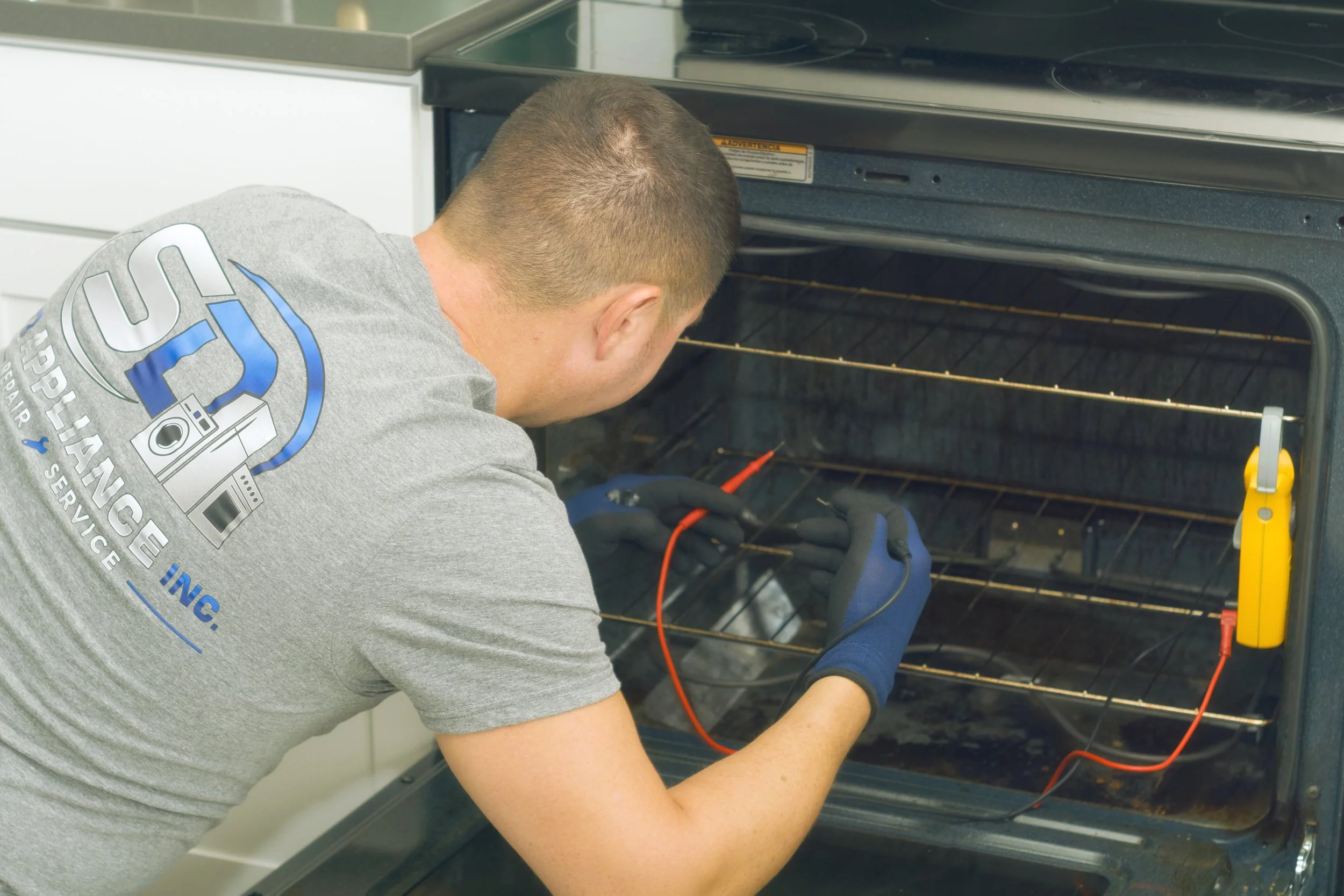
Oven Repair in Spokane, Spokane Valley and North Idaho
Owner-Operated | Repairing Appliances Since 2013 | Open 7 Days, No Weekend or Holiday Surcharge | Licensed, Bonded and Insured in Washington
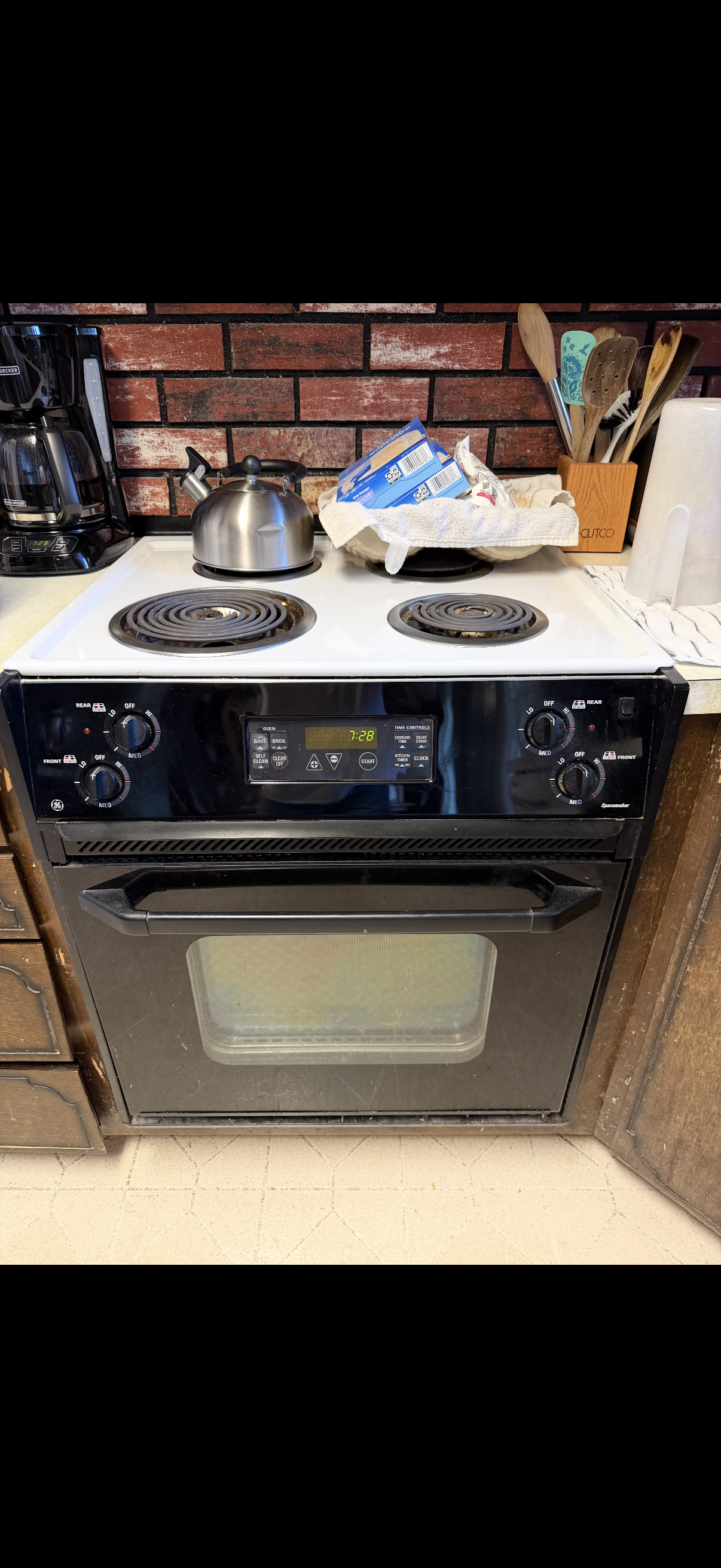
If your oven will not heat at all, if it heats but everything comes out wrong, or if the igniter clicks and clicks without lighting, you are on the right page. Wall ovens, double ovens, built-ins, and freestanding ranges, gas and electric, including convection units.
SD Appliance is Sergei Dergunov, repairing appliances since 2013 and working from the South Hill in Spokane since 2020. Ovens are work he genuinely enjoys, and he is straightforward about why: they are a diagnostic challenge, and because built-ins are expensive and hard to replace, they are good work for a repair business. Both halves of that are true, and the second one is why a built-in oven almost always deserves a proper diagnosis before anyone talks about replacing it.
If you are reading this in November with people coming on Thursday, say so when you call. That week gets its own answer further down.
What people are actually saying when they call
These are the situations people describe when they call. The next section explains what is behind each one.
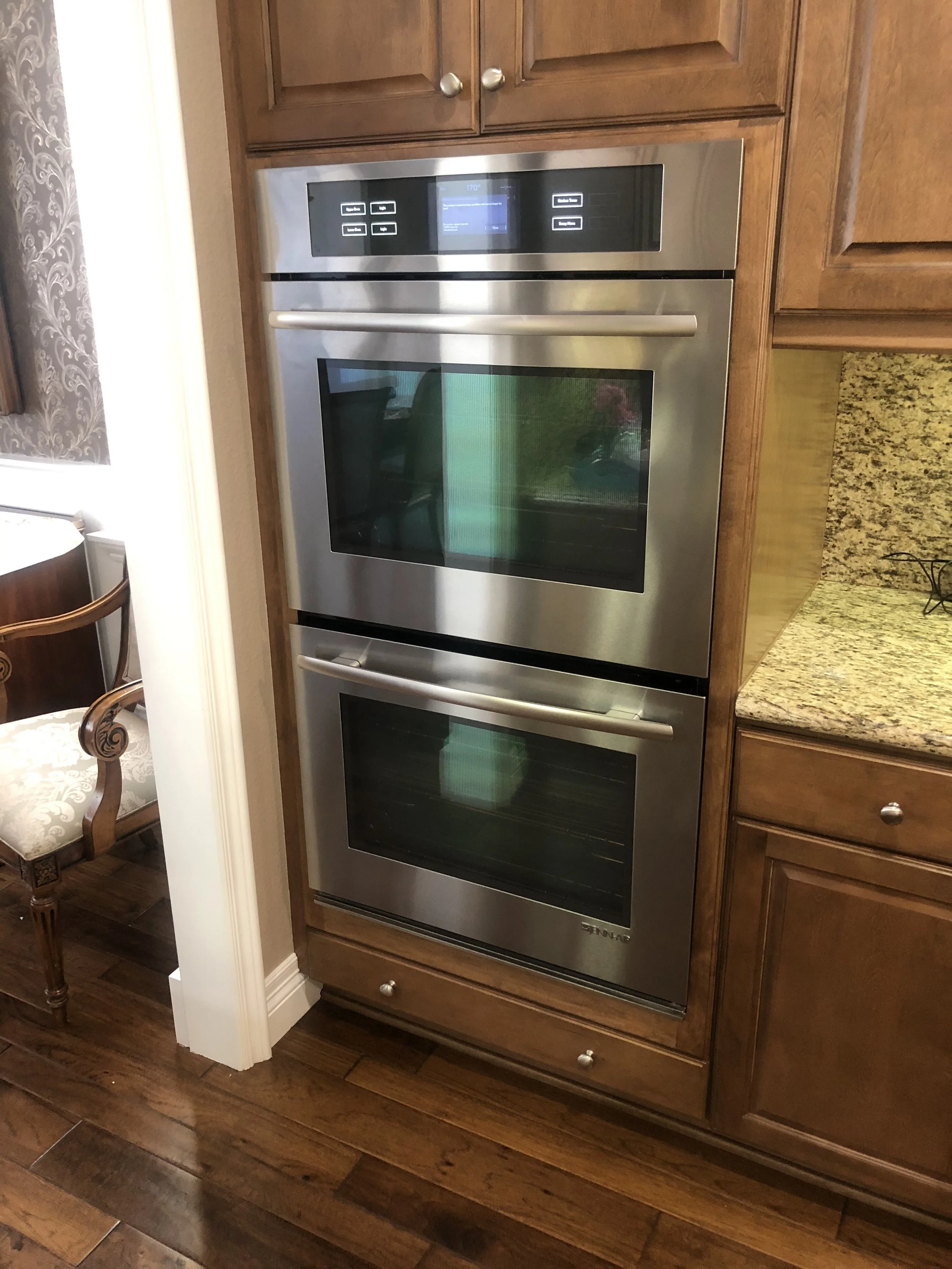
“The bake element is not working.”
The most common oven call there is. The broiler often still works, which is what tells people it is the bake side specifically rather than the whole appliance.
“It clicks, but it will not light.”
A gas oven, and a very specific fault. The clicking is the igniter trying.
“It runs hot. Everything is burning.”
Or it runs cold and nothing browns. The honest answer on calibration is below; it is worth reading before anyone spends money on it.
“My oven died, and family arrives Thursday.”
The pre-Thanksgiving call, and it happens every year. There is a straightforward answer below on what can and cannot be promised during that week.
“It is a wall oven, and I do not know how anyone would get at it.”
Built-ins have to be removed from the cabinet before most parts can be reached. That is a technique question rather than an obstacle.
“It died right after I ran the self-clean cycle.”
A common sequence, and a bad one to discover the week before the holidays. Self-clean drives the oven far hotter than cooking ever does.
“There is a code on the display.”
Read it aloud on the phone, along with the brand and model. Error codes are one of the few times an appliance tells you what is wrong in its own words.
“It bakes unevenly. One side scorches.”
Different from an oven that runs hot overall. Uneven baking points at the convection fan or a temperature sensor reading wrong, rather than at the element.
“There is a smell of gas.”
This one is not a repair call first. Leave, and ring the gas company. That is the only correct answer, and it is the same one you would get on the phone.
What actually fails
Ovens split cleanly between gas and electric, and each has a fault that dominates.
Gas ovens: the igniter, and it is not close
On gas ovens, in his experience, the igniter accounts for the large majority of no-heat calls. It is a known part and a known repair. A weak glow-bar igniter shows up differently: long preheat, delayed ignition, or a bar that glows without the gas ever lighting. The click-click-click-no-flame pattern is a spark ignition system instead, and the fault is usually the spark module, an electrode or moisture across a switch.
Electric ovens: the element, then the relay or the board
On electric ovens, it is the heating element first. When the element tests good, the next places to look are the relay and the control board, which is where the diagnosis matters, because a board is the expensive part on an oven and a relay is not.
Temperature accuracy: the one calibration will not fix
Ovens that run hot, cold, or unevenly trace back to the element itself, the control board relay, or a temperature sensor reading wrong. Calibration is worth mentioning because people ask about it constantly: sometimes it helps, more often it does not. If the element or the relay is the cause, adjusting a calibration setting is treating a symptom.
Doors, hinges and glass
Hinges that sag, doors that stop sealing, glass that has cracked. A door that no longer seals makes a healthy oven look like it has a heating fault, so it gets checked before anyone concludes the element has failed.
The Spokane oven year, and what it means for parts
Ovens have a season here, and it runs in both directions. The week before Thanksgiving brings a rush every year and gets scheduled around. Through the summer, the calls change character, because people cook outside, so an oven that fails in July is rarely urgent to the person who owns it. The other local fact worth knowing is about parts. Local counter stock for appliance parts is thin; anything the local suppliers do not have comes from out of town, and you are told what that means for timing before anything is ordered. Igniters and elements are common enough to ride on the van, which is what makes a same-week oven repair possible in November. Anything beyond those two, in that week, depends on what the supplier has on the shelf. Ask which situation you are in on the first call.
What this covers
What we do not do
Installation
Repairs only. A new oven is not supplied or fitted into the cabinetry, though an existing one is removed and refitted as part of a repair.
Drop-off or in-shop repair
There is no shop and no bench repair. A built-in comes out of the cabinet, gets worked on, and goes back in, all in your kitchen.
Commercial ovens
No restaurant ranges, deck ovens or commercial convection units. Residential ovens only, including the pro-style ranges fitted in domestic kitchens.
Repair or replace?
Ovens are among the strongest appliances to repair, and built-in ovens are the strongest of all. The reason is arithmetic rather than sentiment: replacing a built-in wall oven means the appliance plus the fitting, and that total is usually well above what the repair costs.
Igniters and elements in particular are good value. They are known parts with known labor, and a working oven at the end.
Freestanding ranges are a closer call, because the replacement cost is the appliance alone, so the usual half-the-price-of-new test actually applies. On a built-in, that threshold almost never gets reached.
What tips either one is a control board on an older unit, especially where parts are getting hard to source. Igniters and elements almost never tip it.
What it costs
It covers travel, inspection, and the diagnostic time needed to separate an element or igniter from a relay or a board, which is the difference between a modest repair and an expensive one. It applies to the repair if you go ahead, and stands on its own if you decide not to.
What moves an oven price is the part and the access. An igniter on a freestanding gas range is a different job from a control board on a double wall oven that has to come out of the cabinet first. Built-ins carry more labor for the same part, and that shows up in the quote rather than as a surprise afterward.
The price comes before the work starts.
How the visit goes
You talk to Sergei
Tell him whether it is gas or electric, whether it is built-in or freestanding, and what it is doing. Not heating at all, heating unevenly, and clicking without lighting are three different repairs, and gas against electric changes the likely part before anyone leaves.
He arrives with the likely parts
Igniters and elements are the two parts that fail most and ride on the van, which is why many of these are one-visit.
Getting a built-in out without wrecking your floor
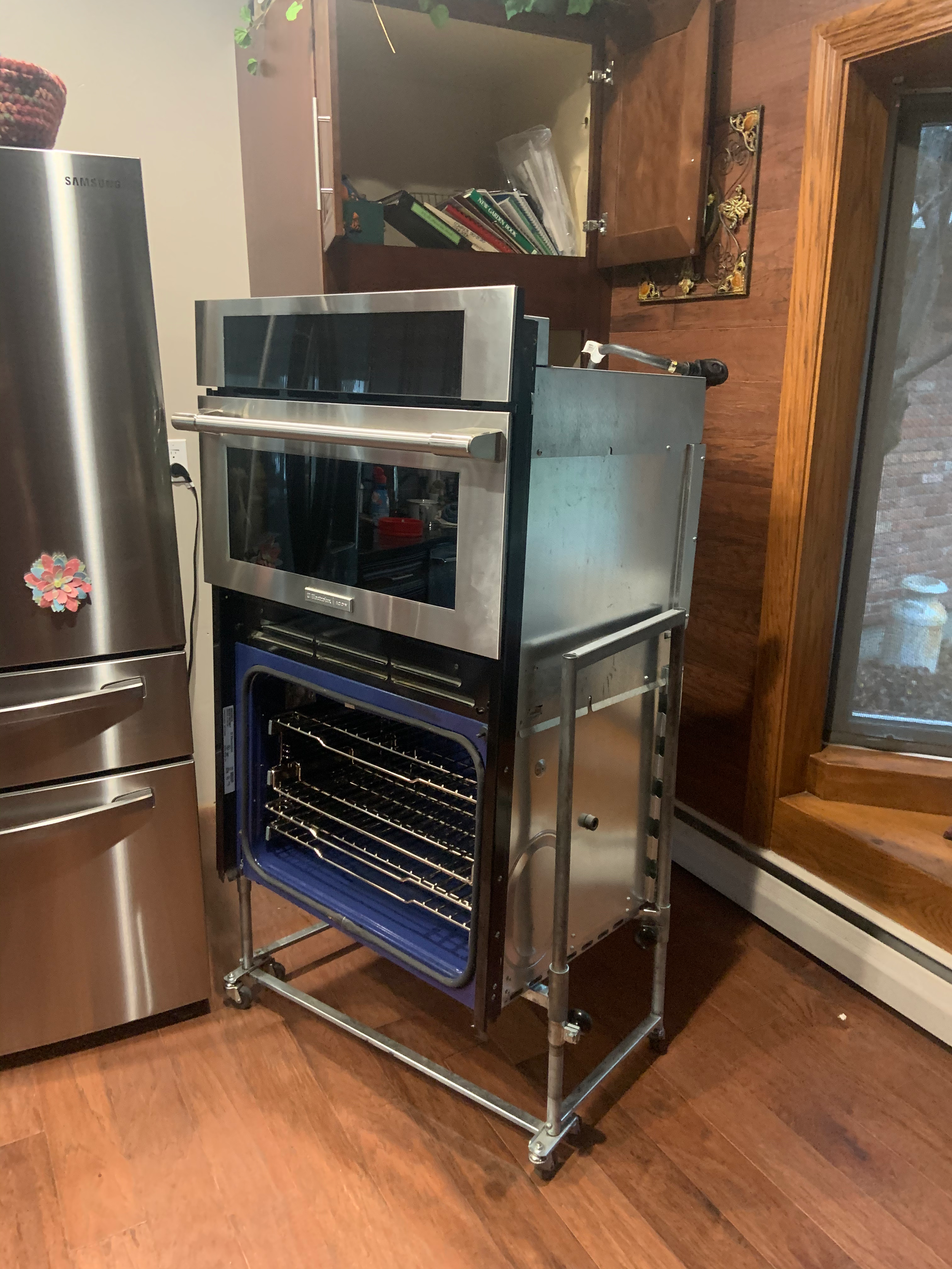
Most parts on a built-in sit behind or above the unit, so it has to come out of the cabinet. That is done with a special appliance dolly, which means it does not need a second person and it does not drag across the floor. Where the oven sits in a finished kitchen, protecting the floor is part of the job rather than an afterthought.
Diagnosis, then a price, then the repair
The fault is confirmed on the oven rather than assumed from the symptom, and you get the price before any work starts. Nothing gets ordered without your approval on the part and the price, including discontinued parts. Original manufacturer parts come first. Parts and labor are warranted for 30 to 90 days as stated on your invoice.
honestly
The Thanksgiving question, answered honestly
Every year the week before Thanksgiving produces the same call: the oven has died, people are coming on Thursday, and can it be fixed in time? The honest version is more useful than a promise.
The first step is a phone diagnosis. Brand, model number, gas or electric, and precisely what the oven is doing. On a gas oven that will not light, the answer is very likely the igniter. On an electric oven with no heat, very likely the element. Both are parts that are commonly on the van, and where that is the case, the repair is not waiting on a supplier.
Where it cannot be promised is when the part is not one of the common ones, or when it turns out to be a board, or when the supplier is closed. Local counter stock for appliance parts is thin; anything beyond that has to come from out of town. Nobody can talk a part into existence on a Wednesday afternoon, and being told that straight beats being told yes and let down on Thursday morning.
The practical advice, then. Call as early in that week as you can, and have the model number ready, because it is what makes an accurate phone diagnosis possible. Ask on that first call whether the likely part is on the van or has to be ordered. That answer is what tells you whether to plan on your own oven or somebody else's.
Real customers, real repairs
“My elderly in-law's 2 ovens went out on the same day, right before the holidays. We contacted several businesses, but no one could get to us for 2-3 weeks... or they didn't service their brand of ovens. I reached out to Serhiy and he responded immediately. He was so professional and really knew his stuff. He had good and bad news. Our ovens were not the problem, but we were having an electrical issue. […]”
“Sergei came out quickly and efficiently assessed the problem with my oven. He gave me the options available and then shared what he would do if it would have been his personal issue. The charge was very reasonable. I am happy with his work and would use him again. Thanks, Sergei!”
Common questions
Yes, including double ovens. They take longer because most parts require the unit to be removed from the cabinet, and that is done on a proper appliance dolly with the floor protected.
Leave, and call the gas company. That comes before any repair call, and it is the same answer you would get on the phone.
It is hard on it. Door locks, thermal fuses and control boards are what tend to give out during or after a cycle. Occasionally is fine; the week before a holiday is a gamble.
All the major ones, including LG, Whirlpool, Samsung, Maytag, GE and Frigidaire, plus Sub-Zero, Wolf, Thermador, Viking, Dacor, Bosch and Miele on the high-end side. No manufacturer authorization and no manufacturer script to follow.
Yes, and it is worth booking as one visit rather than two. On a freestanding range, they are one appliance; on a separate cooktop, they are two, and either way it is one trip. There is more on the range, stove and cooktop page.
Igniters and bake elements ride on the van. Anything less common is ordered, and the timing is covered above.
No. Seven days a week at the same rate.
Where we go, and how to book
Oven repair across Spokane and the South Hill, Spokane Valley, Liberty Lake, Cheney, Mead, Colbert, Airway Heights, Medical Lake and out to Coeur d’Alene, Post Falls, Rathdrum and Hayden. Idaho is charged at the same rate, with no distance surcharge.