Range, Stove and Cooktop Repair in Spokane, Spokane Valley and North Idaho
Owner-Operated | Repairing Appliances Since 2013 | Open 7 Days, No Weekend or Holiday Surcharge | Licensed, Bonded and Insured in Washington
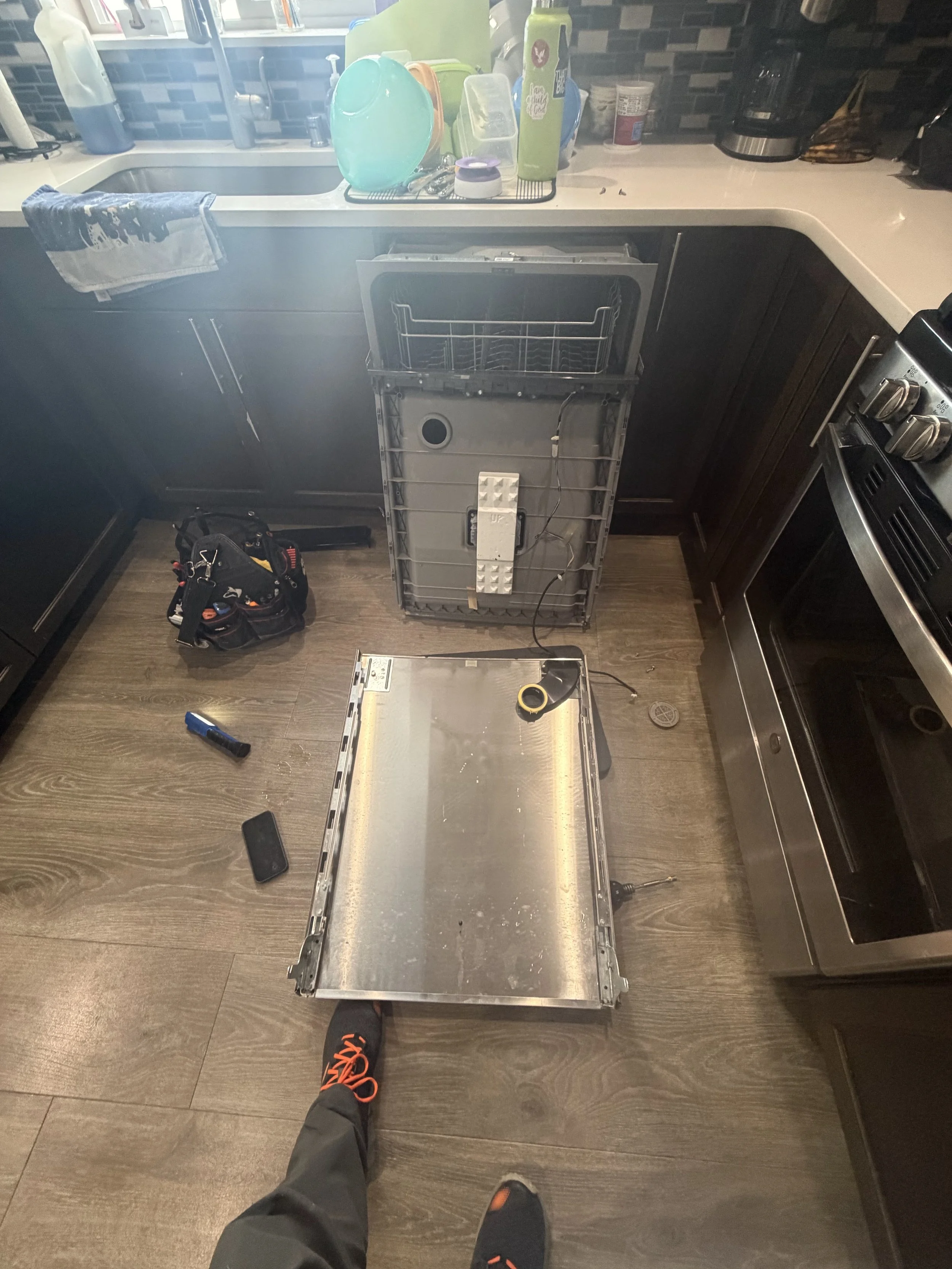
If one burner has stopped working, if a gas burner clicks and clicks without lighting, or if the indicator light comes on but the element never gets hot, you are on the right page. Those three are the calls that come in.
SD Appliance is Sergei Dergunov, working out of the South Hill since 2020 and repairing appliances since 2013. Gas, electric, and induction. Freestanding ranges, slide-ins, and cooktops dropped into a counter, and the range hood above it, which has its own page.
Cooking is the one appliance failure people work around rather than report, which is why so many of these calls arrive with one dead burner and three that still work. There is a good reason not to wait on it, and it is further down this page.
What people are actually saying when they call
These are the situations people describe when they call. If one of them is yours, the next section explains what is behind it.
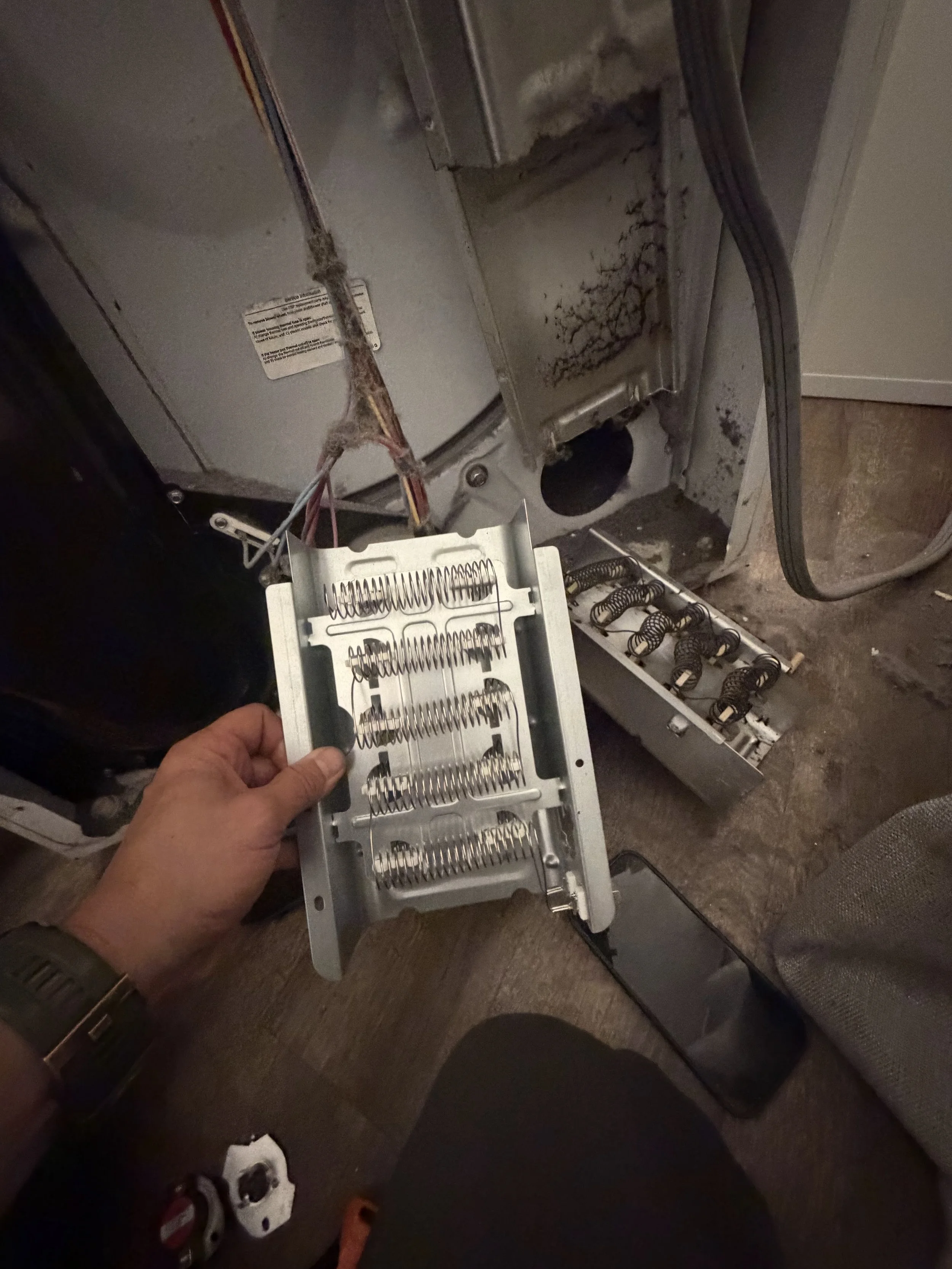
“One of my burners will not turn on.”
The single most common call on this appliance, and a useful one, because a range with one dead burner and three working ones has already ruled out most of the expensive causes.
“It clicks and clicks but never lights.”
A gas cooktop, and a specific fault. There is a free check worth trying before anyone drives out, and it is further down.
“The light comes on, but the burner does not heat up.”
An electric element or, more often, the switch behind it. Power is reaching the indicator and not the element.
“The bake side has stopped, but the cooktop still works.”
That is an oven fault rather than a cooktop fault, even though they live in the same appliance. There is a page for it on the oven repair page, and it is worth mentioning on the same call.
“The glass top is cracked.”
Worth a straight answer early. The glass is replaceable; whether it should be is a price question, and it is better to have it on the phone than after a visit.
“The whole range is dead.”
Different from one dead burner, it points elsewhere: the power supply, the main control board, or a wiring fault rather than any individual burner component.
“It is induction and one zone has stopped.”
Induction fails differently from gas and electric. The two parts that go are the power module and the cooling fan behind it.
“The fan above the stove has stopped.”
That is the range hood, not the range, and it has its own range hood repair page.
What actually fails
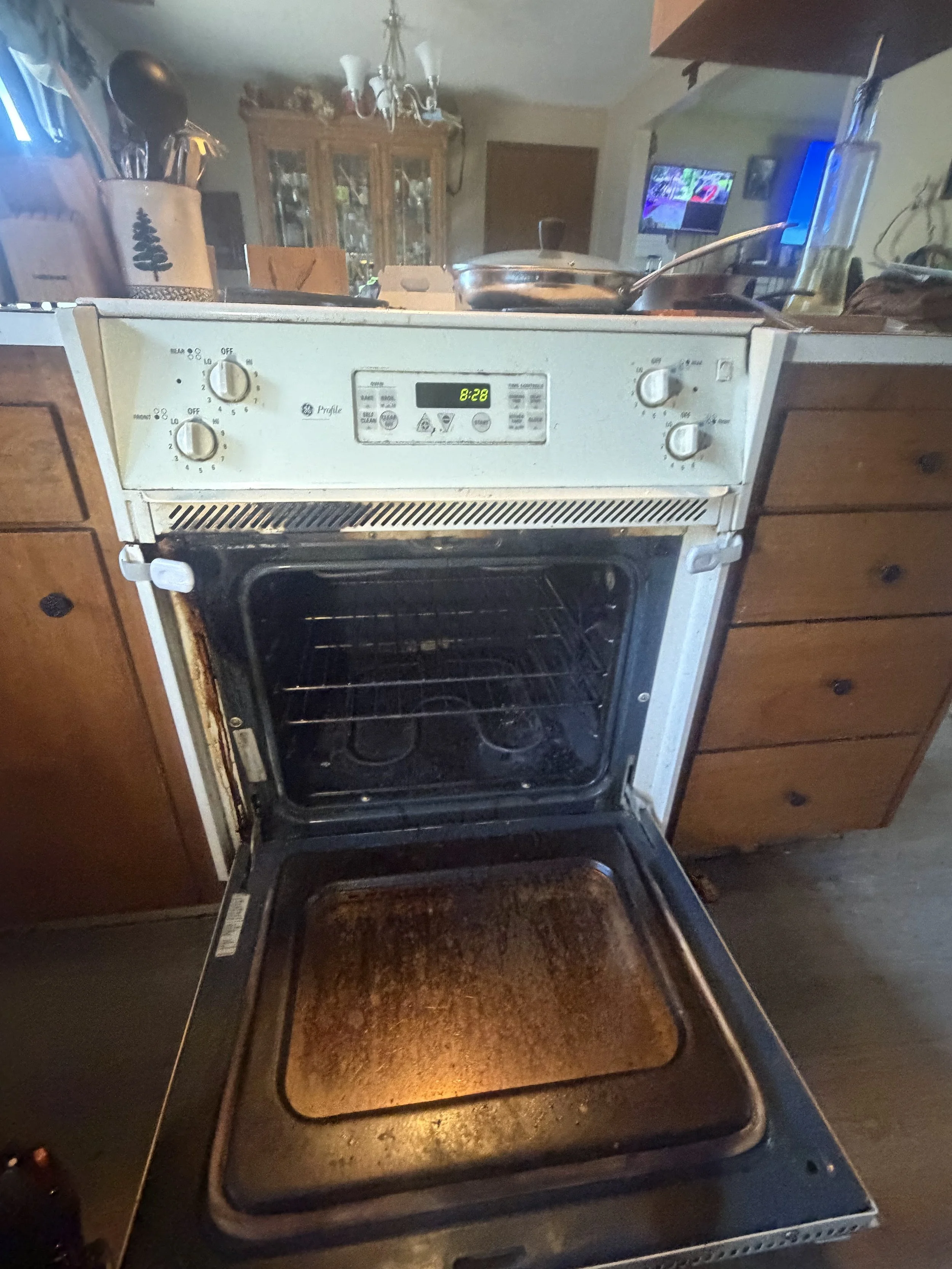
Gas, electric, and induction each break in their own way, and knowing which one you have narrows the part before anyone leaves.
Gas: the burner switch, the spark module, or the gas valve
Those three, in that order. If one burner will not light but the others spark, the fault is usually local to that burner. If nothing sparks anywhere, the spark module is the suspect.
Electric: the burner switch, then the element
The switch is the one people do not expect. An indicator light that works while the burner stays cold is a classic switch symptom, because the light and the element are on different sides of it. On coil ranges, the receptacle the element plugs into is worth checking too.
Induction: the power module or the cooling fan
Induction cooktops run their electronics hard and rely on a fan to keep them alive. When that fan fails, the module overheats and shuts down, which reads to the customer as a cooktop that works for a while and then quits. The module itself is the other failure.
Glass tops: what is repairable and what is arithmetic
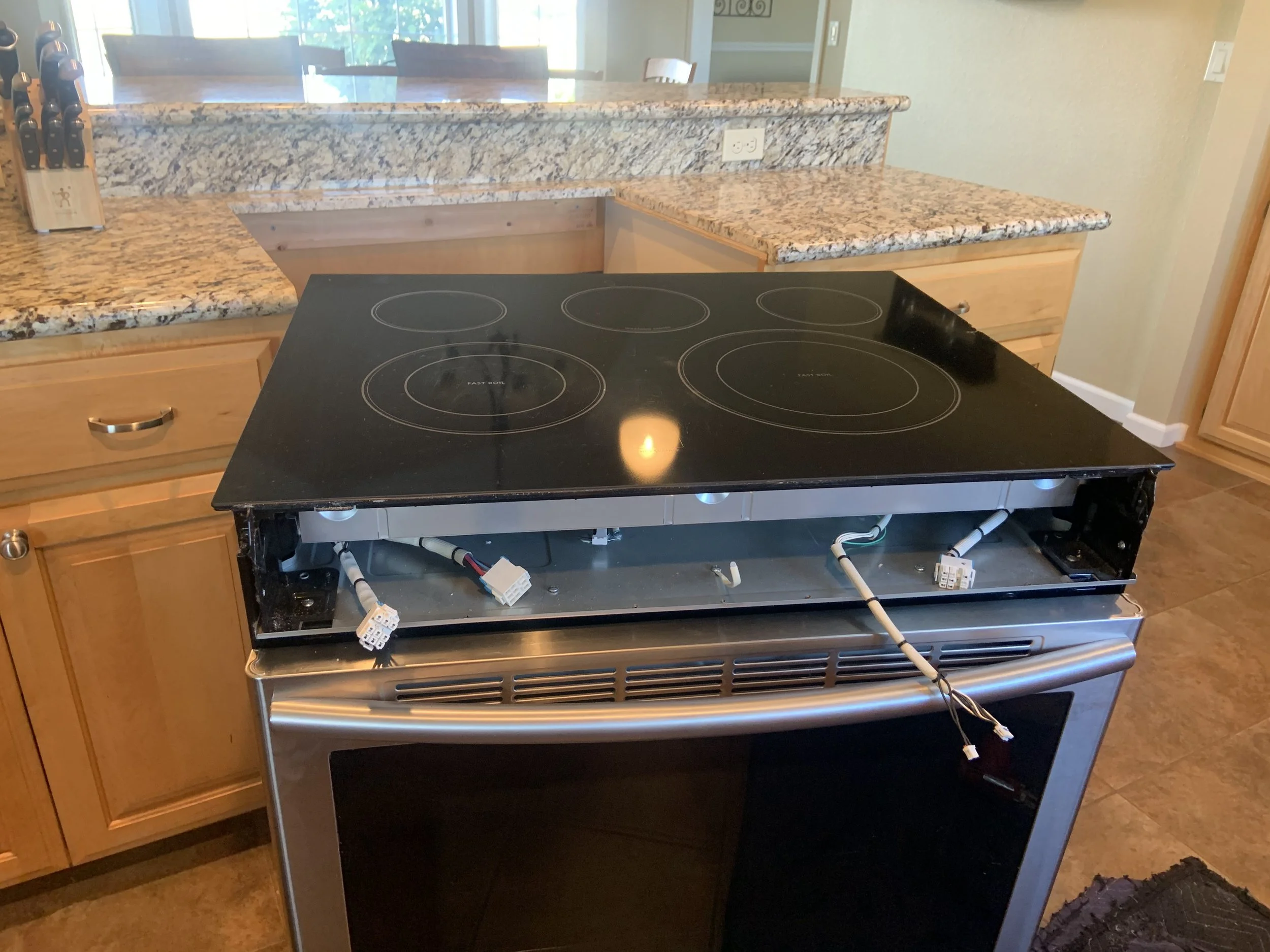
Everything under the glass is repairable, and so is the glass. The catch is the price: on some units, a replacement glass top costs about as much as a new appliance, and that is a conversation rather than a repair. Elements and switches underneath are a different matter and are ordinary work.
What Spokane adds to a cooking call
One seasonal pattern here is worth knowing. Through a Spokane summer, cooking appliance calls slow down. People stop wanting the house any hotter than it already is and move to the barbecue, so a range that fails in July is an inconvenience rather than an emergency, and it is a good moment to have the repair done properly. That reverses through the fall, and the oven side of it gets busy enough to have its own oven repair page. On parts, local counter stock for appliance parts is thin, so burner switches and igniters ride on the van, and anything less common comes from out of town, and you are told what that means for timing before anything is ordered. Model number matters more on this appliance than on most, because burner switches and spark modules are model-specific rather than universal. Service runs well out from the South Hill in every direction, including across the state line, and Idaho is charged at the same rate as anywhere else.
What this covers
What we do not do
Installation
Repairs only. New ranges, cooktops and hoods are not fitted, and no new gas line or ductwork is run.
Drop-off or in-shop repair
There is no shop and no bench repair. The range or cooktop is worked on where it stands, in your kitchen.
Commercial ranges and cooking equipment
No restaurant ranges, griddles or commercial cooking lines. Residential only, including the pro-style ranges fitted in domestic kitchens.
Repair or replace?
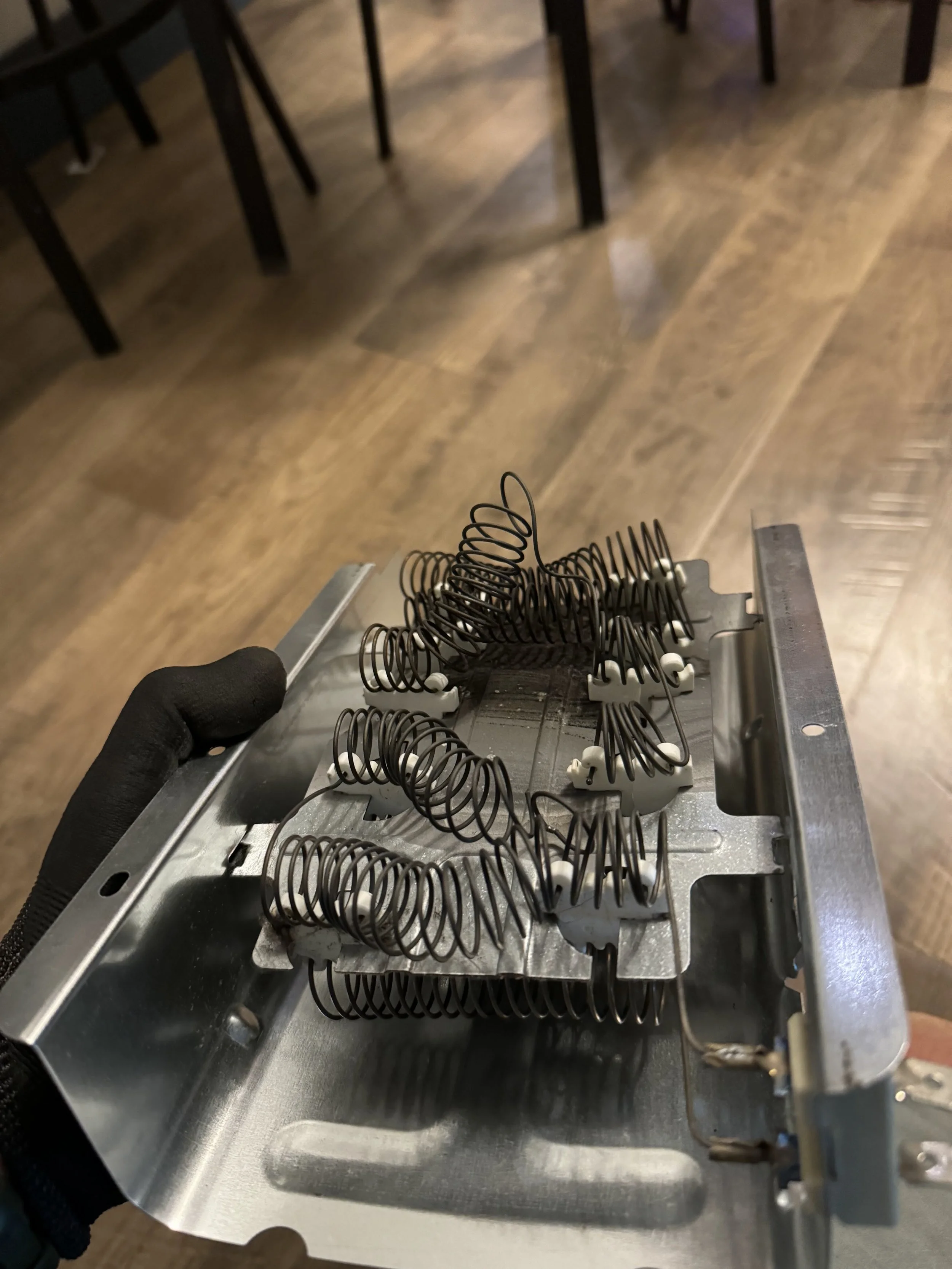
A burner switch, an igniter, a surface element, or a spark module is an easy yes on almost any range. They are inexpensive parts with known labor, and the appliance returns to full functionality.
The one that is a closer call is the glass top. His answer on it is the clearest: everything is repairable; it just depends on how much, and some glass costs as much as a new unit. Where that is the case, you will be told the number and left to make the call, rather than being talked into a repair that costs what a replacement costs.
A drop-in cooktop tilts further toward repair than a freestanding range does, for the same reason a wall oven does: replacing it means the appliance and the work of fitting it into the counter.
What tips it either way is a dead control board on an old machine, especially where parts are getting hard to source. On an old freestanding range with a dead board, the honest answer is usually a new range.
What it costs
It covers travel, inspection, and the diagnostic time needed to test a switch, a spark module or a valve rather than guess between them. It goes toward the repair if you go ahead, and it stands on its own if you decide not to.
After that, it comes down to which part failed and whether it is a common one. Burner switches and igniters sit at one end. Induction power modules and glass tops sit at the other.
You get the number before the work starts. If something unexpected turns up once the top is lifted, the work stops, and you are told before anything is added.
How the visit goes
You talk to Sergei
No call center and no dispatcher. Tell him gas, electric, or induction; whether it is a freestanding range or a cooktop in a counter; and how many burners are affected. One burner and all burners are two different repairs.
Have the model number ready
It matters more here than on most appliances. Burner switches, igniters, and spark modules are specific to the model rather than universal, so the model number is what makes it possible to arrive with the part.
Diagnosis, then a price
Confirmed at the machine before any number is quoted, because a burner that will not heat has several causes at several prices.
The repair, and what happens if a part has to come in
Nothing gets ordered without your approval on the part and the price, discontinued parts included. Burner switches and spark modules are model-specific, so the model number is what decides whether it is ordered or already on the van. Parts and labor are warranted for 30 to 90 days as stated on your invoice.
version
One dead burner, and why it is the cheapest call you can make
A range with one burner out and three that work is the most common version of this call, and it is worth explaining why that is the good version, because most people wait on it.
When one burner fails, and its neighbors do not, the shared components are already exonerated. The power supply is fine. The main control board is fine. On a gas cooktop, if the other burners spark, the spark module is fine. What is left is local to that burner: its switch, its element or igniter, its connection. Those are the inexpensive parts.
Wait on it, though, and the picture can change. A switch failing gradually can take the connection with it, and on a coil range a bad receptacle arcs and damages the element that plugs into it. What was a switch becomes a switch and an element. That is the case for calling on one dead burner rather than cooking around it for a year.
Two checks are worth doing yourself first, and both are free. On a gas burner that clicks without lighting, lift the cap off, reseat it squarely, and check the ports are not blocked with grease. A cap sitting slightly out of position will spark all day without lighting. On an electric coil, unplug the element and look at the receptacle for scorching.
If neither is it, the diagnosis is a test rather than a guess: a switch test on an electric range, a spark module or valve test on gas. Have the model number ready when you call, because on this appliance the parts are model-specific and there is no way to bring the right ones without it.
Real customers, real repairs
“What a great experience it was to work with Sergei from S D Appliance repair. He was knowledgeable, helpful, correctly diagnosed the issue with my range and ordered the needed part before coming to repair it. He repaired it so it works flawlessly now.”
“Although they weren't able to repair our range due to it's age and part being unavailable, we were so impressed with the quick response, same-day visit, honesty and professional attitude, they will be our first call if another situation comes up.”
Common questions
Yes, and whether it should be is a price question rather than a technical one. You will be given the number before anything is ordered.
One visit’s worth of diagnosis either way, because they are usually the same appliance. Whether both get fixed the same day depends on whether both parts are on the van. The oven side is covered on the oven repair page.
Yes. If the hood has stopped as well as the range, say so when you call, and both get looked at on the one visit.
All the major ones, including LG, Whirlpool, Samsung, Maytag, GE and Frigidaire, plus Wolf, Thermador, Viking, Dacor, Bosch and Miele on the high-end side. No manufacturer authorization and no manufacturer script to follow.
Leave, and call the gas company. That comes before any repair call, and it is the same answer you would get on the phone.
No. Seven days a week at the same rate.
Where we go, and how to book
Range, stove, and cooktop repair across Spokane, the South Hill, Spokane Valley, Liberty Lake, Cheney, Mead, Colbert, Airway Heights, Medical Lake, and out to Coeur d’Alene, Post Falls, Rathdrum, and Hayden. Idaho is charged at the same rate, with no distance surcharge.