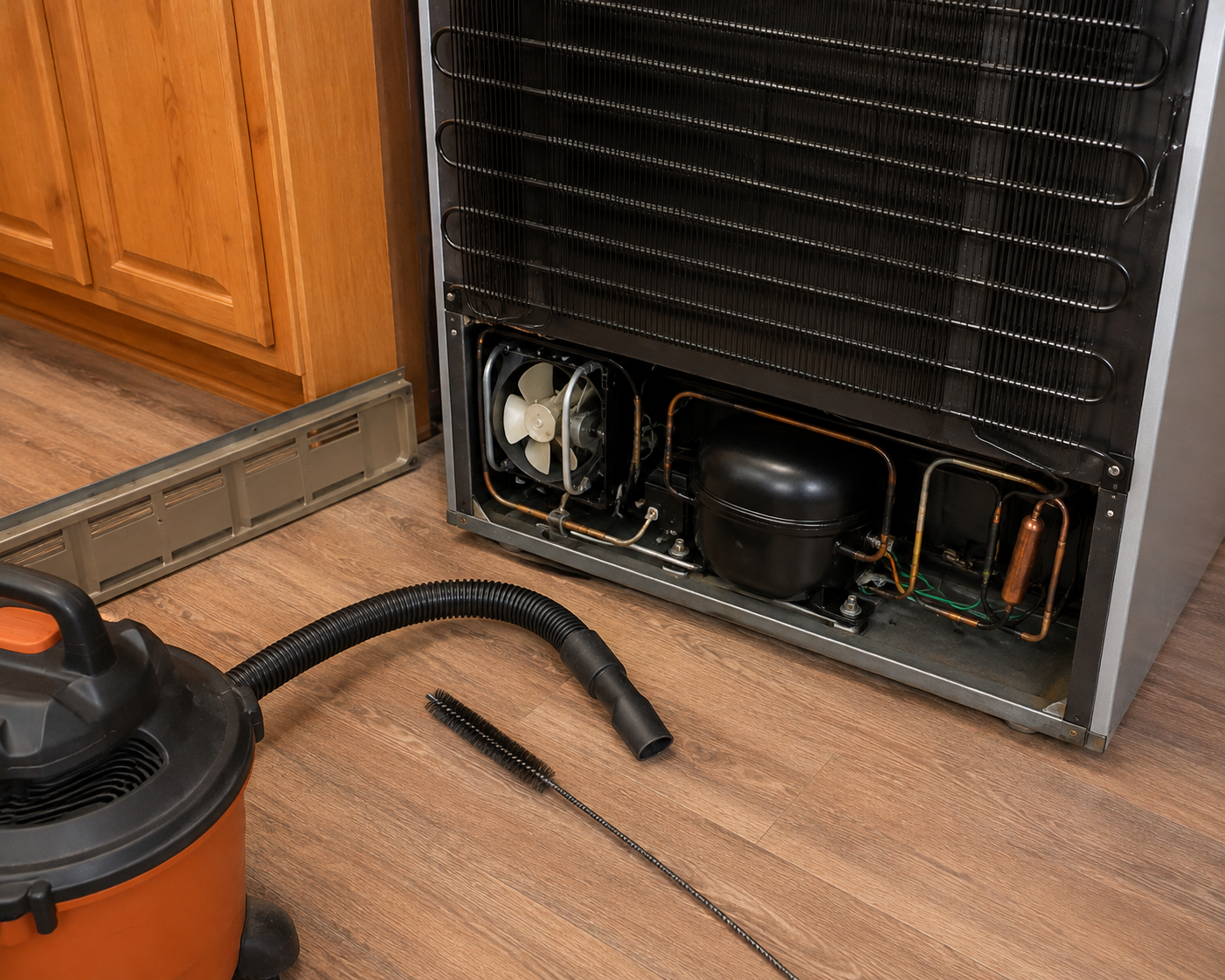
Wine cooler repair in a Post Falls home by SD Appliance

Wine Cooler Repair in Post Falls, ID

Owner-Operated | Same Rate as Spokane, No Distance Surcharge | Open 7 Days | Bonded and Insured

A wine cooler in a cold Post Falls basement can read below its setting and go quiet for long stretches. A compressor cooler removes heat from its cabinet and may have no way to put any back in, so in a corner colder than its setting, the bottles drift toward the temperature of the room around them.

Put a thermometer beside the cooler, outside the cabinet, before calling.

Built-in wine cooler with a dark glass door and wine racks, where a Post Falls homeowner checks whether bottles sit colder than the setting

Two clues that point at the cold

Bottles colder than the number you chose: The display, or a thermometer standing on a shelf inside, reads below the setting, and the compressor hum you were used to hearing has gone quiet for long stretches.

A reading that will not settle: The inside temperature wanders from one check to the next, and the change began when the weather turned cold. If the wandering started in July, or persists once the space around the cooler is warm, look to the cooler itself.

What Post Falls builds for in winter

The City of Post Falls Building Division's sheet of adopted codes and design criteria, revised Feb. 16, 2025, lists a winter design temperature of 25°F for outdoor air, which is reason enough to check the corner where a cooler stands each winter. Indoors, a basement or an unheated spare room can still fall below the 50°F floor that some coolers' manuals set, and only a thermometer set beside the cooler, outside the cabinet, shows whether yours does.

25°F
winter design temperature, City of Post Falls Building Division, sheet revised Feb. 16, 2025
50°F
bottom of the room range in the manual quoted here

Fifty matters because of the manual. Wine Enthusiast's manual for its Prestige XL 250, a compressor-cooled unit, says it “should be placed in a location where the ambient temperature is between 50-109° Fahrenheit” and that it “was not designed to operate in temperature settings below 50° Fahrenheit.” It adds that “placing your unit in extreme cold or hot conditions may cause interior temperatures to fluctuate,” and it warns against “any location not properly insulated or heated.”

Why a cold corner can quiet a cooler

A compressor cooler's thermostat starts and stops the compressor, and the manual lists its click as one of the normal sounds. A cold room interrupts that cycle. Whynter's manual for its BWR-541STS, a built-in compressor model, says: “The internal temperature of this unit will not rise if the ambient temperature where the unit is located is lower than the set temperature.” In a space colder than its setting, such a cooler has no reason to start the compressor, and the bottles cool toward the surrounding air. On a reading alone, that can pass for a failed thermostat or a dead compressor.

For wine that seems too cold, the Prestige troubleshooting guide has a single line: “If temperature control setting is too cold, adjust to a warmer setting.” That answers a setting chosen too low. It does little for a cooler standing in air below its setting, where a warmer number only gives the compressor less reason to start.

When the cooler is the problem

If the space around it is within its maker's stated range and the cooler still will not keep its setting or runs without stopping, the cause is most likely in the cooler. For a blank display, check that the cooler is plugged in and that its outlet has power at the circuit breaker. The usual faults on these units are listed at Wine and Beverage Cooler Repair.

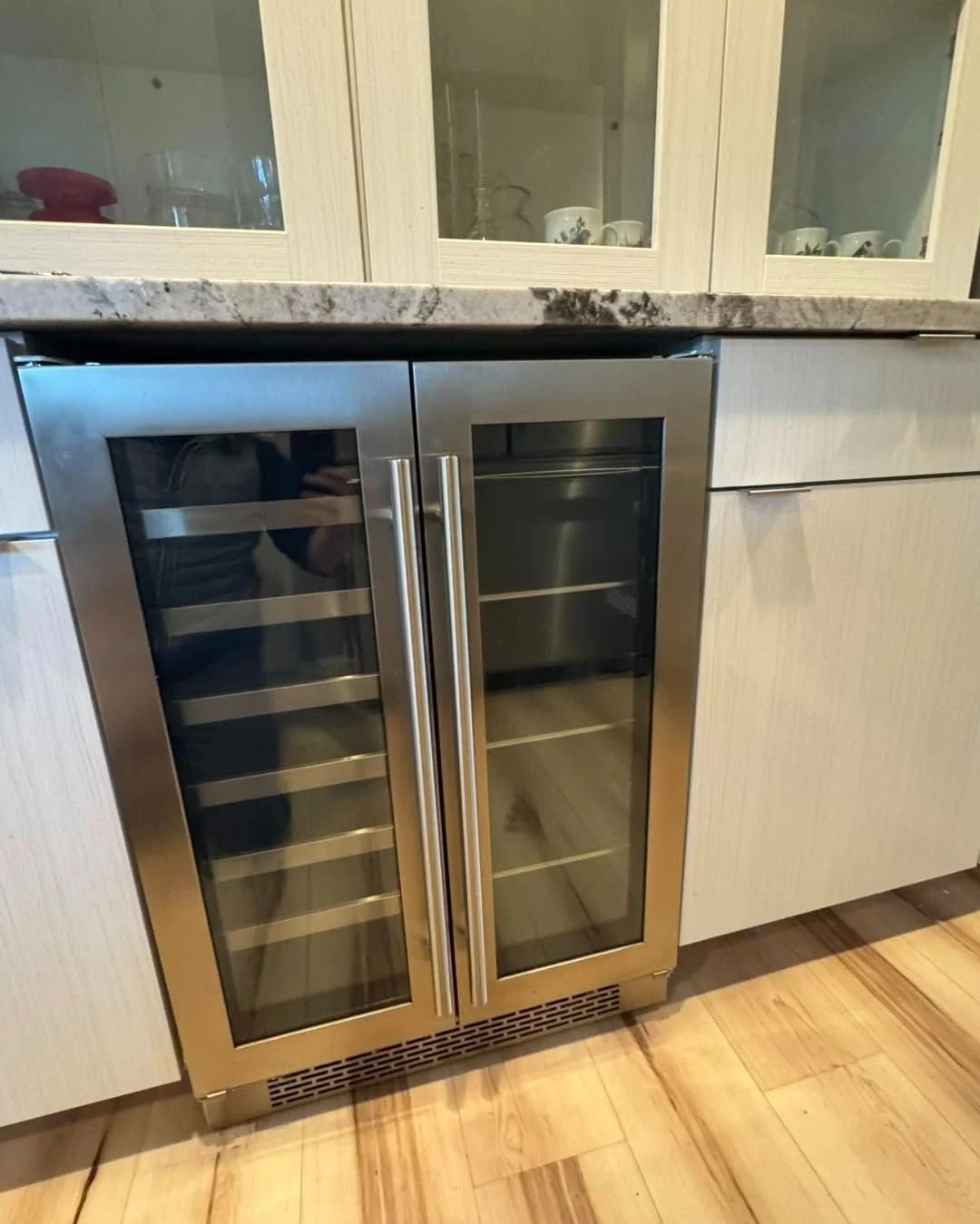
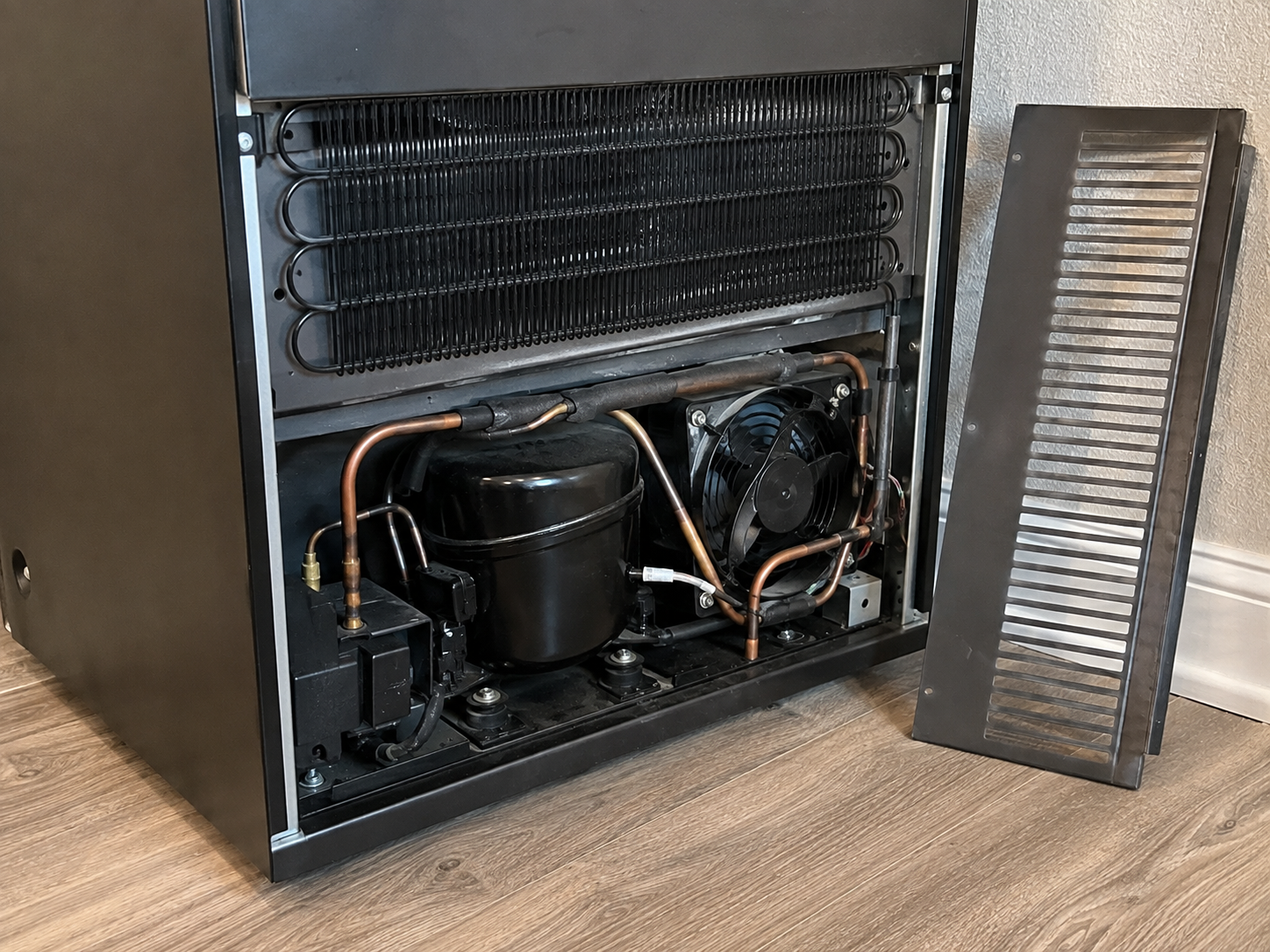
Under-counter wine and beverage cooler with its front grille removed, the compressor side of a cooler that a cold Post Falls room can quiet

Basements and moved coolers

For the cooler, yes: the range quoted above starts at 50°F. For a 60°F setting, no. With the cooler set to 60°F for reds, a 55°F basement leaves the compressor with nothing to remove, so the bottles can sit near 55°F while it stays quiet. On that model, a control range of 41°F to 68°F means that a setting below 55°F, such as one for whites, causes the compressor to work again. Take the reading where the cooler actually stands, too: the air beside it can run colder near an outside wall, a window well, or a concrete floor.

A full day, going by the manual: “After moving, wait for 24 hours before plugging in the wine cellar.” Once it is running, the same manual recommends waiting at least 30 minutes before making any adjustments, and its troubleshooting guide adds: “Allow time for recently added wine to reach desired temperature.” Judge the cooler after the bottles have.

Not right next to it. The manual asks for a location “away from direct sunlight or heat source e.g. radiators, baseboard heaters, cooking appliances etc.” Any space heater also comes with its own maker's placement rules. A space that stays within range all winter is the steadier answer, and for a freestanding cooler, that may simply mean a different spot in the house.

Cold-corner calls, priced

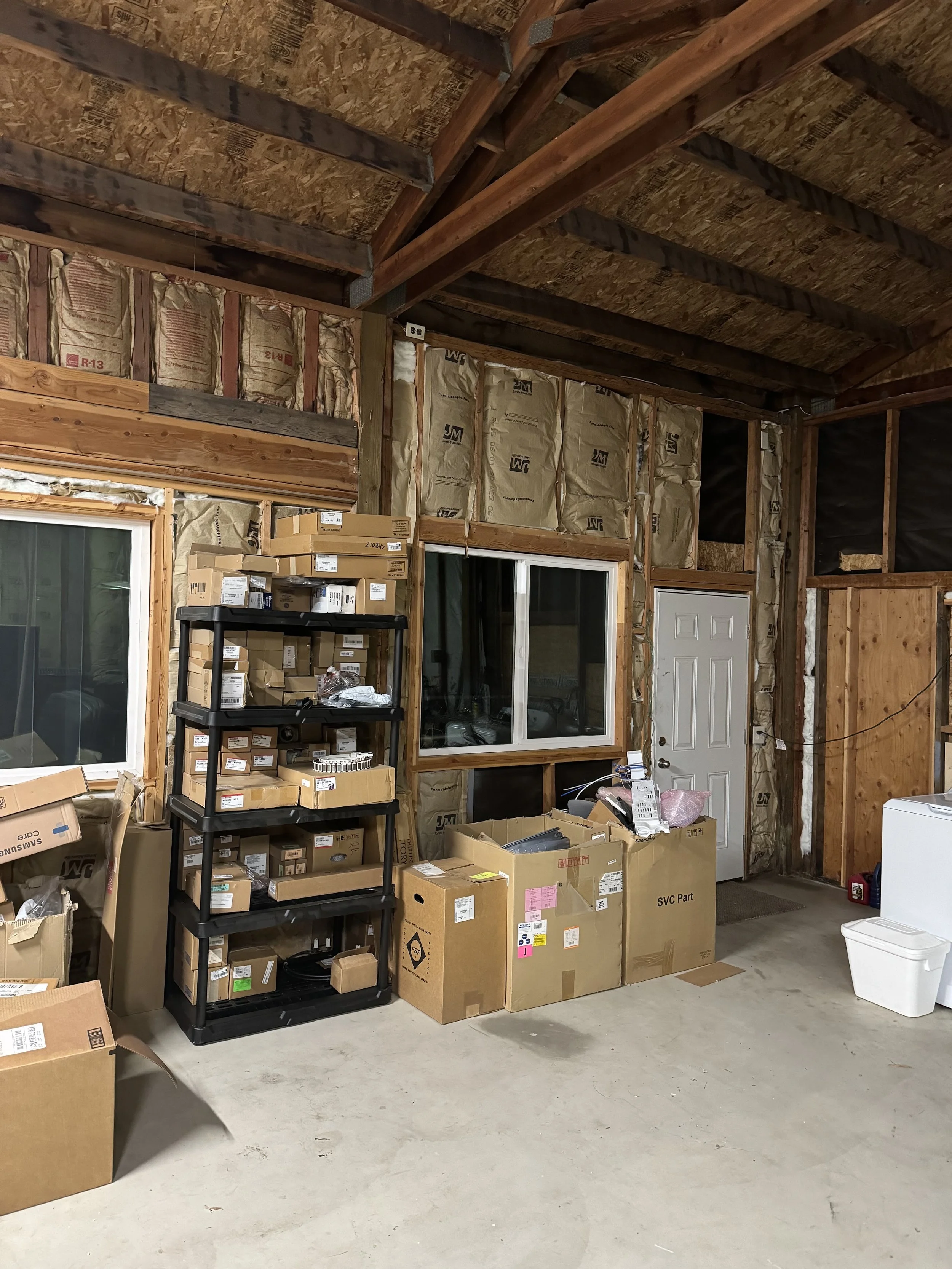
The SD Appliance parts room with shelved appliance parts, behind the parts-and-labor warranty on wine cooler repairs in Post Falls

The service call is $89. It covers travel, inspection, and diagnostic time. It goes toward the repair if you go ahead, and it stands on its own if you decide not to.

Parts and labor are warranted for 30 to 90 days as stated on your invoice, with the full terms at Warranty.

Zero-interest financing through Wisetack is available on repairs over $500 for eligible customers, and active-duty service members and veterans get 15% off labor. Terms are at Financing.

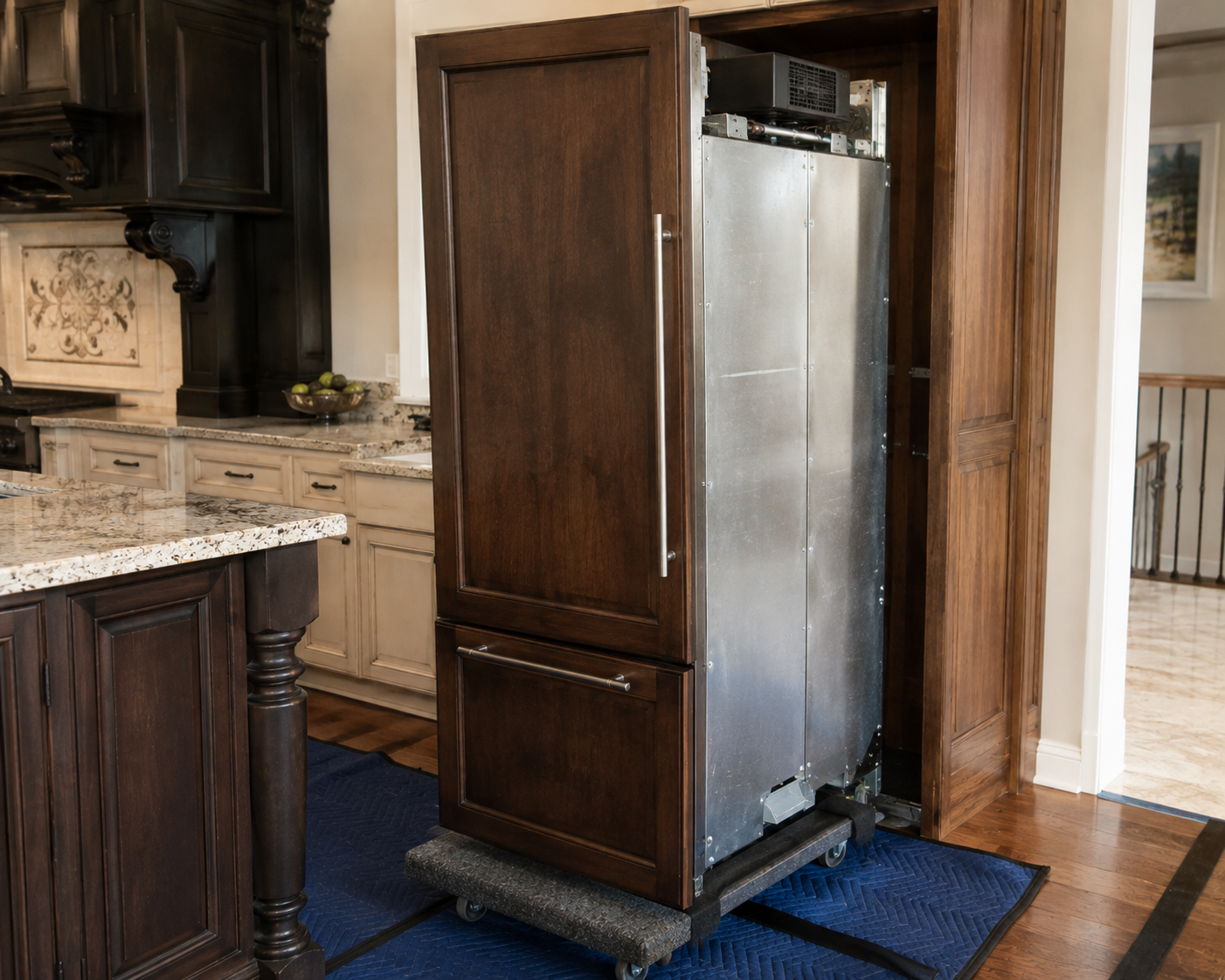
Tall built-in beverage cooler pulled from wood cabinetry; in Post Falls homes the work is repairs only, with no fitting of new units into cabinetry

Standing exclusions

01

Repairs only, in your home. Appliances are not installed, a new unit is not fitted into cabinetry, and nothing is reconnected after a kitchen change. The one exception anywhere on the site is a like-for-like garbage disposal swap.

02

Residential only. In Sergei's words, no commercial at all. Homes and rental properties are the business, and commercial kitchens, restaurants, and commercial refrigeration are not taken on.

03

There is no shop and no drop-off, so nothing gets carried anywhere. There is also no factory authorization here, which means manufacturer warranty repairs are not done. If your appliance is still inside its manufacturer warranty, you will be told to use that coverage rather than being sold a repair you could have had free.

Rated by customers

Get the cooler on the schedule

Note the setting, the reading inside and the reading beside the cooler, then call.

Call (509) 866-6767 with the brand, the model number, and what the appliance is doing.

Request a Repair