
Trash compactor repair in a Post Falls home by SD Appliance

Trash Compactor Repair in Post Falls, ID

Owner-Operated | Same Rate as Spokane, No Distance Surcharge | Open 7 Days | Bonded and Insured

The liner comes out of the drawer split along one side, and there is a film of juice on the drawer floor under it. Whether the machine or the load is doing the tearing decides whether there is anything to repair, and the split liners themselves can often show which. In Post Falls there is a second reason to stop the leaks, in the city's garbage code, covered below.
What the bag is telling you

Most of the answer to machine or load sits in the liners themselves. A compactor that will not start or crushes nothing at all has its own causes at Trash Compactor Repair.

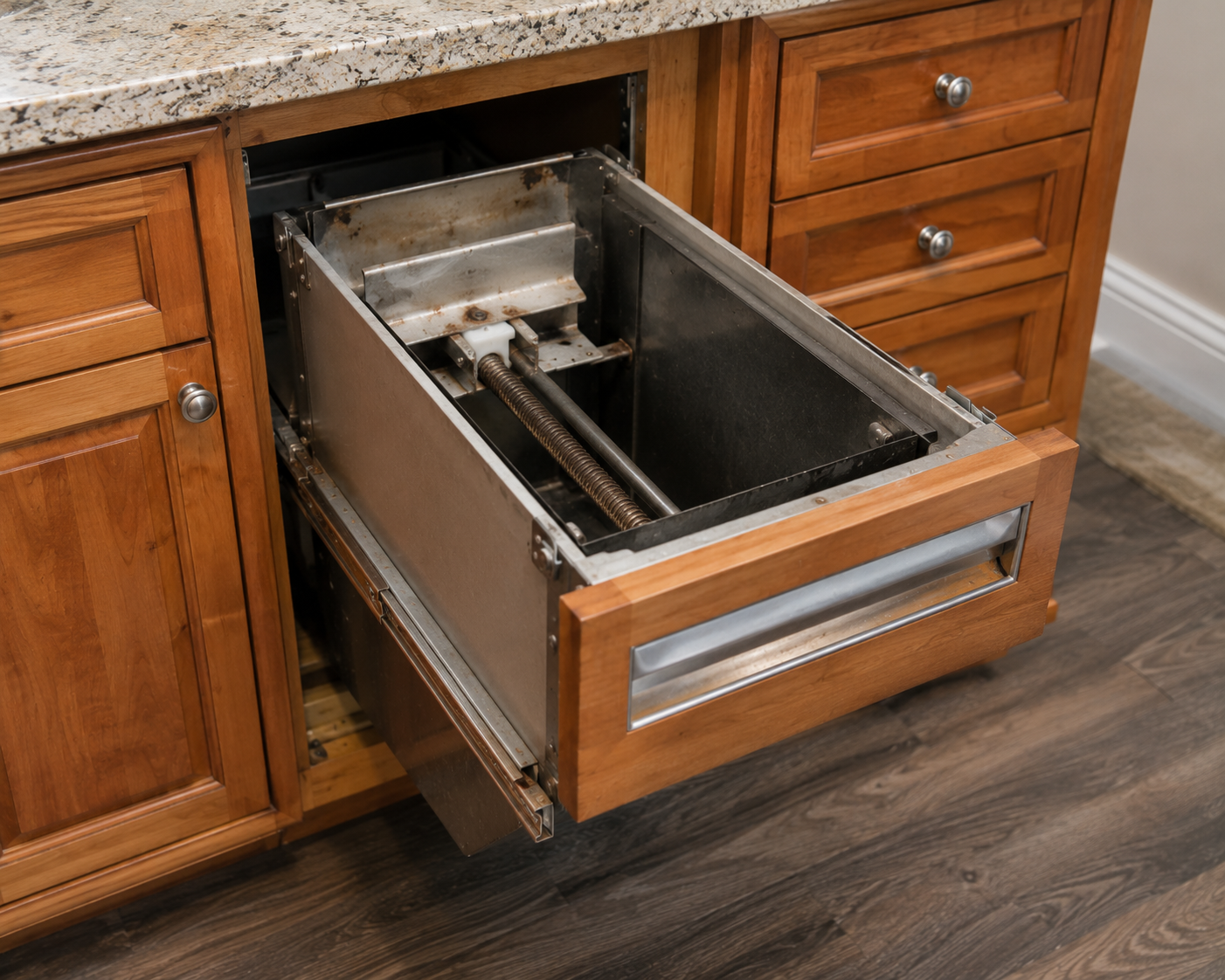
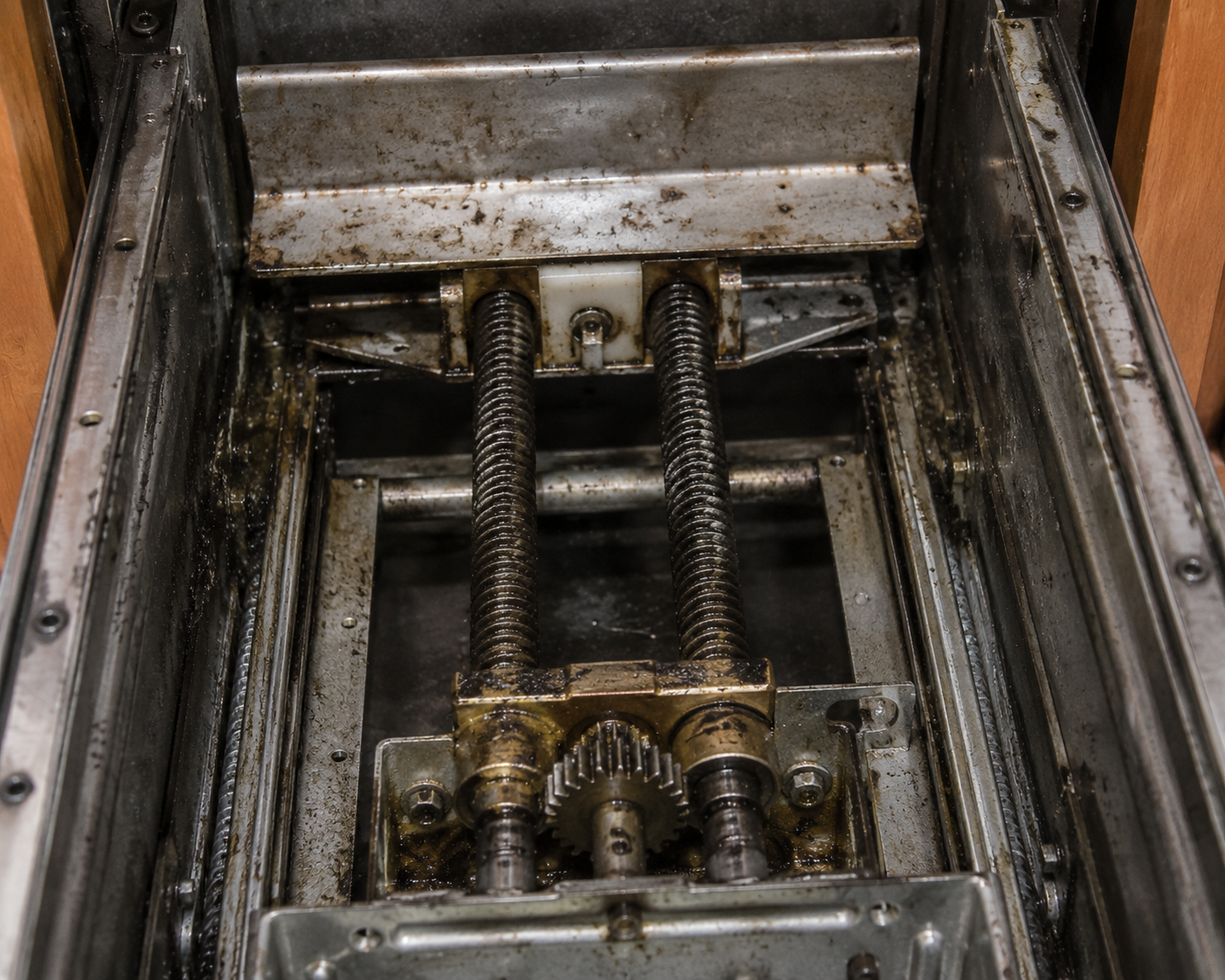
Trash compactor ram and drive mechanism exposed, the part a Post Falls liner can catch on when bottles or cans go in off center

Tears that stop with the right bags:

If the splits stopped after a switch back to bags made for the model, the old liner was the likely cause. KitchenAid's guide for its built-in compactor says to use only bags designed for that compactor and to press a new one into the drawer bottom, sides and corners for a smooth fit.

Tears beside bottles and cans:

Splits next to glass or cans that went in off center point to loading. Post Falls Municipal Code 13.32.050(G) reads: “Recyclable portions of solid Waste shall be separated from the other materials and deposited in the containers provided for recyclable materials.” The hauler's 2026 Post Falls recycling calendar lists aluminum and tin cans and #1 and #2 plastics among the items it takes, so cans and plastic bottles can go in the recycling cart, which keeps them out of the compactor and takes away one common cause of tears. The same calendar says it does not accept glass, so glass may still go in the compactor. Load bottles on their sides in the center of the drawer, since items off center can catch between the ram and the drawer, and glass can break under the ram.

Tears on the way out:

A liner that rips as it is lifted may be catching on the drawer. The guide's removal order is to free the top of the bag from the retainer buttons, pull up all four cuffs, tie it, then tilt the drawer side open and lift the bag out.

A split in the same spot whatever goes in:

With the right bags and a centered load, a tear that keeps landing in one place points to the machine and is the one to show at the visit. Keep one split liner, or note which side gave way.

Liquid under an intact bag:

A pool on the drawer floor that no hole explains, or a wet patch on the floor in front of the cabinet, is a different matter. Say whether it appears only after compacting. Wrapping wet trash before it goes in keeps most of that liquid inside the bag.

Two other signs are not about the bag:

A drawer that will not open:

On many built-in models, the drawer opens only when the ram is fully raised, and the use-and-care guide gives the steps for raising it on that control type. A solid or locked cycle, where a model has one, also keeps the drawer locked until it is reset. If the drawer still stays shut, leave it closed for the visit.

A smell that outlasts a clean drawer:

If the drawer has been washed and the cabinet still smells with a fresh liner in place, something may have dropped behind or beneath the drawer, out of sight. If you would rather not lift the drawer out yourself, leave it where it is and point it out at the visit.

Keeping leaks out of the outside can

That code section, quoted above, covers the outside can, and the grease and decomposing material it names are the reason a split liner's leaks are worth stopping. Pressing food scraps squeezes liquid out of them. An intact liner holds that liquid; a split one can pass it to the drawer floor first and to the garbage can after, where it sits until pickup. Two steps help while the compactor is waiting for repair.

First, keep liquid grease out of the compactor. Let cooking fat cool until it sets, seal it in a container, and put that container straight into the outside can. Wrap or cover wet or messy trash before it goes in, and keep out the items the guide lists as likely to develop offensive odors, such as raw meat, fish, grapefruit rinds, disposable diapers and personal hygiene items.

Second, clean the drawer once liquid collects in it. Cut the power at the plug, or the panel before the liner comes out. Lift the liner out and wash the inside of the drawer with a soft cloth and mild detergent in warm water, then rinse and dry it thoroughly before the power is turned back on. Gloves help, since bits of glass can collect in the drawer, and the ram cover can be wiped off with a cloth or paper towels. The guide also covers lifting the drawer out to clean spills inside the cabinet, by hand or with a vacuum made for liquids. Wipe without spraying, so water stays clear of the switches and the motor. Before an absence of more than a couple of days, the bag is best taken out.

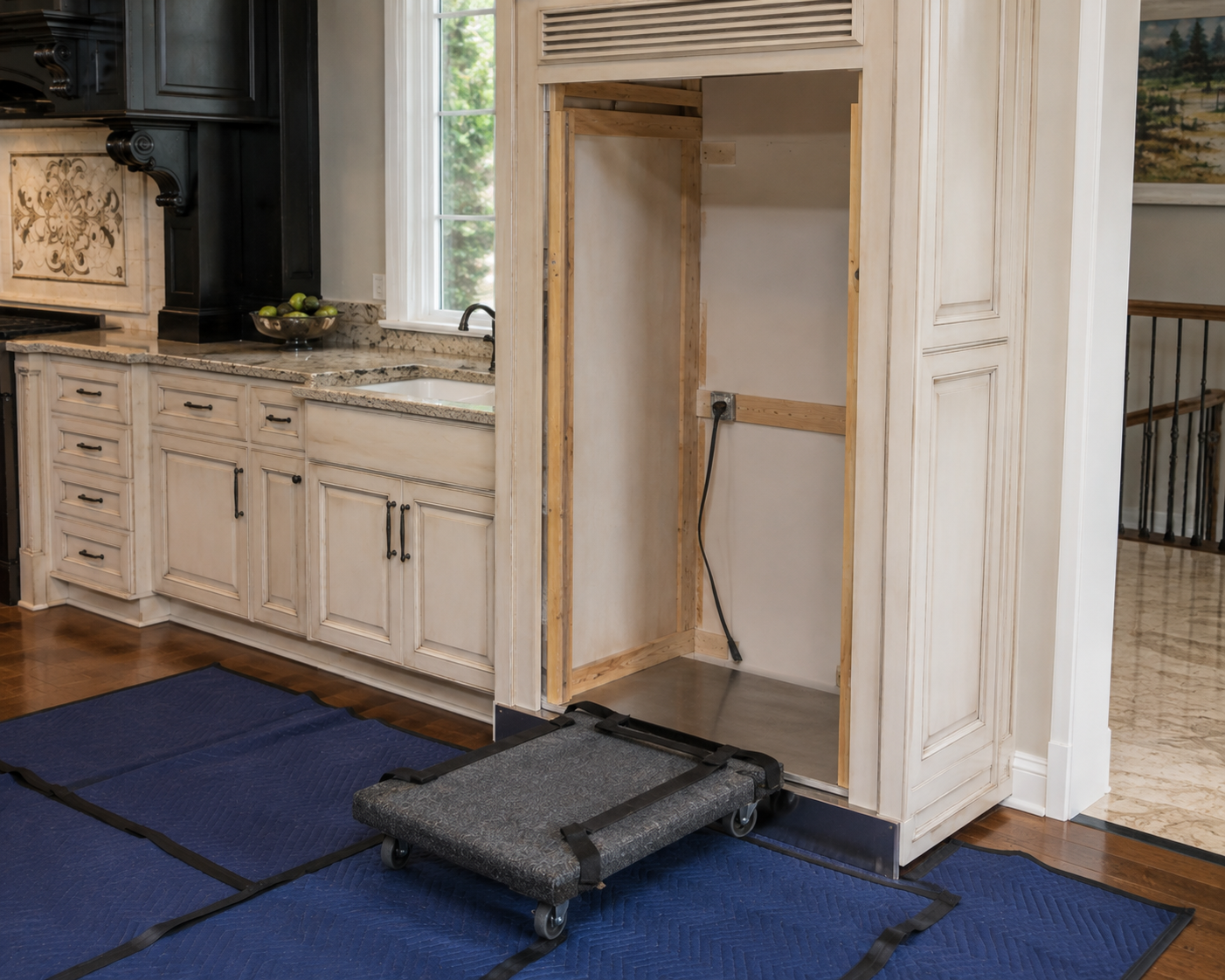
Empty cabinet opening after a trash compactor was pulled out, the space a Post Falls homeowner cleans when spills reach inside the cabinet

Post Falls Municipal Code 13.32.050(D): Containers shall be kept in a sanitary condition and free inside and out from accumulating grease and decomposing material so that no odor nuisance is created.

When the trouble is the bag or the smell

Some models carry a charcoal air filter or an air freshener for cabinet odors, and on KitchenAid's built-in models, the charcoal filter works only with the key knob on. The guide recommends using either one in the filter compartment. A filter treats the air in the cabinet, so the liquid under the drawer still needs to be cleaned out.

If it still compacts and the liners come out whole, yes. Either way, do not overload it, and do not push items down with hands or feet. If the liners split cycle after cycle, set the compactor aside and use an ordinary kitchen trash can for now so the leaks no longer reach the outside can. If it grinds, smells hot, or trips its breaker, stop using it rather than running it again until it has been looked at.

Compactor visit: fee and warranty

Sergei explaining to a homeowner in her kitchen, going over the compactor visit fee and warranty in Post Falls

The service call is $89. It covers travel, inspection, and diagnostic time. It goes toward the repair if you go ahead, and it stands on its own if you decide not to.

Parts and labor are warranted for 30 to 90 days as stated on your invoice, with the full terms at Warranty.

Zero-interest financing through Wisetack is available on repairs over $500 for eligible customers, and active-duty service members and veterans get 15% off labor. Terms are at Financing.

The live review panel

Getting the compactor booked

Keep one split liner and note the model number from the label, then call.

Call (509) 866-6767 with the brand, the model number, and what the appliance is doing.

Request a Repair