
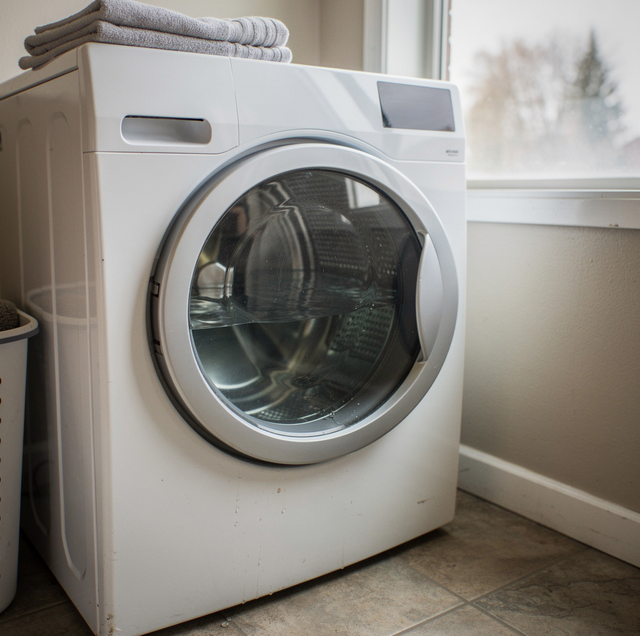
The washer went quiet partway through a cycle. The display shows an error or nothing at all, the drum is still, and the door handle will not give even a little. Through the glass, there is still water sitting around the bottom of the tub, and the load inside is soaked. Pulling on the handle harder does nothing except make the hinge creak.
A locked door on its own does not mean a broken lock. The lock is doing what it was built to do: hold the door shut until the machine can confirm the tub is safe to open, and right now something is stopping that confirmation. Three causes cover the ordinary cases. The first is water still sitting in the tub above the level a sensor is watching. The second is a drain that stopped moving water out. The third is the lock hardware itself failing in the closed position even after the water is gone.
What Keeps the Door Locked After a Washer Stops Mid-Cycle
A front-load washer's door lock is tied to two separate conditions, not one. A small pressure switch, sometimes called a pressostat, reads the water level in the tub through a sealed air tube. While that switch reports water above a low threshold, the control board will not release the lock, regardless of what the display says or whether the cycle finished. That is the anti-flood half of the design: a door that could open over standing water is treated as a fault, not a convenience.
The second condition sits inside the lock assembly itself. On locks with a heat-released latch, a small heater warms a bimetal strip or a wax-filled motor, and the latch only disengages once that part cools. That is why a washer that just finished a normal cycle can keep the door shut for a short stretch with no water left: the release needs time to cool as well as the board's permission. Cutting power starts that cooldown straight away.
Checking How Much Water Is Still in the Drum
Before touching the door, look through the glass. Water sitting at or above the bottom of the door seal means the pressure switch has a legitimate reason to hold the lock, and prying at the door will not change that. A drum that looks empty can still hold water below the glass, so open the drain filter before ruling the water level out.
On front-load washers that have one, a small hinged flap at the lower front corner covers a drain filter and, on some models, a short drain hose. Opening that flap with a shallow pan underneath lets residual water drain out by gravity even with the machine unplugged, which both confirms how much water remains and gets the tub closer to the point where the pressure switch should release on its own.
Open the drain filter cap a quarter turn at a time and close it again each time the pan fills. With water showing at the glass, the drum can hold a few gallons, far more than one pan.
When the Drain Is the Real Problem
If the filter is clear and the tub still never drained during the cycle, the pump is the next thing to suspect. A drain pump that has failed completely stays silent when the machine tries to run it. A pump fighting a clog, by contrast, hums or runs audibly while moving little or no water because the motor spins but something downstream blocks the flow. Both failures leave the tub full enough to keep the pressure switch reporting water, which keeps the lock engaged no matter how long the machine sits.
A blocked drain hose, a coin or sock lodged in the pump housing, or a kinked line behind the machine can all produce the same external symptom: no water leaving the tub. The lock stays closed as a direct result, not as a separate fault.
A Lock Assembly That Fails Locked
Once the water is confirmed gone and a reasonable cooldown has passed, a door that still will not budge points at the lock assembly, or the board signal that releases it, rather than the water system. The lock unit combines a switch, a solenoid or heating element, and a mechanical hook that catches a strike plate on the door frame. Any one of those three can fail in the closed position: a stuck solenoid, a switch that never reports "safe to open" to the board, or a hook that has physically jammed against the strike plate.
A lock that fails this way will not respond to waiting longer, because waiting only helps the other two conditions, water level and cooldown. It needs to be freed or replaced as hardware.
Safe Steps Before You Force Anything
Cut power first: Unplug the washer or switch off the breaker feeding it. This removes any chance that the board is actively holding the lock through the control circuit and allows a heat-based release mechanism to begin cooling right away rather than on its own schedule.
Drain what you can: Open the drain filter to let gravity pull water out, then test the door again. A tub that is confirmed empty removes the water-level condition from the list of causes.
Wait before pulling harder: Give the lock several minutes after power is cut and the tub is drained. A lock held only by residual heat releases in that window without any other intervention.
Look for a manual release: A number of front-load washers include an emergency release cord or tab reached by removing a toe-kick or small access panel at the bottom front of the cabinet. Where one exists, it disengages the hook mechanically, without needing the lock to cycle electrically at all.
If the cycle stopped during a hot wash, the water behind the drain filter can still be hot enough to scald, so let it cool first. A lock with scorched or melted wiring is a job for an appliance technician.
Forcing the handle or prying the door frame with a tool risks bending the hook or cracking the strike plate, turning a lock that might have released on its own into one that requires the full assembly to be replaced. That is the outcome worth avoiding more than a few extra minutes of waiting.
The Cost of Leaving a Wet Load Sealed Inside
A tub full of wet fabric, sealed behind a locked door with no airflow, is not a problem that waits well. Warm, damp conditions inside a closed drum let mold and mildew take hold quickly, and the smell that comes with it tends to transfer to the gasket and the interior of the machine, not just the clothes. Getting the door open and the load out, or at minimum getting air moving through a cracked door once the lock releases, matters more the longer the machine has been sitting since it stopped.
A washer that locks up mid-cycle with water inside is not signaling a single broken part. It is reporting that a condition it watches, water level, drain flow, or the lock hardware itself, has not cleared yet, and each one points to a different fix.
Frequently Asked Questions
A lock held only by a cooling heating element generally clears within two to three minutes of the power being cut. If the door is still solid after ten minutes with the tub confirmed empty, the holdup has shifted from cooldown to a mechanical or electrical fault in the lock itself.
The pressure switch reads the water level through a thin air tube from the bottom of the tub. If that tube kinks or clogs with detergent residue, it traps air, and the switch keeps reporting water that is not there, so the board holds the lock as if the tub were full. A technician clears or replaces the tube and checks the switch itself.
If the machine still responds, plug it back in and select Drain and Spin (or Spin Only). When the pump works, the tub empties and the board releases the lock at the end of that short cycle. If the pump stays silent or only hums, cancel it and drain through the filter instead.
The code is the board's record of which condition it saw: a drain fault, a water-level fault or a door-lock fault. Photograph the display before you unplug the machine, because on some models, cutting power clears the code, and it is the quickest way to tell which of the three is holding the door.
A warm, closed drum holding soaked fabric can start to smell within a few hours, sooner in a warm room. A load that has sat overnight needs a rewash with detergent before it goes in the dryer, because drying sets the sour smell into the fibers.
The door swings open, and every bit of water above the bottom of the opening comes out across the floor at once. Drain through the filter until no water shows at the glass before using a release cord or tab.
Schedule a locked-washer visit — the drain pump and door lock are checked where the machine stands, with common parts on the van so many repairs finish on the first visit. SD Appliance serves Spokane, Spokane Valley, and North Idaho. Call (509) 866-6767.