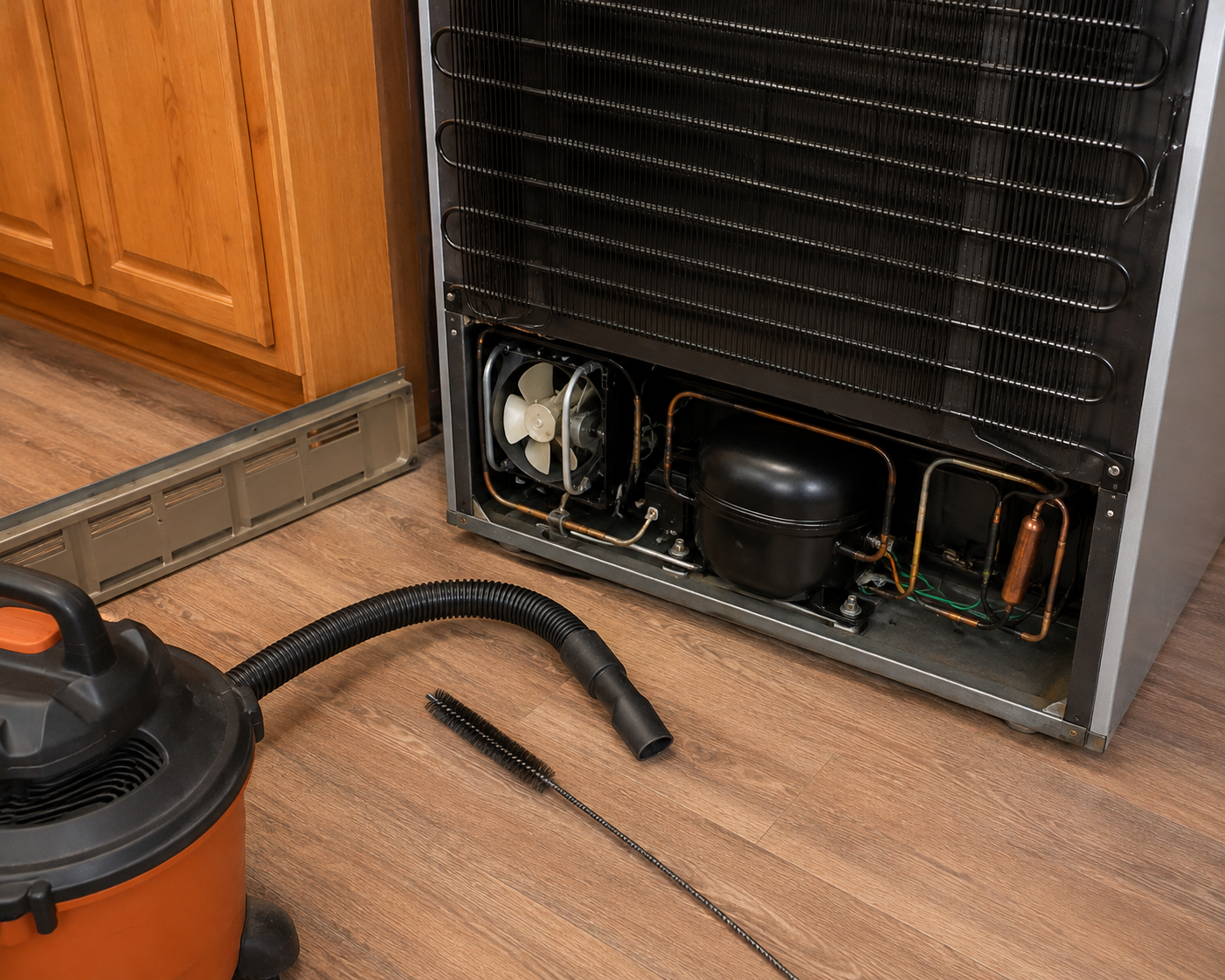
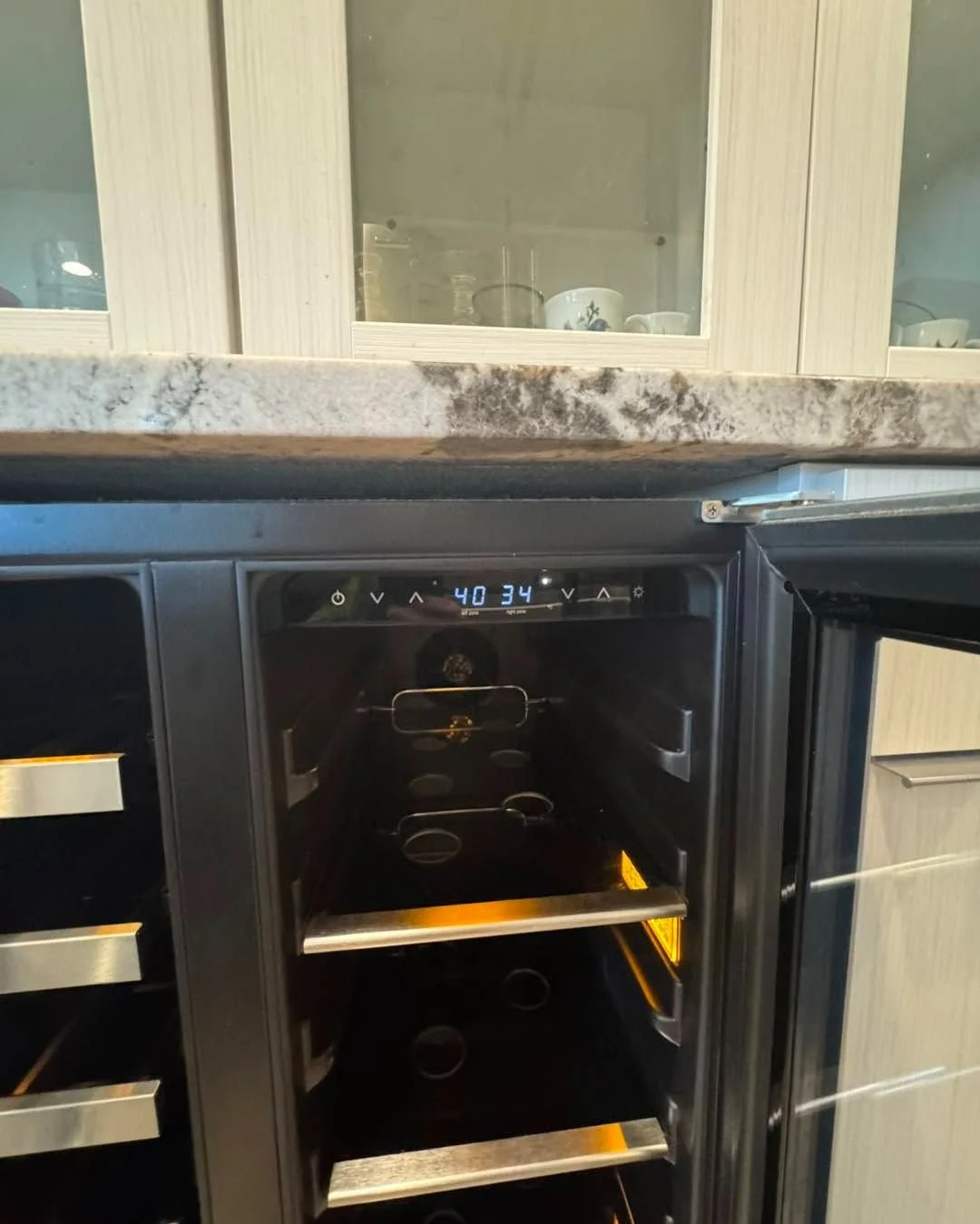
Wine cooler repair in a Coeur d'Alene home by SD Appliance

Wine Cooler Repair in Coeur d'Alene, ID

Owner-Operated | Same Rate as Spokane, No Distance Surcharge | Open 7 Days | Bonded and Insured

A wine cooler that runs warm in July may have nothing broken. It keeps its bottles cold by pushing heat into the space around it, and it can only do that as well as its installation lets it breathe. NOAA's 1991-2020 normals for Coeur d'Alene count about 22 days of 80°F or more in each of July and August, and those are the weeks a built-in that has lost the air in front of its grille, or a freestanding unit boxed into a cabinet cutout, is likely to drift warm. Clear the grille and check the clearances in June, before July's run of 80°F days, and again before booking.
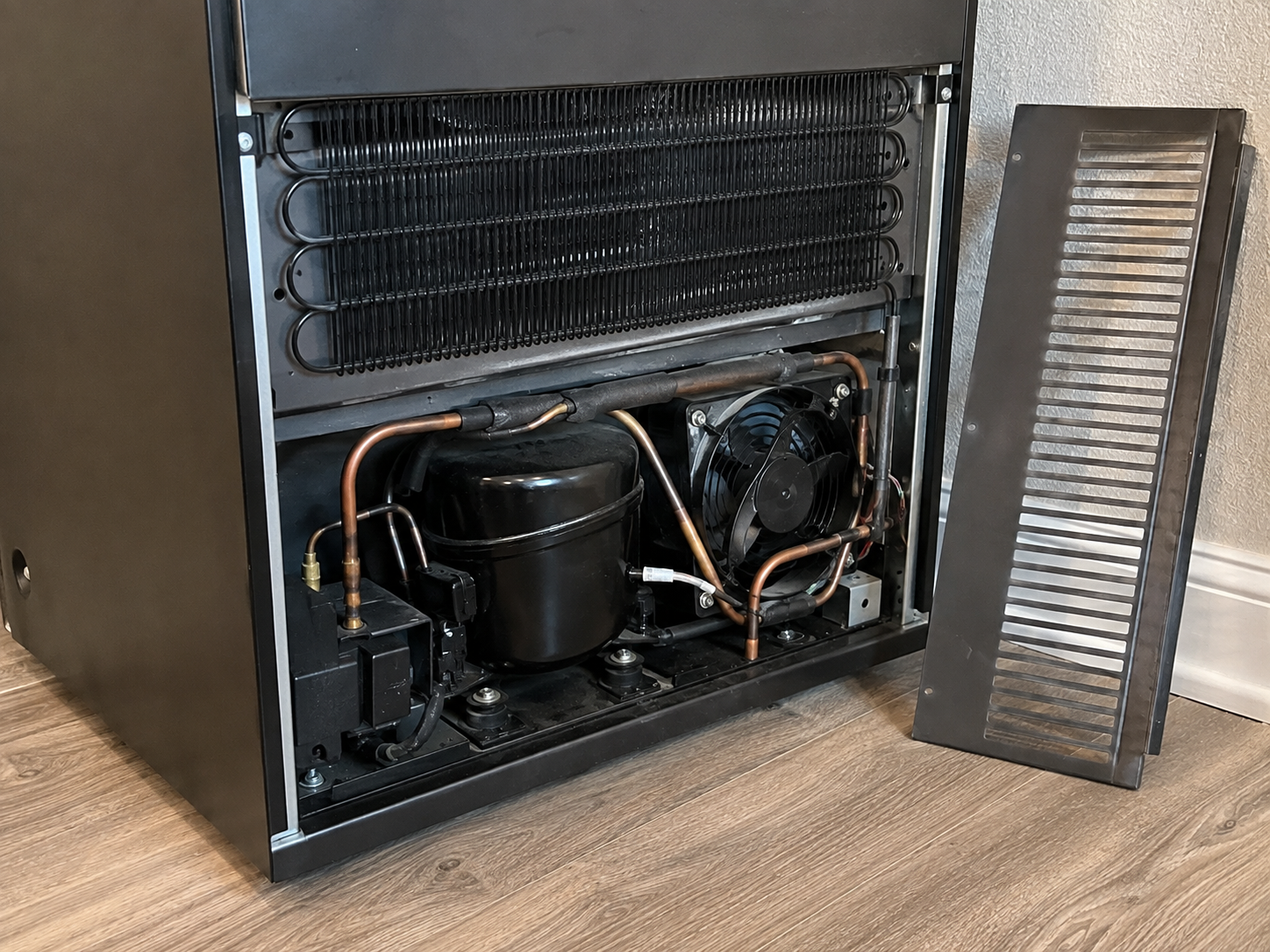
Under-counter wine and beverage cooler with its front grille removed, the front vent a Coeur d'Alene built-in breathes through

How a cooler sheds its heat

Many built-in, under-counter models are made to breathe through the front. Whynter's manual for its BWR-541STS, a 24-inch built-in, says its front-ventilation design allows it to sit flush with the cabinets under a counter, and that the front air vent must not be covered or blocked in any way. Its troubleshooting table lists “The front bottom grille does not have sufficient ventilation” among the reasons a cooler is not cold enough. A rug, a kick plate, or a few cases of wine stacked against it can sit right where the air moves in and out.

Flush does not mean tight. Even in a built-in installation, that model requires at least a quarter-inch of space on each side and at the top. Its maker also does not recommend installing it on carpet.

Freestanding models can ask for much more. Vinotemp's manual for its VT-18TEDS, an 18-bottle thermoelectric freestanding cooler, asks for “a minimum of 6 inches at the back of the cooler, 10-12 inches on each side of the cooler” and unlimited clearance at the top, and says the unit “is not designed to be installed under a counter, inside a cabinet, or in any location that does not allow the proper clearances on all sides.” Your own model's manual gives its figures.

A freestanding cooler slid into a cutout built for something else can end up with its back, sides, and top boxed in, so the heat it gives off lingers around it. It may cope through a mild spring and start drifting warm in July, when a cooler already short of air has the least margin.

The first check, then, is the installation itself. On a built-in, check whether the front grille is clear of rugs, trim, stacked cases, and dust. On a freestanding unit, check whether it has the space its manual specifies at the back, sides, and top.

Following the air through the cooler

1

How the cooler is fitted

A diagnosis of a cooler that runs warm takes in the model and how it is installed, built-in or freestanding, and venting at the front or the back, then sets the space around it against what its manual calls for. While a freestanding unit sits boxed into a cutout, or a built-in has trim across its vent, a new part is unlikely to help.

2

The fans and the air around the unit

Then the fans that move air across the cooling parts, since a stopped circulation fan leaves the cabinet warm while the cooling side is healthy, however much space surrounds it. The air path inside the cabinet matters too. The BWR-541STS manual asks owners to “keep small gaps between the walls and the bottles to allow air circulation” and to avoid blocking the internal fans on the back panel, so a back row packed tight against them is worth clearing before a fan is blamed.

3

A part to replace, or a placement to change

If the air path is clear and the cabinet still runs warm, a fault in the cooler is likely. The parts usually behind that, from sensors to door seals, are covered on Wine and Beverage Cooler Repair, along with when a small cooler is worth repairing at all. If the installation is the cause, a diagnosis can name what is blocking the air and what would open it up.

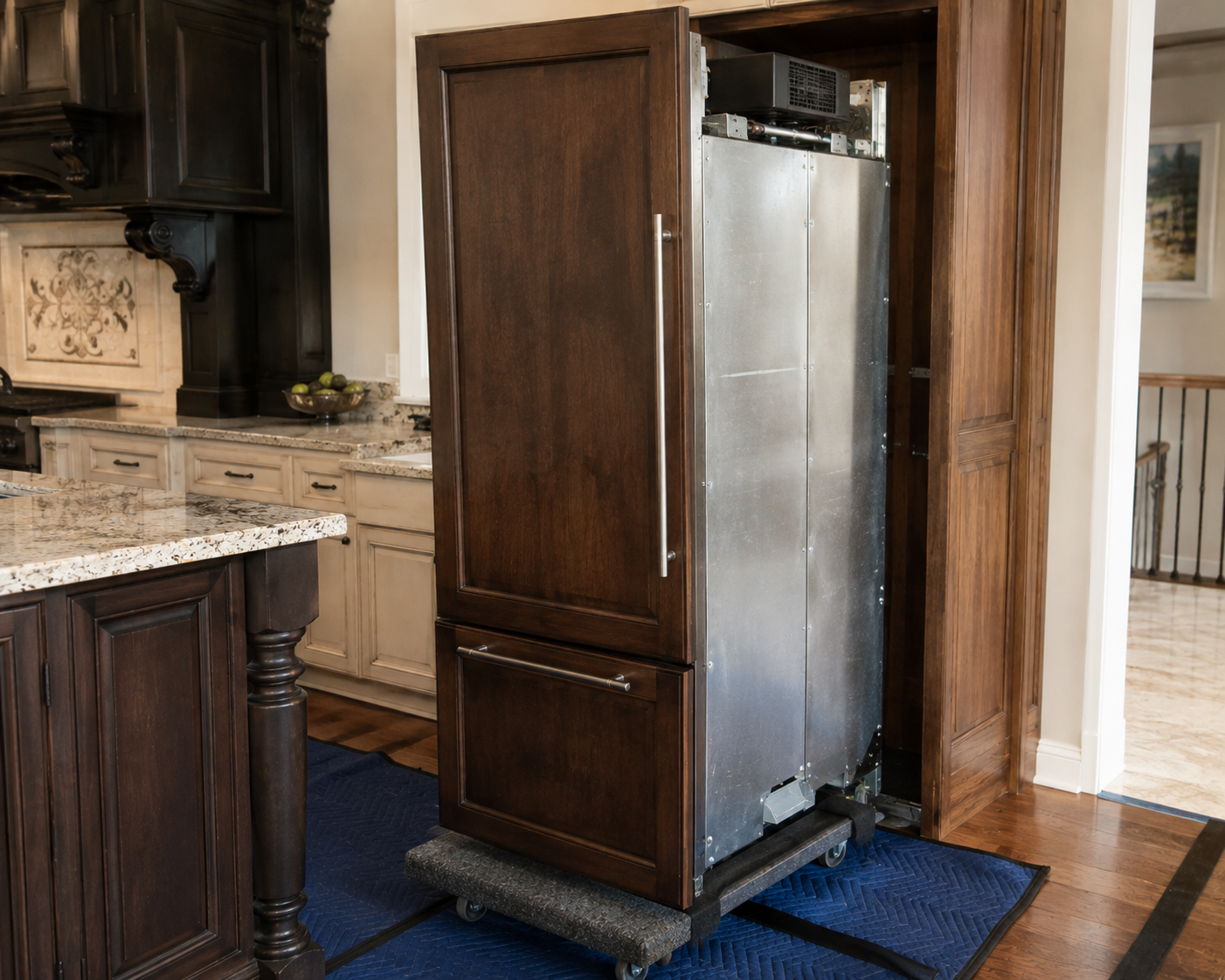
Tall built-in beverage cooler pulled from wood cabinetry, showing how a cooler is fitted, part of a wine cooler diagnosis in Coeur d'Alene

Grilles, trim and alarms

With the grille and the trim around it. New flooring, a baseboard, or a kick plate fitted during a remodel can end up across the lower front of the unit. The BWR-541STS manual says: “For best performance, do not install the appliance behind a cabinet door or block the base grille.” If the trim covers part of the vent opening, that is work for whoever fitted the cabinetry; it is not a repair.

Not the Vinotemp VT-18TEDS. Besides the back and sides, its manual asks for unlimited clearance at the top, which a counter overhead cannot give. If a cooler has to live under a counter, a model sold as built-in or front-venting is the type made for that space.

Not necessarily. Whynter's troubleshooting table gives several causes for that alarm, from a door left open or opened too often to a large batch of bottles added at once, and one of them is “The ventilation opening being covered or too dusty.” The maker's remedy for that one is to clear the obstructions and clean the dust. Error codes are a different matter: on that model, E1 or E2 marks a failed air temperature sensor, and the manual's answer is a service call.

Unplug the cooler, then brush or vacuum it gently with a soft attachment. The thermoelectric model's care section also asks for the back and bottom of the unit to be cleaned “thoroughly to ensure efficient operation.” Do not push anything through the openings toward the fan. If the cover has to come off, or the dust is packed in deeper than you can reach from outside, leave that for the visit.

Visit charge and terms

Sergei talking with a homeowner in her kitchen, going over the wine cooler visit charge and terms in Coeur d'Alene

The service call is $89. It covers travel, inspection, and diagnostic time. It goes toward the repair if you go ahead, and it stands on its own if you decide not to.

Parts and labor are warranted for 30 to 90 days as stated on your invoice, with the full terms at Warranty.

Zero-interest financing through Wisetack is available on repairs over $500 for eligible customers, and active-duty service members and veterans get 15% off labor. Terms are at Financing.

Built-in wine cooler with a dark glass door and wine racks, the kind of fitted unit a Coeur d'Alene homeowner may need moved or refitted

Where a cooler visit hands off

01

Refrigerant and the sealed loop: On a compressor model, a refrigerant leak or a failed compressor means work inside the sealed loop, and that belongs with a refrigeration technician certified under the EPA's Section 608 rules. SD Appliance holds no such certification and does not open the loop. The visit passes on a confirmed diagnosis, so that technician, or a decision to replace the cooler, starts from a known fault.

02

Moving or refitting the cooler: When the installation is the cause, the remedy is to give the cooler its air back. No installation work is done, so relocating the unit, refitting it into cabinetry, trimming a kick plate, or cutting new venting is left to the homeowner or a cabinetmaker.

Ratings and comments

To arrange the cooler check

Note whether the cooler is built-in or freestanding and what sits in front of its grille, then call.

Call (509) 866-6767 with the brand, the model number, and what the appliance is doing.

Request a Repair