Before the visit, start with the one check that needs no tools. Whirlpool's care pages say laundry detergent and fabric softener residue can build up on the lint screen, and that the buildup can cause longer drying times or make the dryer stop before the load is completely dry. Their advice is to wet the screen with hot water, scrub it with a nylon brush and liquid detergent, rinse it and dry it thoroughly before it goes back, every six months or sooner if it clogs. A coated screen slows drying in any building, so it is worth ruling out before the building's duct takes the blame.
1. The dryer itself
The diagnosis starts with determining whether the dryer is producing heat and, if it is not, which part has failed. That is the repair you called about, and it may be the whole story.
2. The connection behind the dryer
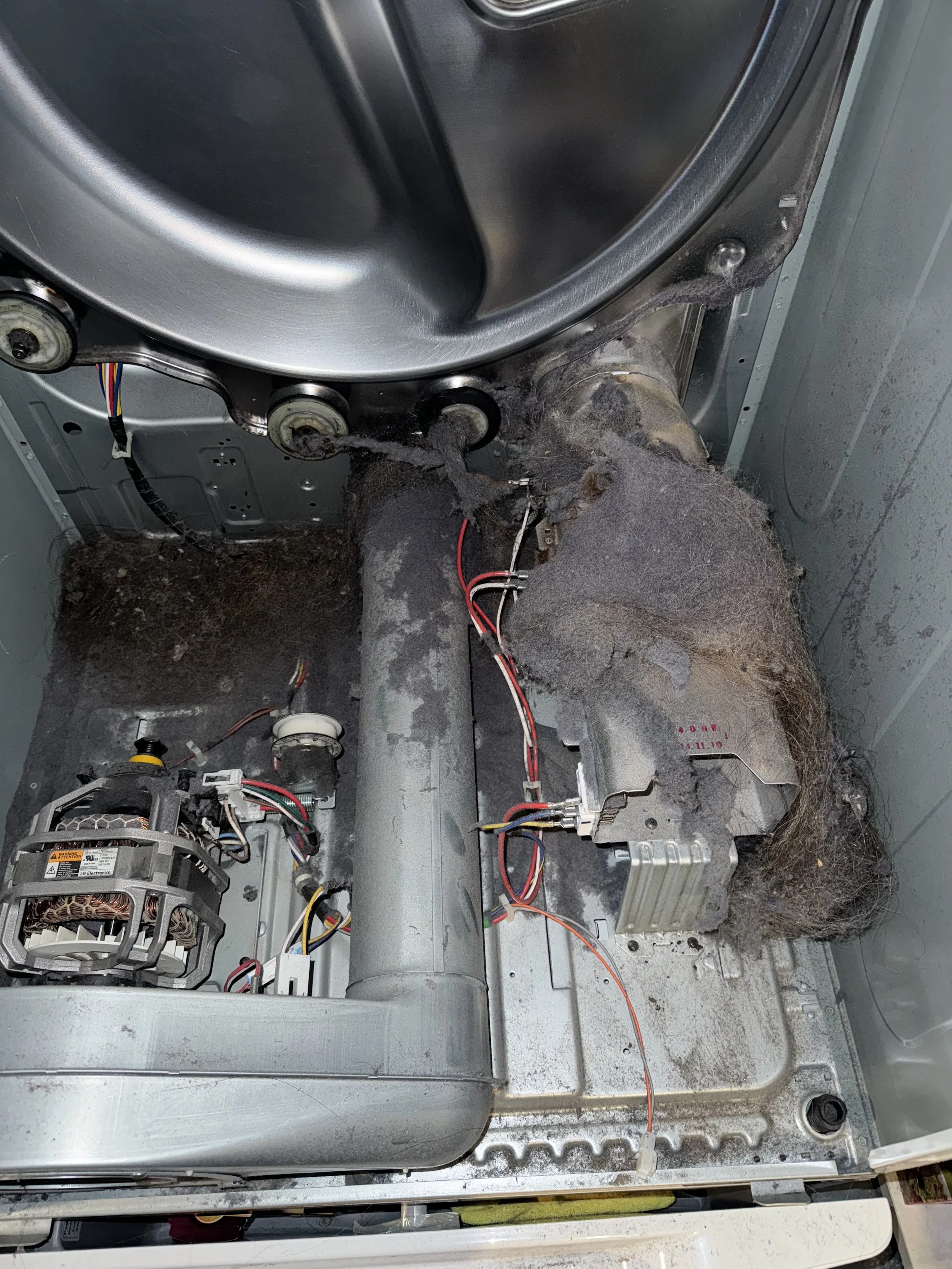
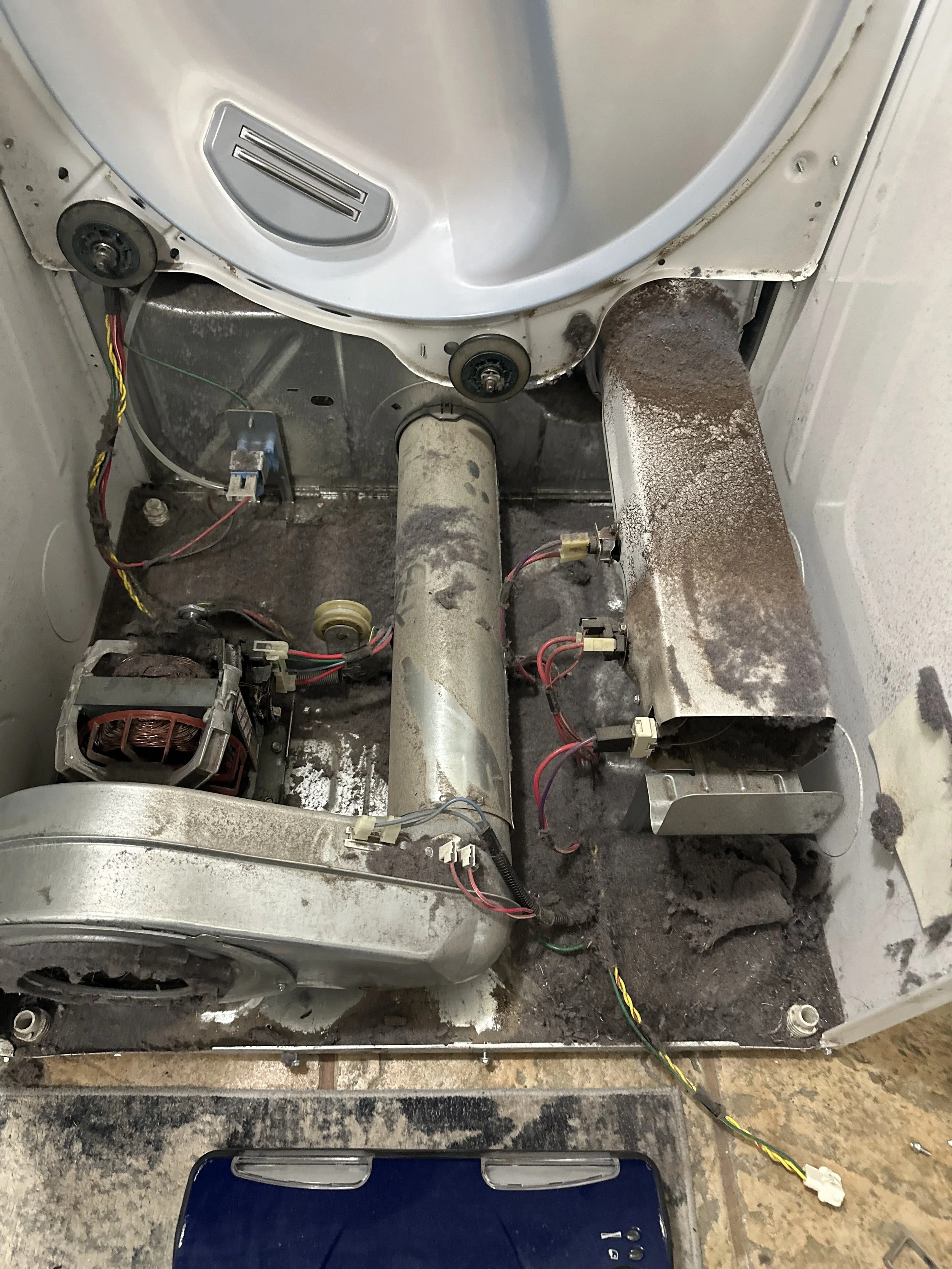
The vent connection behind the dryer is checked as part of the repair, where the setup allows it. The venting guide warns that flexible venting materials “are known to collapse, be easily crushed, and trap lint,” and that kinks, crushing, or excessive length in the vent hose behind the dryer are known causes of long dry times. In a closet with a stacked pair, reaching that connection can mean bringing the dryer down first.
3. A plain answer about everything past the wall
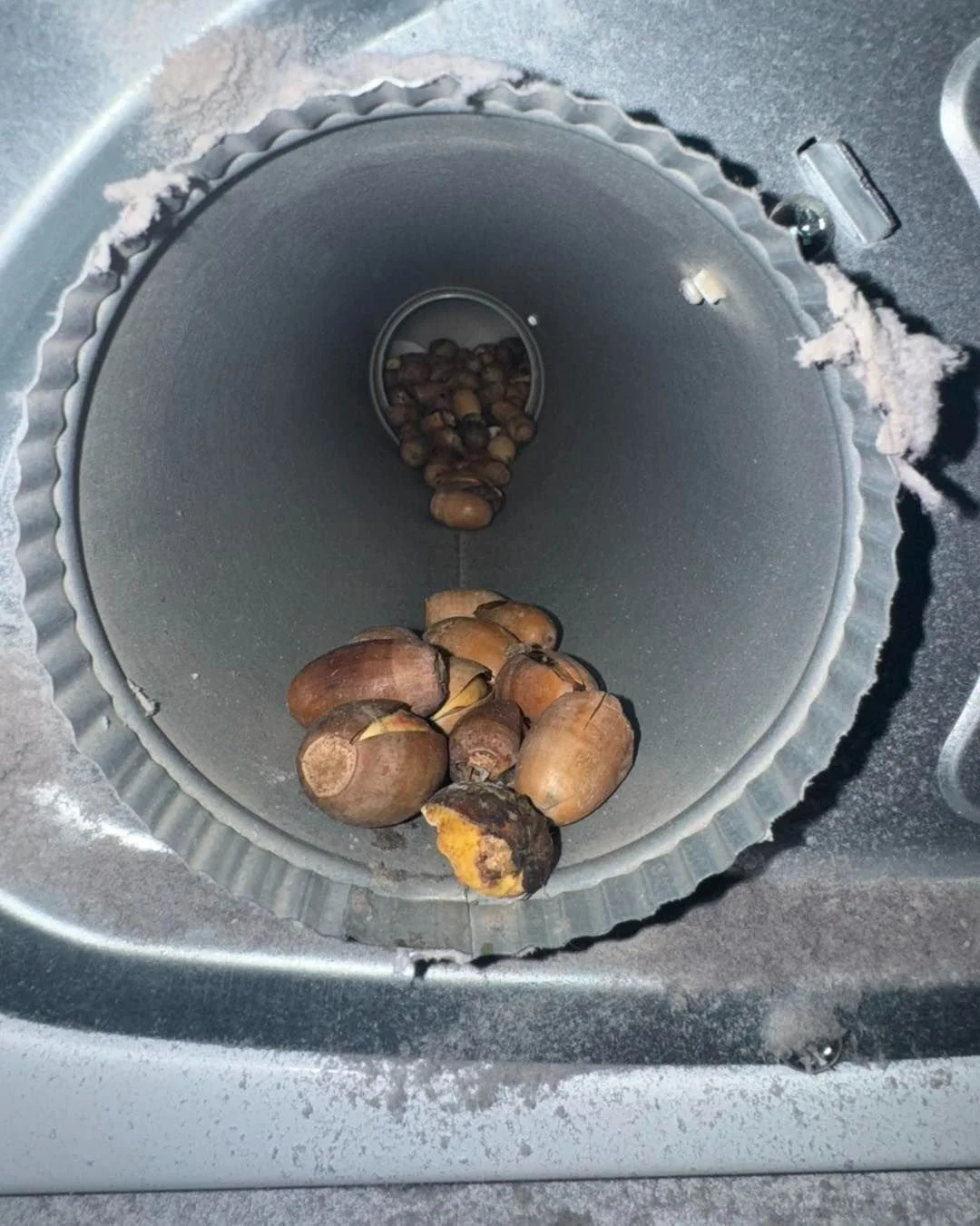
Whirlpool calls longer than normal dry times the most common sign of restricted house venting. If the dryer is heating, the connection behind it is clear, and the clothes still come out damp, the restriction is most likely farther along, in the building's duct. You come away with an account of what was found, ready to pass to the building manager.
Other signs of restricted venting are things an owner can see or feel from the outside: the cabinet is very warm to the touch, especially on the sides and near the bottom; steam shows on a glass door or fogs the display; and very little lint collects on the screen. On certain electronic models, an “AF” code on the display indicates extremely low airflow, which the guide interprets as a blocked or partly blocked vent, or a vent system that is too long overall.